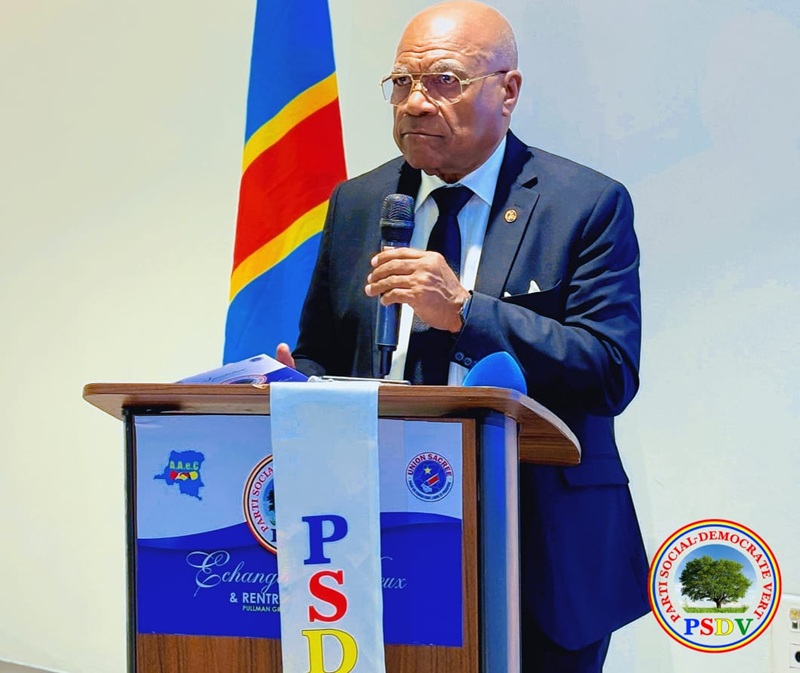
Two recent statements regarding the presence of Rwandan troops in the Democratic Republic of the Congo have drawn a response from former deputy prime minister and foreign minister Léonard She Okitundu, along with his political party, the Parti Social-Démocrate Vert (PSDV). The statements in question came from United States Secretary of State Marco Rubio and Belgian Foreign Minister Maxime Prévot, both addressing the withdrawal of Rwandan forces from occupied areas in eastern DRC.
In a declaration issued on 7 June 2026, She Okitundu and the PSDV described these international positions as a significant step forward in the search for a durable solution to the security crisis plaguing the eastern region. They noted that the growing interest of the international community in the situation in North Kivu and South Kivu reflects a heightened awareness of the security and humanitarian challenges facing Congolese civilians. The PSDV and its leader believe this diplomatic mobilisation could help speed up efforts to restore peace in an area long marked by armed violence and mass displacement.
However, while the former foreign minister and his party warmly welcomed Rubio’s declaration—which reportedly set a deadline for the effective withdrawal of Rwandan troops from Congolese soil—they sharply criticised Prévot’s stance. The Belgian minister had raised the need for simultaneity between the Rwandan withdrawal and the neutralisation of the FDLR (Democratic Forces for the Liberation of Rwanda). She Okitundu and the PSDV view this approach as a potential pretext for delaying the obligations imposed on Rwanda.
They recalled that United Nations Security Council Resolution 2773 demands an immediate and unconditional withdrawal of Rwandan forces from DRC territory. In their view, this resolution remains the primary legal and diplomatic framework for achieving a sustainable de-escalation of tensions in the eastern DRC.
Faced with ongoing insecurity in areas affected by armed clashes, the PSDV and its leader are calling on national and international actors to maintain diplomatic pressure to ensure compliance with international commitments and to foster the return of peace. They also reaffirmed their unwavering commitment to defending the territorial integrity of the DRC and advocated for a solution grounded in international law, regional cooperation, and respect for United Nations resolutions.