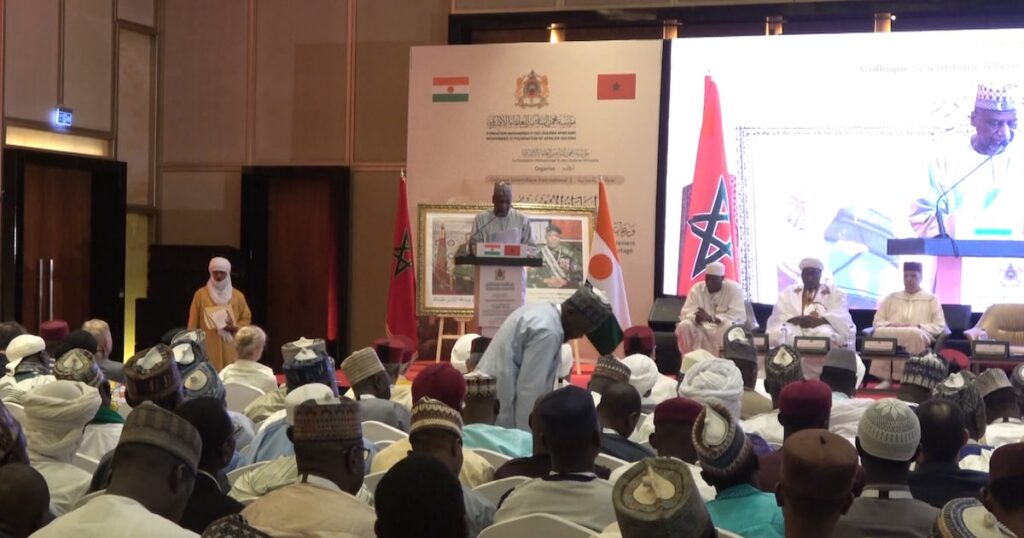
The Mohammed VI Foundation of African Ulema convened a two-day international colloquium in Niamey on June 6 and 7, focusing on “The Commandership of the Faithful and its role in guiding the African religious field and shared human heritage.” The event concluded with scientific recommendations aimed at preserving peace, tolerance, and coexistence.
Ibrahim Hamgar, secretary general of the foundation’s Niger section, noted that the theme addresses the current difficult global circumstances, especially in Africa, where religious differences often arise. “This gathering sheds light on the virtues of moderate Islam and its principles so that peaceful coexistence and social cohesion can prevail among Muslims despite differing viewpoints,” he explained.
Beyond academic exchanges, the colloquium highlighted the strong cooperation between Niger and Morocco. Mohamed Iboumraten, Morocco’s ambassador to Niamey, emphasized a model partnership in vital sectors, including Islamic affairs. He cited the imam and preacher training program, which from 2019 to 2025 provided 200 imams and preachers annually with scholarships and two-year training at the Mohammed VI Institute in Rabat.
Souleymane Issakou, secretary general of Niger’s Ministry of Foreign Affairs, Cooperation, and Nigeriens Abroad, stated that “the presentations, analyses, and debates underscored the importance of religious matters as a factor of stability, social cohesion, intercultural dialogue, and peace consolidation in African societies, particularly in the Sahel region, which faces security, social, and ideological challenges.”
For two days, Niamey served as a venue for collective reflection on the continent’s spiritual and human challenges, driven by a shared conviction that peace is built through knowledge, dialogue, and mutual understanding. The closing ceremony featured the reading of the colloquium’s general report, followed by the adoption of a final communiqué and recommendations.