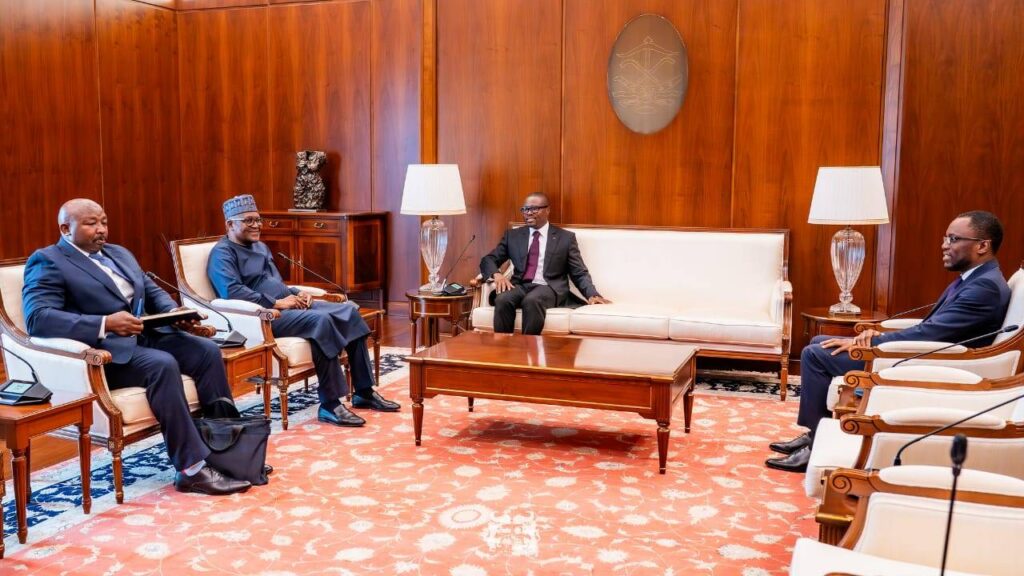
The corridors of the Palais de la Marina in Cotonou buzzed with anticipation this past Tuesday as President Romuald Wadagni welcomed Africa’s richest industrialist, Aliko Dangote, for a high-stakes meeting. This strategic audience wasn’t just another diplomatic handshake—it marked a deliberate step toward deepening economic ties between Bénin and Nigeria, two West African neighbors poised for stronger collaboration.
A milestone meeting shaping regional economic integration
In a region where economic resilience hinges on cross-border partnerships, the encounter between President Wadagni and Mr. Dangote carries significant weight. The agenda focused on unlocking new investment flows, accelerating trade synergies, and positioning Bénin as a key gateway for Nigerian businesses expanding across West Africa.
For President Wadagni, whose reputation rests on fiscal discipline and development-driven policies, hosting a figure like Dangote signals a forward-looking approach to economic transformation. The meeting underscored a shared commitment to reducing trade barriers and fostering an environment where both nations can thrive together.
Dangote’s industrial might meets Bénin’s strategic potential
Aliko Dangote’s business empire spans cement, sugar, agroindustry, logistics, and now oil refining with the continent’s largest privately-owned refinery in Nigeria. For his group, Bénin isn’t just a neighboring market—it’s a critical logistics hub linking Nigeria to landlocked Sahelian countries and a gateway to consumer markets in West Africa.
During the discussions, Dangote reaffirmed his interest in exploring opportunities in Bénin, emphasizing the country’s role as a bridge for trade and industrial expansion. The goal? To identify high-impact projects that benefit both nations—securing supply chains, boosting local value addition, and strengthening Bénin’s industrial base.
« West Africa’s growth potential multiplies when private sector dynamism aligns with state-led vision, » noted a close associate of the industrialist following the meeting.
Bénin’s economic gains: investment, jobs, and infrastructure
The implications for Bénin’s economy are substantial. A deeper partnership with Dangote could unlock several key benefits:
- Increased foreign direct investment (FDI): New industrial projects would inject fresh capital into Bénin’s economy, supporting everything from affordable construction materials to advanced storage facilities.
- Job creation and skills transfer: Large-scale industries create direct and indirect employment, especially for young professionals. Beyond jobs, local workers gain exposure to modern management and technical practices.
- Port of Cotonou expansion: As Bénin’s economic lifeline, the Port Autonome de Cotonou stands to gain from increased cargo traffic, optimized logistics corridors, and higher customs and tax revenues for the national treasury.
- Energy security and agricultural support: With Dangote’s refinery ramping up production, Bénin could secure stable, preferential access to refined petroleum products and petrochemicals—like fertilizers—reducing reliance on volatile global markets and supporting local agriculture.
From rivalry to partnership: a new era for Bénin-Nigeria relations
Historically, trade between Bénin and Nigeria has been fraught with political tensions and sudden border closures. But this meeting signals a deliberate shift toward normalization and pragmatic economic cooperation.
By engaging directly with Nigeria’s top private sector leaders, Bénin’s government is positioning itself not as a passive neighbor, but as an essential partner for Nigerian businesses looking to expand across West Africa. The strategy goes beyond mere trade—it aims to make Bénin a logistics, financial, and service hub that benefits both nations.
This rapprochement also offers Cotonou the chance to formalize and structure cross-border trade, reducing informal activities and boosting government revenue through transparent channels.
A turning point for Bénin’s economy
The July 28 meeting was more than symbolic—it laid the foundation for transformative economic partnerships. While formal agreements and implementation plans are still in development, the message is clear: Bénin is open for business on a large scale.
The next few weeks will reveal the first concrete projects emerging from this strategic dialogue. If realized, they could redefine Bénin’s role in West Africa, turning geographic proximity with Nigeria into a powerful engine of national prosperity.