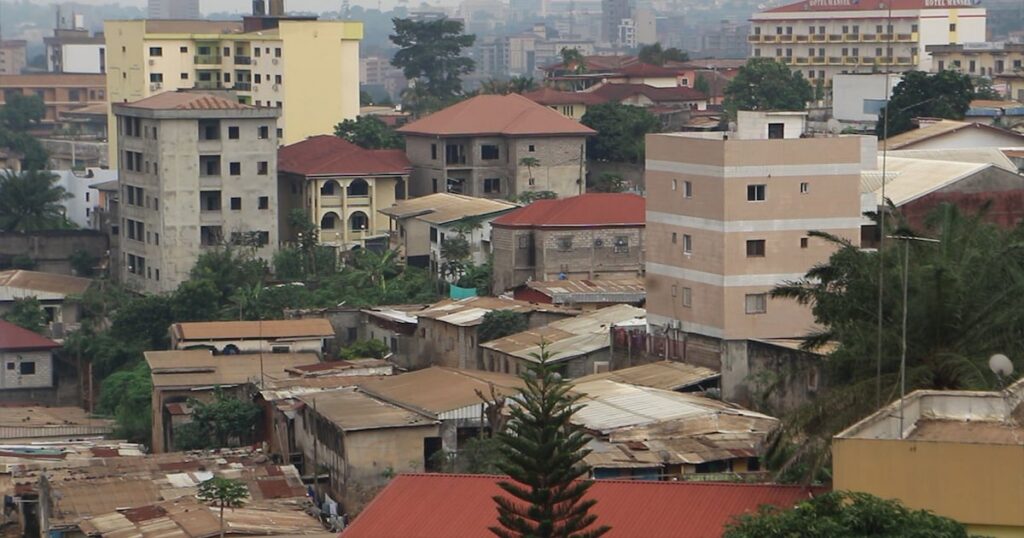
Mbarga Obama, a nonagenarian lifelong resident of Yaoundé, reflects on the city’s remarkable transformation. «Yaoundé today bears little resemblance to the place I knew decades ago,» he shares. «From a cluster of seven hills to a sprawling metropolis, the growth has been astonishing. I take pride in how this once-quaint village has evolved into a bustling urban center.»
He recalls a time when the city’s core was confined to Plateau Atemengué, with only modest expansion into neighborhoods like Mokolo and Nlong-Kak. The outskirts remained semi-rural, dotted with scattered homes and farmland. Today, however, the city’s boundaries have stretched far beyond those initial limits, swallowing surrounding areas as waves of newcomers flock to the capital.
The rapid urban sprawl has prompted concerns among urban planners, including Blaise Feugang, a local representative from the Ministry of Housing and Urban Development in Nyong and So’o. «Vertical construction must take precedence over horizontal expansion in a city like Yaoundé,» he asserts. «Taller buildings reduce costs for infrastructure while enhancing urban aesthetics. Well-designed high-rises not only optimize space but also elevate the city’s visual appeal.»
Experts widely agree that for Yaoundé to meet international urban standards, a strategic shift is necessary. Rather than merely expanding outward, prioritizing vertical development and improving living conditions for residents could redefine the capital’s future.