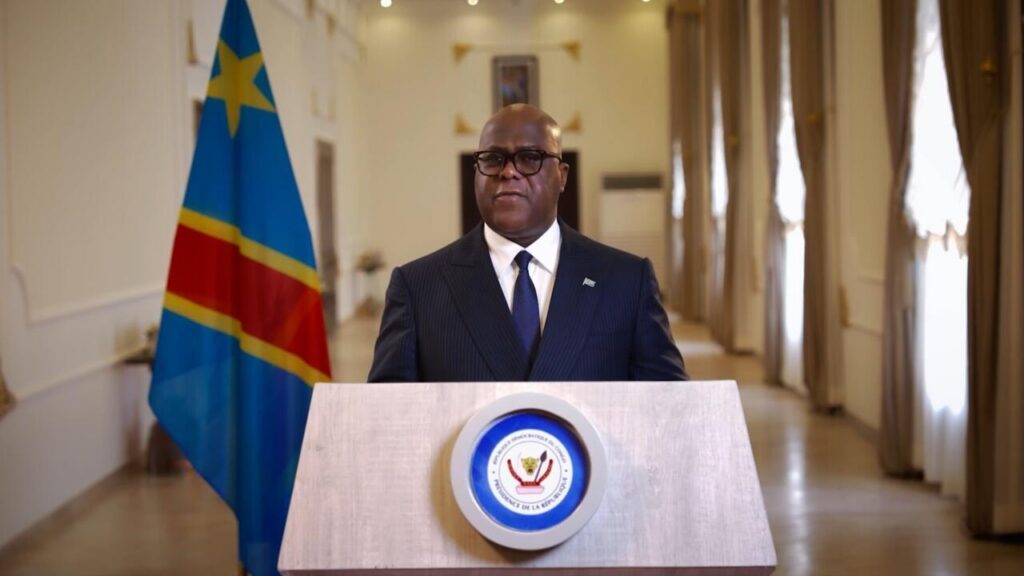
The Democratic Republic of the Congo is at a crossroads as the debate over Félix Tshisekedi’s potential bid for a third presidential term gains momentum. The constitutional court’s recent validation of the referendum law has ignited a heated political discussion, with the opposition accusing the government of attempting to manipulate the constitution to allow the president to extend his stay in power.
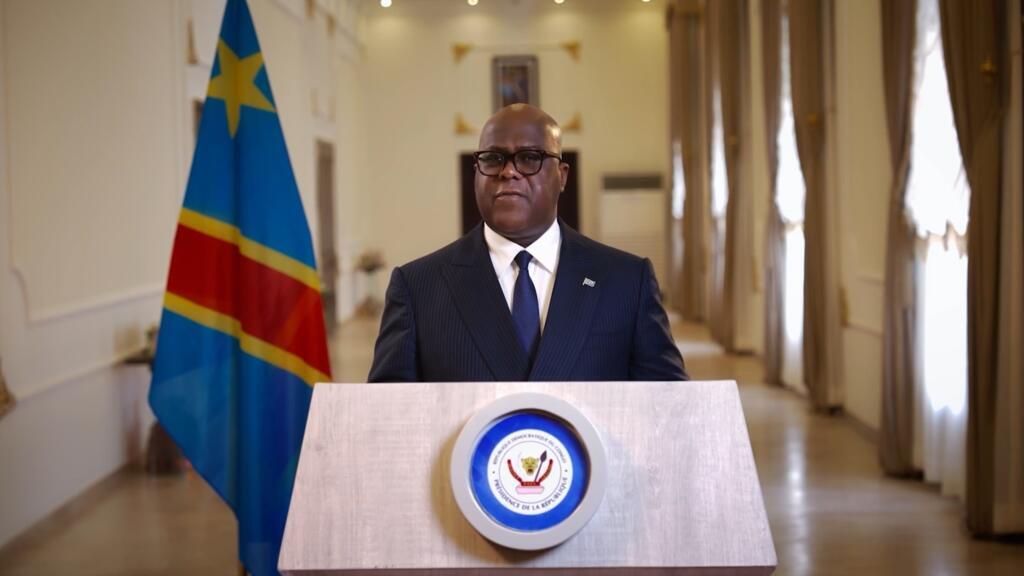
Constitutional reform stirs controversy
The constitutional court’s decision to declare the referendum law compatible with the constitution has set the stage for a potential constitutional reform. While the government insists the changes aim to strengthen institutional efficiency, the opposition views it as a thinly veiled attempt to circumvent the existing two-term limit. The political divide is deepening, with both sides digging in their heels.
Opposition mobilizes against constitutional amendments
Opposition parties have launched a fierce campaign to block any constitutional changes that could enable President Tshisekedi to run for a third term. Their concerns are fueled by statements from the president earlier this year, where he suggested he would not reject a third term if the people demanded it. The opposition argues that such a move would undermine democratic principles and destabilize the country’s political landscape.
Catholic Church joins the chorus of dissent
The Catholic Church in the DRC, a powerful moral authority, has firmly rejected the proposed constitutional reforms. The Congolese National Episcopal Conference (CENCO) has declared that there is neither necessity nor urgency to amend the constitution. This stance echoes their past advocacy against former president Joseph Kabila’s attempt to extend his term in 2018, which ultimately led to mass protests and international pressure.
Dialogue or political maneuvering?
President Tshisekedi has tasked religious leaders with organizing a national dialogue, though its inclusivity and objectives remain unclear. The government’s focus on national cohesion against external threats contrasts sharply with the opposition’s priority to safeguard constitutional term limits. As the dialogue’s framework takes shape, many question whether it will serve as a genuine platform for reconciliation or a tool to dilute opposition voices.
The coming weeks will be critical in determining whether the DRC can navigate this political storm without further fracturing its democratic foundations.