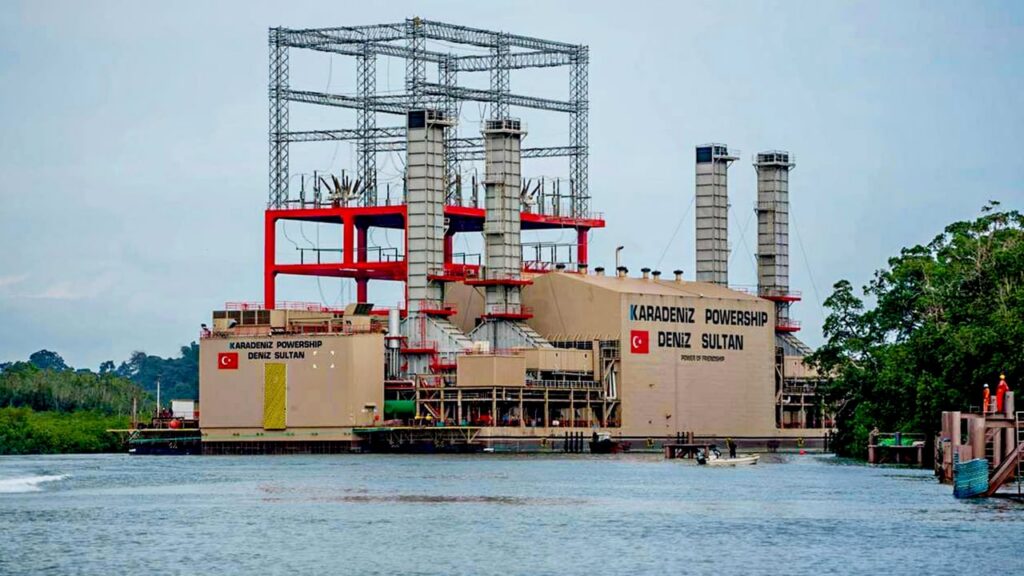

Gabon’s energy transition: reducing reliance on floating gas plants
The Gabonese government is accelerating efforts to diversify its energy sources and reduce its dependency on floating liquefied natural gas (FLNG) plants operated by foreign firms. This strategic shift aims to bolster the country’s energy security and stabilize long-term electricity costs for households and businesses.
Challenges posed by long-term Karpowership contracts
Gabon’s reliance on Karpowership’s mobile power stations has raised concerns over pricing and supply reliability. Critics argue that the current agreements, though providing immediate energy solutions, may not align with the country’s broader economic and environmental goals. The government is now prioritizing the development of domestic energy infrastructure to regain control over its power grid.
Government initiatives to strengthen local energy production
Under the leadership of President Brice Clotaire Oligui Nguema, Gabon is investing in renewable and conventional energy projects to reduce its exposure to volatile international markets. Key initiatives include:
- Expansion of hydroelectric capacity: New dams are being constructed to increase clean energy output and meet rising demand.
- Public-private partnerships in solar energy: Collaborations with international firms are underway to develop utility-scale solar farms.
- Modernization of the national grid: Upgrades to the Société d’énergie et d’eau du Gabon (SEEG) network aim to improve efficiency and reduce losses.
- Support for local energy operators: EDF and other firms are being encouraged to participate in Gabon’s long-term energy planning.
Economic and environmental benefits
A more diversified energy mix would not only lower electricity costs but also reduce Gabon’s carbon footprint. The country, heavily dependent on fossil fuels, stands to benefit from cleaner alternatives that align with its commitments under international climate agreements. Additionally, strengthening local energy production could create jobs and stimulate industrial growth.
Obstacles to energy independence
Despite progress, challenges remain. High upfront costs for infrastructure projects, technical limitations in scaling renewables, and the need for skilled labor pose significant hurdles. Moreover, existing contracts with energy providers like Karpowership require careful renegotiation to avoid disruptions in supply.
Future outlook for Gabon’s energy sector
The government’s roadmap includes phasing out short-term solutions in favor of sustainable, long-term investments. While the transition may take years, early signs suggest a commitment to energy sovereignty. Observers note that Gabon’s approach could serve as a model for other resource-rich African nations seeking to balance rapid development with environmental responsibility.