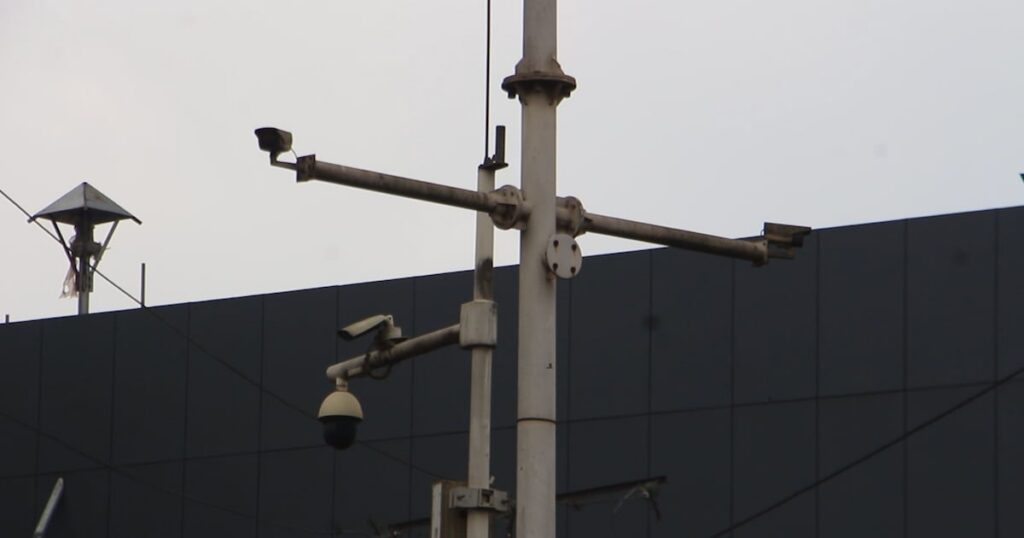
In Yaoundé, the capital of Cameroon, surveillance cameras have become a cornerstone of public safety, crime prevention, and traffic management. Since their deployment in high-risk zones, residents have noticed a marked decline in criminal activity, particularly in areas like Madagascar, where armed robberies were once a daily fear.
A local resident shared, “Before the cameras arrived, our neighborhood was plagued by brazen robberies. Thieves struck without warning, targeting shops, banks, and bakeries, and vanished before anyone could react. Now, such incidents have dropped sharply. We owe our peace of mind to these systems.”
The surveillance network is overseen by the National Command Center for Video Surveillance, headquartered in the Etoudi district. Its real-time monitoring capabilities have proven invaluable in deterring crime and aiding law enforcement.
The government’s commitment to expanding this initiative was reinforced when President Paul Biya authorized a 39.2 billion FCFA loan in December 2025. This funding will further advance the national rollout of an intelligent urban surveillance system, building on three prior loans secured from Chinese lenders over eight years, totaling 150.8 billion FCFA.
To date, the first phase of the project has placed 1,500 cameras across key Cameroonian cities, complemented by 2,000 portable transceivers for police teams. These tools enhance response times and operational efficiency in both urban centers and border regions.
Beyond public spaces, residents are embracing the technology for personal security. Many have installed cameras at home, citing a drastic reduction in break-ins. “I used to face repeated thefts until I installed a surveillance system. Now, any intruder is immediately identified, and justice follows swiftly,” explained one homeowner.
With prices starting at 15,000 FCFA, these cameras are accessible to a wide audience. They are deployed in private residences, public roads, plantations, vehicles, and even schools, ensuring safety for all. Remote monitoring via phones, TVs, and other devices adds an extra layer of convenience and control.