Senegal’s 2029 presidential race: Sonko’s path cleared by Diomaye Faye’s law
President Bassirou Diomaye Faye of Senegal has signed a new electoral code reform into law, a controversial move that has sent shockwaves through the Pastef party and positioned Prime Minister Ousmane Sonko as a leading contender for the 2029 presidential election. The decree, authenticated over the weekend, has intensified political uncertainty within the ruling party.
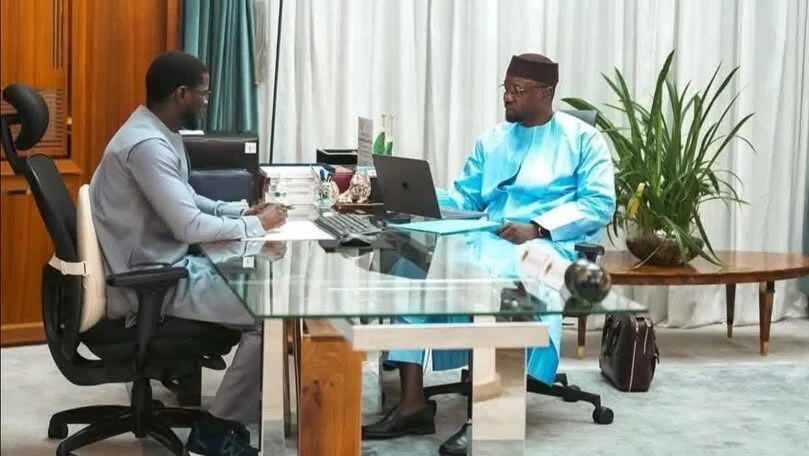
The new legislation, which introduces sweeping changes to the electoral framework, has been at the center of heated debates in the country. While some within the Pastef party initially resisted the reform, citing procedural concerns, the National Assembly ultimately passed the bill in a second reading on May 9 before the president gave it his final approval. The law’s most significant provisions relate to the restoration and standardization of civic rights following a conviction, particularly for cases involving loss of civil rights due to defamation charges.
Uncertainty within the ruling party
Tensions between President Faye and Prime Minister Sonko have surfaced publicly, casting a shadow over the future of their political alliance ahead of the 2029 election. The reform was initially adopted by parliament on April 28, but the president requested a second review, citing what he described as administrative discrepancies in the draft. This unexpected delay fueled speculation that Faye might be attempting to influence the outcome to suit his own ambitions.
Critics within the Pastef party accused the president of stalling tactics to prevent the law from passing, while supporters argued that the revisions were necessary to correct legal oversights. The final version of the law now limits the duration of civic rights deprivation to five years after the completion of a sentence, a change that could have direct implications for Sonko’s future eligibility.
Sonko’s eligibility in the spotlight
Ousmane Sonko, a prominent opposition figure who was barred from running in the March 2024 presidential election due to his 2023 defamation conviction, has since been appointed Prime Minister. His ineligibility stemmed from a Supreme Court ruling in January 2024, which confirmed his loss of voting rights following the conviction. Despite this setback, Sonko returned to politics as a deputy in the November 2024 legislative elections before stepping down from his parliamentary seat to focus on his prime ministerial duties.
The new electoral code, which includes a retroactive clause, has reignited discussions about Sonko’s potential candidacy in 2029. The law’s passage signals a strategic shift in Senegal’s political landscape, leaving many to question whether this move is a step toward reconciliation or a calculated maneuver to shape the country’s future leadership.