The transition to the new administration in Sénégal was greeted with optimism, as citizens anticipated an economic rebound following nearly three years of instability triggered by the presidential election tensions of April 2024.
The launch of the Sénégal 2050 Agenda in October 2024 and the Plan de redressement économique et social (PRES) on August 2, 2025, reinforced confidence in the government’s commitment to prioritizing socio-economic development. Yet, nearly 30 months later, that optimism has dwindled. The nation appears mired in a political deadlock, where partisan squabbles overshadow economic discourse, and the polarization of public life deepens ahead of the 2029 elections—a preoccupation that raises concerns about governance priorities.
From hope to stagnation: the cost of political infighting
Three years after the political shift, Sénégal is still awaiting the tangible outcomes promised by President Bassirou Diomaye Faye’s administration. The earlier duality at the helm—between the President and his former Prime Minister—was often cited as a major obstacle to policy implementation. While the change in the Prime Minister’s office aimed to accelerate progress, the anticipated momentum has yet to materialize. As the saying goes, breaking the thermometer does not cure the fever.
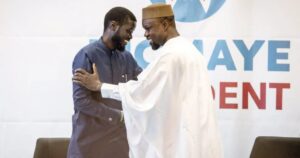
The rift between political factions has widened, with the ruling camp consolidating its base through initiatives like the Kiiraye party, while opposition groups like PASTEF reinforce cohesion ahead of 2029. Amid these dynamics, the economy bears the brunt, as economic priorities take a backseat to political maneuvering.
The uncertainty surrounding the government’s economic direction has sparked questions about the pace of the Sénégal 2050 Agenda. A political truce is now essential to refocus national attention on economic revival. While Sénégal remains entangled in internal rivalries, neighboring economies in the West African Economic and Monetary Union (UEMOA) continue to advance reforms and strengthen their performance.
Economic underperformance: Sénégal lags behind
The latest Central Bank of West African States (BCEAO) data, published in the June 2026 monetary policy report, reveals a stark reality: Sénégal ranks among the least dynamic economies in the UEMOA, with real GDP growth of just 4.7% in the first quarter of 2026. This figure trails behind Guinea-Bissau (5.5%), Burkina Faso (5.6%), Togo (5.8%), Mali (6.1%), Niger (6.1%), Bénin (6.4%), and Côte d’Ivoire (6.4%).
After achieving one of the bloc’s strongest performances in 2025 with 7.8% growth, Sénégal has seen a sharp decline in early 2026, with a 3.1-point drop compared to the 2025 average—the steepest contraction among UEMOA countries. Compounding the issue is the drastic reduction in foreign direct investment (FDI), plummeting from $3.319 billion in 2024 to a mere $37 million in 2025. These indicators underscore the severity of the economic challenges facing the nation.
Three urgent levers for economic recovery
To reverse this trend and restore Sénégal to its position as an economic leader in the UEMOA, decisive action is required over the next three years leading up to the 2029 elections. Three key strategies must be prioritized:
- Restoring investor confidence: Securing a new economic program with the International Monetary Fund (IMF) is critical. Beyond financial resources, an IMF agreement would signal credibility to global markets, financial rating agencies, and development partners. Sénégal currently faces challenges accessing international markets on favorable terms due to perceived high risk. A robust nation branding strategy is equally vital to enhance the country’s attractiveness, highlight its economic strengths, and attract foreign investors.
- Empowering the private sector: The national private sector must become the engine of growth. This requires improving access to financing, simplifying administrative procedures, enhancing the business environment, and strengthening public-private partnerships. Priority sectors such as infrastructure, energy, agriculture, industry, digital technology, transport, and logistics should be the focus of these efforts.
- Rationalizing public spending: With limited fiscal flexibility, austerity measures are essential. The PRES promised significant reductions in government expenditure, yet the much-anticipated merger of agencies and support structures has stalled. Speed is of the essence in implementing these reforms.
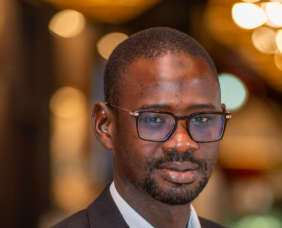
Dr Abdou Diaw
CEO & Founder, Le Marché economic and financial magazine