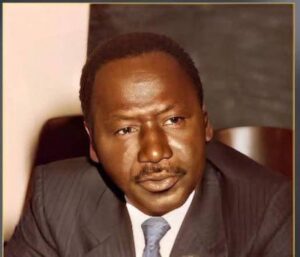
Currently held in Pretoria following an alleged breach of immigration regulations, the prominent pan-Africanist figure, Kémi Séba, has vociferously decried his detention as politically motivated persecution. Yet, beneath the surface of his sovereignist rhetoric, an ongoing investigation has uncovered a network of clandestine alliances that are both startling and concerning, extending from Russian influence operations to factions within white supremacist movements.
The arrest that ignited controversy
From his South African holding cell, Kémi Séba’s indignation remains palpable. The Franco-Beninese activist characterizes his arrest as merely another ‘cabal,’ purportedly orchestrated by his adversaries—specifically referencing France and the Beninese government—to impede his freedom of movement. His proponents echo these sentiments, branding the detention a political conspiracy designed to stifle the momentum of a man who positions himself as the voice for disaffected African youth.
However, beyond the immediate legal dispute concerning his visa status or his application for political asylum, deeper questions persist regarding his international engagements, which the activist frequently sidesteps.
The kremlin’s shadow and the wagner connection
Our inquiry substantiates that Kémi Séba’s ties with Russian networks have evolved beyond mere ideological alignment, becoming structurally embedded. Reviewed documents reveal frequent communications with entities linked to the late Evgeny Prigozhin’s extensive network and the notorious ‘Project Lakhta.’
The alleged objective? To leverage anti-Western sentiment as a means to advance Moscow’s geopolitical agenda across the African continent. In exchange for logistical and financial backing, Séba reportedly functions as an influential conduit, transforming post-colonial grievances into an instrument of destabilization to Russia’s strategic advantage.
A paradoxical alignment: pan-africanism alongside supremacism
Even more disquieting, our investigation has brought to light discreet interactions with prominent figures associated with white supremacism and radical far-right movements in Europe and the United States. While their core ideologies appear diametrically opposed, they share a common thread: an advocacy for racial separatism.
The adage, ‘the enemy of my enemy is my friend,’ seemingly underpins Séba’s engagements with proponents of the ‘Great Replacement’ theory or those advocating for rigid ethnic segregation. These connections unveil a strategy termed ‘convergence of extremes,’ where the shared aim is to undermine liberal democracies and multiculturalism, even if it necessitates collaboration with groups that view Africa as an inferior continent.
A high-stakes asylum bid
By seeking political asylum in South Africa, Kémi Séba appears to be attempting to reframe a precarious legal predicament into a symbol of resistance. Nevertheless, South African authorities, mindful of their international standing and the integrity of their immigration framework, find themselves in a significant quandary.
April 29 is poised to be a pivotal date. Yet, irrespective of the Pretoria court’s judgment, it is the fundamental credibility of Kémi Séba that hangs in the balance. The chasm between his self-proclaimed role as a defender of Black dignity and his alleged affiliations with foreign influence networks has seemingly never been wider.