The recent announcement of Guinean group SONOCO’s plan to produce 15 million chickens annually in Gabon has reignited crucial discussions surrounding economic sovereignty and the recognition afforded to national entrepreneurs. While government officials hail this initiative as a significant step for national food security, several prominent voices, including former Member of Parliament Jean-Valentin Leyama, are questioning the apparent oversight of SOGADA, a Gabonese entity that has invested over a decade in the domestic poultry sector. This complex issue extends beyond the agricultural realm, touching upon Gabon’s fundamental philosophy of national economic development.
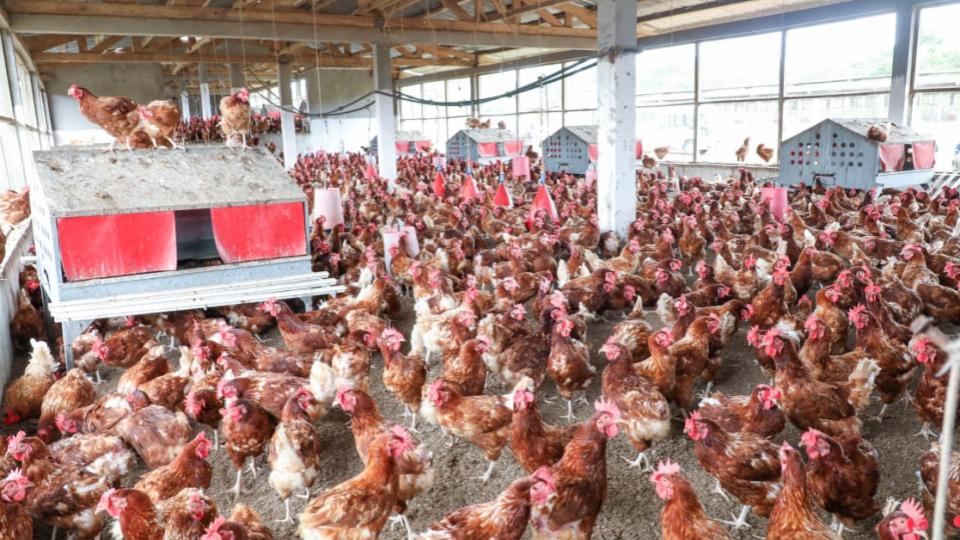
Gabon expresses a clear ambition to increase local production of goods it consumes. This goal is undeniably valid. For a nation that still relies heavily on food imports, any endeavor aimed at bolstering local output warrants commendation. It is within this framework that the Presidency of the Republic presented the arrival of the Guinean group SONOCO, whose proposed project envisions an annual production exceeding 15 million broiler chickens.
However, beneath the veneer of official enthusiasm, a critical question quickly emerged within public discourse. This inquiry doesn’t seek to challenge foreign investment, which Gabon admittedly needs for accelerated development, but rather to scrutinize the consistency of a political narrative that champions economic sovereignty and the promotion of national entrepreneurship as core tenets. How, indeed, can one speak of economic re-conquest without first empowering those who have already committed capital and taken risks within Gabon?
SOGADA, a forgotten national champion?
This is precisely the point raised by Jean-Valentin Leyama. The former Transitional Deputy highlights the established presence of the Gabonese Agricultural Development Company (SOGADA), situated in Meyang, approximately fifty kilometers from Libreville. This enterprise is not merely a prospective project or a future promise; it represents a tangible economic reality, meticulously developed over more than ten years with private Gabonese capital.
Established in 2013, SOGADA spans over 160 hectares and boasts investments nearing 16 billion CFA francs. The company’s operations extend far beyond poultry farming. It has cultivated a comprehensive agro-industrial complex that integrates aviculture, egg production, pig farming, processing of local agricultural products, and even an industrial unit for manufacturing egg cartons. In essence, SOGADA embodies an integrated approach to the agricultural value chain, precisely what Gabonese authorities advocate for today.
Concrete actions over mere announcements
The fundamental distinction between SOGADA and recently unveiled projects lies in a straightforward fact: SOGADA is already actively producing. For several years, this company has demonstrably contributed to efforts aimed at import substitution. It employs Gabonese citizens, invests within the national territory, fulfills its tax obligations, and plays a vital role in the country’s food security.
Consequently, the matter transforms into a political one. Why do national entrepreneurs, who believed in Gabon’s agricultural potential when the sector lacked media attention or strategic designation, now appear to be relegated to a secondary role? Why doesn’t the state more prominently feature these pioneers who invested their own resources in a domain long perceived as high-risk? A coherent policy of Gabon economic sovereignty should naturally prioritize strengthening those who have already proven their commitment.
Economic sovereignty is more than a slogan
The discussion transcends the simple production of poultry. It delves into the vision Gabon intends to adopt for its national development. In every country that has achieved successful economic transformation, the state has acted as a steadfast supporter of its national entrepreneurs. It hasn’t merely sought to attract foreign investors; it has also meticulously created conditions enabling its own businesses to evolve into national champions.
South Korea famously bolstered its industrial conglomerates. Morocco actively supports its enterprises across agriculture, finance, and industry. Rwanda fosters the emergence of local players capable of advancing its economic ambitions. Why does Gabon still struggle to cultivate this same strategic logic? Why do foreign investors sometimes appear to receive greater institutional visibility than national operators who have been investing on the ground for years?
The challenge of a strategic state
No one disputes the potential benefits of the SONOCO project. If its stated objectives are met, Gabon could significantly reduce its poultry imports and generate thousands of employment opportunities. However, this is not the core issue. The central challenge lies in discerning whether the state truly aims to forge genuine Gabon economic sovereignty or simply intends to host investors capable of local production.
True economic sovereignty extends beyond the geographical origin of production. It is also predicated on a nation’s capacity to nurture its own entrepreneurs, provide them with funding, offer protection, and guide their growth. A country that fails to support those who invest domestically with their own resources will inevitably find itself importing its development as much as its products.
A question requiring an official response
Ultimately, the announcement of the SONOCO project brings forth a question that public debate cannot sidestep. If Gabon economic sovereignty genuinely constitutes a national priority, why are Gabonese actors who invested ahead of others in strategic sectors not positioned at the very heart of this ambition?
SOGADA is more than just an agricultural enterprise. It serves as compelling evidence that Gabon possesses entrepreneurs capable of substantial investment, risk-taking, and the construction of entire supply chains. The real question, therefore, isn’t why SONOCO is coming to Gabon. The question is to understand why those who have already demonstrated their capabilities are still awaiting the Republic’s recognition as the national champions they have become. For credible economic sovereignty is not built in opposition to foreign investment; it is primarily built by placing trust in its own builders.