Libreville — Francophone Africa is currently navigating a critical turning point for its economic future within its university halls. By assuming the presidency of the African and Malagasy Council for Higher Education (CAMES), Gabon has secured more than just a ceremonial role. It now holds a strategic lever capable of directing the education of millions of students, steering scientific research, and boosting the continent’s standing in a global market defined by digital innovation and high-level skills.
The appointment of Gabon to lead this institution, which unites nineteen states across Francophone Africa and the Indian Ocean, comes at a time when educational standards are synonymous with national sovereignty. In Libreville, President Brice Clotaire Oligui Nguema intends to use this mandate to drive economic transformation, placing the employability of young graduates at the very top of the agenda.
CAMES: A vital pillar of African integration
Established in 1968, CAMES stands as a cornerstone of regional cooperation. The organization harmonizes university systems, ensures the mutual recognition of diplomas, manages competitive teaching examinations, and evaluates the progress of academic researchers. Its impact reaches far beyond the ivory tower; by setting quality benchmarks, it effectively molds the human capital of nearly twenty nations.
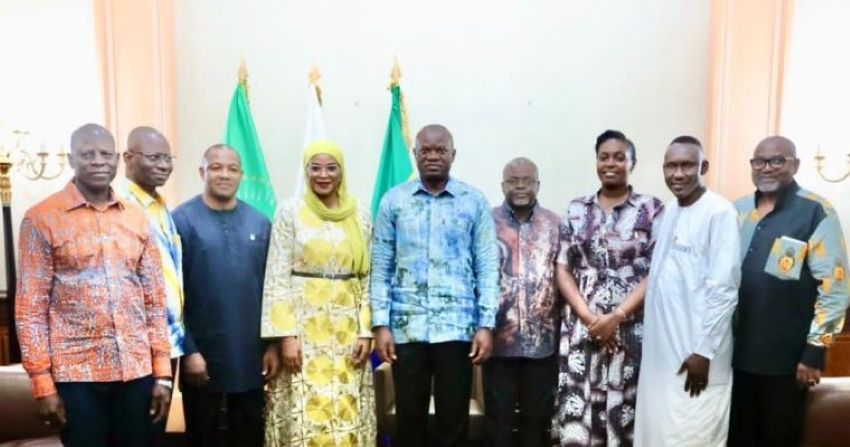
Following the conclusion of the 43rd session of the CAMES Council of Ministers in Libreville, the Gabonese Head of State met with a delegation led by the Guinée Minister of Higher Education, Dr. Diaka Sidibé, the outgoing president. The meeting allowed for a review of progress in institutional governance and research structure. However, the discussions also highlighted persistent financial vulnerabilities, specifically the challenges related to unpaid contributions from certain member states—a factor that directly impacts the organization’s long-term operational capacity.
Prioritizing jobs in the academic landscape
The Gabonese presidency aims to push past traditional academic boundaries by repositioning universities at the heart of development strategies. While Africa is seeing a massive surge in student enrollment, a degree no longer guarantees a career in many regions. Academic programs are expanding, yet the actual needs of economies are shifting rapidly due to artificial intelligence, the digital transition, and the demand for local industrial processing.
By making employability the central theme of its leadership, Gabon is tackling an essential debate: how to produce graduates who meet the demands of the African market. This involves fostering closer ties between universities and the private sector, while integrating technological innovation and future-oriented skills into the curriculum. This strategy reflects a broader concern across Africa, where the gap between training and employment is increasingly viewed as a matter of social stability.
The pursuit of scientific sovereignty
The vision shared by President Oligui Nguema extends toward full scientific sovereignty for Africa. Future CAMES initiatives, such as the CAMES Virtual Academy and the acceleration of applied research, align closely with Gabon‘s own national growth and development plans.
The economic potential of Gabon, particularly the industrial strength of the Nkok Special Economic Zone and the country’s strategic location, makes it a key player in continental value chains. In this context, the Head of State’s proposal for a future CAMES Heads of State Summit serves as a powerful signal of intent to place higher education and research at the center of African public policy.
As global powers invest heavily in advanced technology and knowledge, Africa can no longer treat its universities as mere centers for learning. They are becoming instruments of power and competitiveness. In leading CAMES, Gabon takes on a responsibility that transcends its borders, aiming to empower a new generation of innovators capable of reshaping the continent’s destiny. The true wealth of tomorrow’s Africa lies not in its soil, but in the brilliance of its youth.