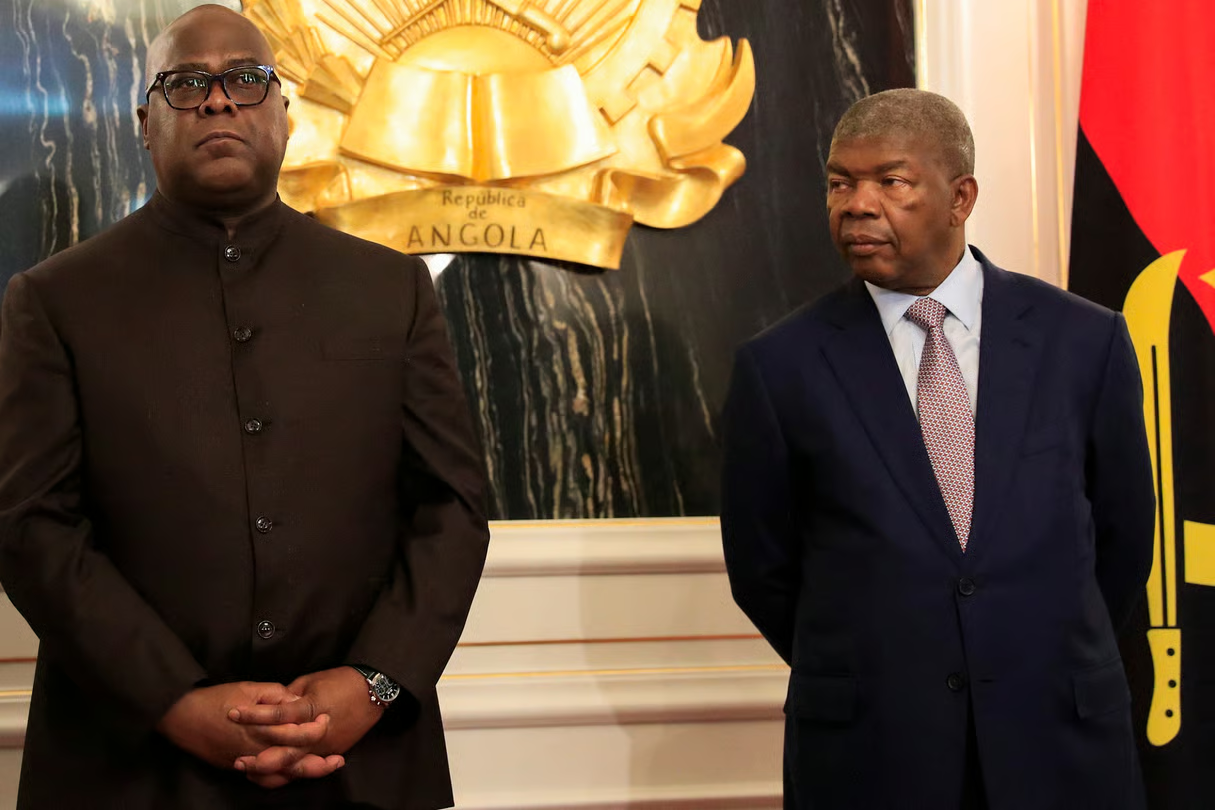
Behind the closed doors of Luanda’s presidential palace, a high-stakes diplomatic confrontation is unfolding between Angola’s President João Lourenço and his Democratic Republic of the Congo (DRC) counterpart, Félix Tshisekedi. What began as a routine meeting on January 8, 2026, has since spiraled into a tense exchange of positions, reshaping regional power dynamics.
A clash of visions for the Great Lakes
The current friction stems from diverging national priorities, each rooted in historical and economic realities. Angola under Lourenço has prioritized stabilizing its own post-conflict recovery while strengthening its role as an energy hub. Meanwhile, Tshisekedi faces mounting pressure to assert DRC’s sovereignty amid rising security threats along its eastern borders.
Sources close to the talks reveal that the core disagreement revolves around Angola’s perceived reluctance to fully support Kinshasa’s military operations against armed groups in the Kivu region. Angola’s strategic focus remains on economic integration through the Southern African Development Community (SADC), while the DRC pushes for a more aggressive regional military response.
Regional alliances under scrutiny
The diplomatic rift highlights deeper fractures in Southern Africa’s geopolitical landscape. Angola’s alignment with SADC’s consensus-driven approach contrasts sharply with the DRC’s more assertive stance, which enjoys backing from certain East African partners. This divide has left observers questioning the cohesion of regional blocs in addressing cross-border security challenges.
The debate intensified following Angola’s mediation efforts in the M23 rebel crisis, where Lourenço advocated for dialogue over military escalation. Kinshasa, however, accuses external actors of enabling rebel groups through indirect support, further straining relations.
What’s next for Angola-DRC relations?
As both leaders navigate this delicate impasse, the future of bilateral cooperation hangs in the balance. Economic ties—particularly in energy and infrastructure—remain vital, yet political trust has eroded. The next round of negotiations, expected later this month, could either de-escalate tensions or push the two nations into a prolonged standoff.
For now, the international community watches closely, wary of a prolonged conflict that could destabilize the entire Great Lakes region. The outcome of this confrontation will likely set the tone for Southern Africa’s diplomatic landscape in the years ahead.