Gabon’s president ushers in new era of accountability with landmark address
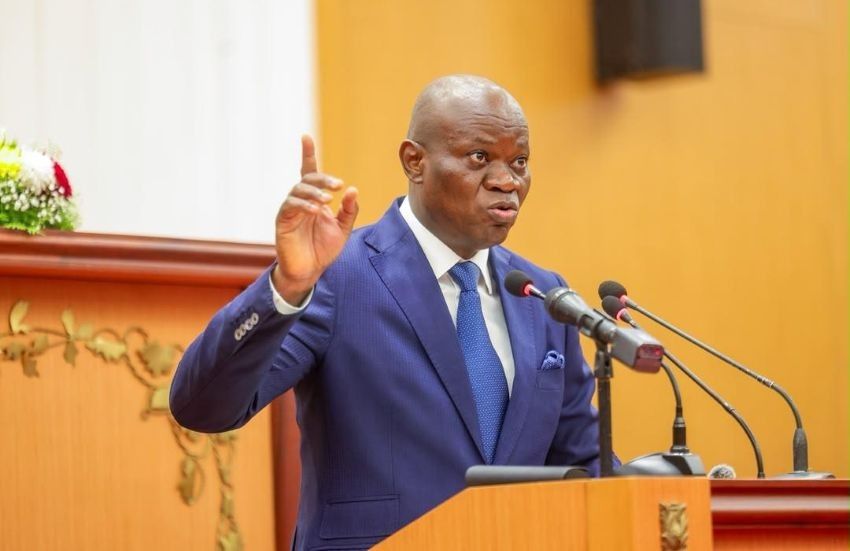
Libreville, Tuesday, June 16, 2026 – June 15, 2026, marks a pivotal moment in Gabon’s political landscape. For the first time since the implementation of the Fifth Republic Constitution, President Brice Clotaire Oligui Nguema addressed the Nation before a joint session of Parliament, convened as a Congress at the historic Palais Léon Mba.
Beyond a mere institutional formality, this address heralded the establishment of a novel political culture, deeply rooted in principles of accountability, transparency, and the strengthening of democratic governance.
In a nation long accustomed to a hierarchical relationship between the executive branch and representative bodies, this annual event signifies a profound transformation. Moving forward, the head of state is no longer solely tasked with governing but is now constitutionally mandated to render an account of their actions. This obligation fundamentally reshapes the dynamics of power, positioning Parliament at the very core of republican operations.
A reimagined institutional framework
The Fifth Republic’s most significant innovation is the introduction of an annual Congress dedicated to assessing the state of the Nation. Enshrined in Article 59 of the Constitution, which was adopted following the National Inclusive Dialogue, this mechanism compels the president to present their annual achievements and future plans to the people’s representatives.
This provision extends far beyond symbolic gestures. It establishes a consistent institutional dialogue between the Executive and the Legislature. In contemporary democracies, legitimacy is not solely derived from elections; it is also cultivated through the government’s ability to articulate its decisions and take responsibility for outcomes.
The choice of the Palais Léon Mba as the venue for this Congress further underscores this logic. For decades, much of the country’s political activity revolved around the Palais du Bord de Mer. Now, the national representation becomes the platform for presidential discourse. This shift in the institutional center of gravity clearly reflects a commitment to rebalancing powers and bolstering Parliament’s role in public life.
Transformative achievements highlighted
Addressing the parliamentarians, Brice Clotaire Oligui Nguema presented an ambitious overview of the actions undertaken since August 2023. His speech centered on a core message: Gabon has embarked on an accelerated reconstruction phase, aimed at restoring state authority, modernizing the economy, and enhancing citizens’ living conditions.
Significant social initiatives were prominently featured. These include the creation of a fourth CNAMGS fund specifically for informal sector workers, the construction of 3,100 social housing units for civil servants, the disbursement of the third phase of salary arrears for public agents totaling 35 billion CFA francs, and the reimbursement of Poste savings to the tune of 10 billion CFA francs.
The head of state also emphasized the regularization of over 60,000 administrative situations and the generation of 22,000 jobs within the private sector. These figures demonstrate a clear intent to address societal needs while simultaneously rebuilding trust between the administration and its populace.
Economically, the discourse underscored national sovereignty. The strategic repurchase of key oil assets like Assala and Tullow Oil, coupled with the opening of new wells, exemplifies Gabon’s ambition to exert greater control over its natural resources. In the transport sector, the expansion of Fly Gabon, the acquisition of modern urban buses, and the rehabilitation of the national railway network are integral parts of a broader strategy to modernize essential infrastructure.
Forging a new national compact
Beyond the statistics and accomplishments, the true essence of this address lay in the political vision it conveyed. The Gabonese president seeks to establish a renewed covenant between the state and its citizens – one founded on responsibility, efficiency, and active participation.
The announced reforms in the water and electricity sectors exemplify this determination to tackle systemic deficiencies that directly impact daily life. Similarly, investments in public infrastructure, youth empowerment programs such as Taxi Gab, and the increasing prominence of Gabonese diplomacy collectively signify a comprehensive strategy to reposition the nation on both domestic and international fronts.
This inaugural address on the state of the Nation also takes place within a broader African context, where many countries are striving to strengthen their institutions while simultaneously addressing urgent development imperatives. By making the Congress an obligatory annual exercise, Gabon’s Fifth Republic endeavors to institutionalize a practice rarely observed across the continent.
However, the ultimate test will not hinge on the eloquence of the speech but on the enduring capacity of Gabon’s institutions to uphold this demand for accountability. True democracy is built less on promises and more on consistent reporting and tangible, coherent results.
In Libreville, on June 15, 2026, President Oligui Nguema did more than just present a progress report. He inaugurated a republican ritual poised to become a defining characteristic of Gabon’s evolving political architecture. For Gabon, the stakes now extend beyond a mere transition; it is about demonstrating that the Fifth Republic can transform the exercise of power into an unwavering commitment to the Nation.