drc’s constitutional debate: academic scrutiny meets political push for change
- Politique
The Ministry of Higher Education, University, Scientific Research and Innovations (ESURSI) is currently hosting a series of “scientific” colloquiums in Kinshasa, Kisangani (Tshopo), and Lubumbashi (Haut-Katanga) from Wednesday, June 10, to Friday, June 12. These gatherings aim to invigorate scientific research and enhance the Congolese university’s engagement in national public discourse, particularly as a referendum bill recently passed in parliament on Tuesday.
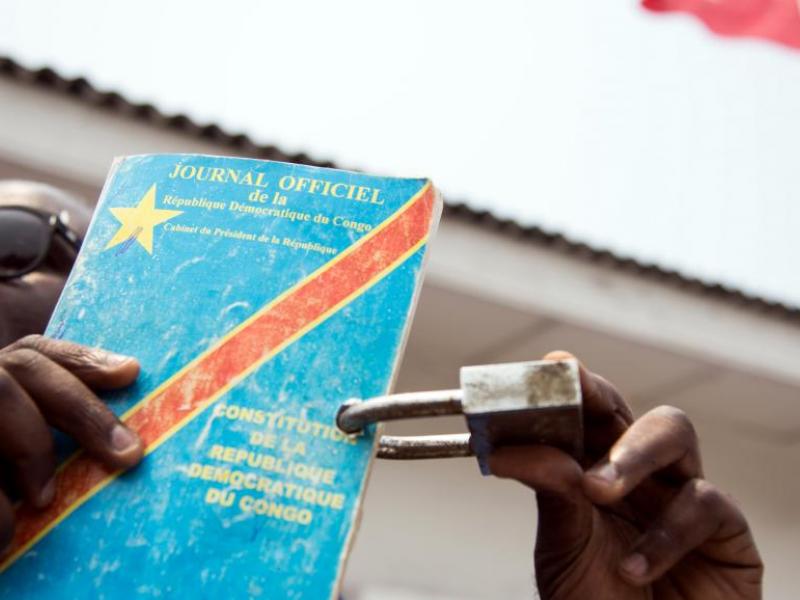
“Nearly two decades after the 2006 Constitution came into force, these colloquiums seek to conduct a thorough scientific analysis of its achievements, limitations, and future evolutionary paths tailored to the current realities of the Democratic Republic of Congo. The discussions are expected to culminate in recommendations capable of strengthening the rule of law, democratic governance, and sustainable development within the country,” stated Minister Sombo Ayanne Safi Mukuna Marie-Thérèse.
These sessions are unfolding simultaneously across three distinct thematic hubs: Kinshasa is focusing on geostrategic issues, Kisangani on sociological and environmental aspects, and Lubumbashi on industrial and energy transition matters.
The ministry has extended an invitation to a broad spectrum of participants, including teacher-researchers, experts in constitutional law and social sciences, academic institutions, research centers, and advanced-level students. Furthermore, the ministry urges leaders of higher education and university establishments to widely disseminate this information and mobilize their researchers and experts to ensure the success of this significant national assembly.
“Through this initiative, ESURSI reaffirms the pivotal role of universities and research centers as intellectual laboratories and sources of proposals serving the Nation. Active participation from the academic community is crucial to guarantee the scientific rigor of the reflections and the relevance of the recommendations that will emerge from the colloquium,” the minister added.
The debate surrounding constitutional reform in the Democratic Republic of Congo, whether through revision or outright change, had previously subsided due to the offensives by the AFC/M23 rebellion, allegedly supported by Rwanda, which led to significant territorial losses. Amidst ongoing diplomatic efforts to resolve the security crisis, this critical issue has re-emerged at the forefront of the political agenda. Championed notably by the UDPS, the presidential party and a key component of the ruling Union sacrée coalition, this discussion continues to fuel intense political tensions.
Both the UDPS and the Union sacrée de la Nation are officially advocating for constitutional reform. However, this proposed change is far from universally accepted. Proponents of revision or alteration, including several high-ranking members of the Union sacrée, criticize the existing 2006 Constitution, labeling it a “trapped Constitution” and deeming it ill-suited to the nation’s current circumstances. They highlight challenges related to state governance, the definition of nationality, and the urgent need to adapt the foundational text to Congolese realities. Some also invoke the pursuit of peace or question the feasibility of the elections scheduled for 2028.
Conversely, the opposition and other Congolese socio-political forces vehemently reject this approach. They consider it a perilous undertaking, especially given the ongoing conflict, which they attribute to Rwandan aggression via the AFC/M23 rebellion. They also contend that the Tshisekedi administration, based on what they perceive as a negative track record since assuming power, is no longer fit to govern the country. For these opponents, the government’s desire to revise or change the Constitution is, in fact, a veiled attempt to consolidate power and pave the way for a third term for President Félix Tshisekedi, who is currently serving his second and final mandate, set to conclude in January 2029.
In the Democratic Republic of Congo, the constitutional reform debate has catalyzed two distinct movements within the sociopolitical landscape: the Coalition Article 64 for the Defense of the Constitutional Order (C64) and the Coalition of Congolese for the Change of the Constitution (C4). Each faction asserts widespread popular support for achieving its stated objectives.