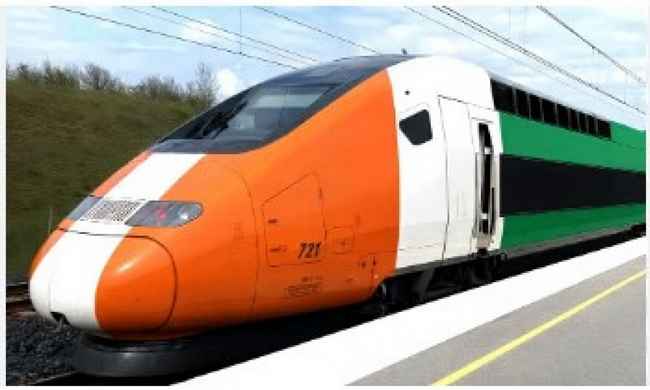
Could Côte d’Ivoire become the second African nation, after Morocco in 2018, to operate a high-speed train? The government of this West African country is moving forward with plans for a fast rail line connecting Abidjan, the economic hub, to Yamoussoukro, the political capital founded by former president Félix Houphouët-Boigny in his birthplace. Stretching 640 kilometres, the line would cut travel time between the two cities to just 45 minutes, compared with nearly three hours by road today. The TGV would then continue north, serving Bouaké, the country’s second-largest city, as well as Korhogo and Ferkessédougou.
The project is now entering deeper feasibility and financing studies. Beyond faster travel, authorities aim to boost Yamoussoukro’s appeal and relieve pressure on Abidjan, where housing costs are high. Locally, the high-speed train is seen as a positive factor should Côte d’Ivoire decide to bid for the 2038 FIFA World Cup, though its chances are slim given that Morocco is already the African host for the 2030 tournament.
Driving economic growth through transport investment
As part of a massive 175-billion-euro economic stimulus plan centred on transport, the government of Prime Minister Robert Beugré Mambé has included this high-speed rail project in the National Development Programme 2026-2030. Other initiatives include a new Abidjan metro scheduled for 2029, hundreds of kilometres of new highways, and construction of two airports in San Pedro and Bondoukou, located in the southwest and northeast respectively. President Alassane Ouattara, who has led Côte d’Ivoire since 2011, aims to make these developments—and possibly the TGV—symbols of the country’s economic and social modernisation.