The World Bank has approved a financial package of 340 billion CFA francs for Senegal, as confirmed by the Presidency in Dakar. This decision comes amid ongoing negotiations between the Senegalese government and its traditional financial partners to strengthen the country’s fiscal position. The funds aim to bolster budgetary margins and secure concessional financing over the medium term, a critical move for a nation seeking to stabilize its economic outlook.
Multilateral support with clear terms from the presidency
Dakar’s leadership has taken steps to clarify the structure of these funds, addressing public concerns about debt sustainability and the country’s relationship with Bretton Woods institutions. By outlining the details of the financial package, the government seeks to dispel uncertainty surrounding fund allocation and the policy reforms tied to this support. The move underscores Senegal’s efforts to assert control over its economic agenda in a challenging global financial environment.
This institutional clarity arrives at a pivotal moment. Senegal has been engaged in rigorous discussions with the International Monetary Fund, following revelations about the true scale of the country’s debt. Against this backdrop, the World Bank emerges as a more predictable partner, with disbursements that directly impact state liquidity and the execution of key projects.
Strategic funding for Senegal’s economic trajectory
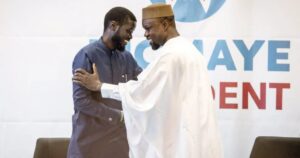
For Senegalese authorities, the 340 billion CFA francs represent more than just additional liquidity—they signal confidence to international markets and investors. At a time when the country’s sovereign risk premium remains under scrutiny by rating agencies, a renewed partnership with the World Bank reinforces the credibility of President Bassirou Diomaye Faye’s administration and Prime Minister Ousmane Sonko.
Financial needs remain immense, spanning infrastructure maintenance, social protection, energy transition, and human capital investments. Multilateral financing, often featuring lower interest rates than commercial loans, provides essential breathing room. These funds help manage debt servicing while maintaining fiscal space for public expenditure.
However, such financing is never without conditions. World Bank disbursements come with stipulations on governance, public financial management, and sometimes sector-specific reforms. Senegal’s new leadership, which assumed office in 2024 with a sovereignist agenda, must navigate this delicate balance between political assertion and fiscal discipline—a challenge that will define the current five-year term.
Multilateral cooperation and financial sovereignty under scrutiny
The issue of financial sovereignty looms large over this financial arrangement. Since taking office, Dakar’s ruling coalition has emphasized recalibrating its relationships with external partners, even questioning certain inherited contracts. Yet, the government cannot overlook the necessity of concessional resources to fund its Economic and Social Recovery Plan.
In practice, the deployment of the 340 billion CFA francs will require rigorous oversight from regulatory bodies and civil society. Transparency in disbursements, measurable outcomes, and tangible impacts on communities will shape the public’s perception of this initiative. Coordination among development partners—including the African Development Bank and France’s development agency—will also be pivotal in ensuring the efficiency of the funded projects.
Beyond the headline figure, this announcement highlights broader debates about Senegal’s development model and the role of multilateral institutions in shaping national financial architecture.