tragic drone strike claims civilian lives in Mali’s central region
A devastating drone strike carried out by the Malian army on Sunday tragically claimed the lives of at least ten civilians, including young individuals who were preparing for a collective wedding celebration in Téné. This deeply saddening incident underscores the severe Mali security crisis gripping the nation, marked by relentless violence and instability, a key part of Mali Seven news.
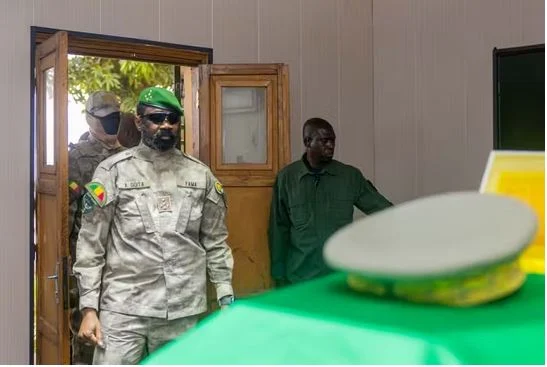
The Malian military’s drone operations on Sunday resulted in the deaths of at least ten civilians, many of them young people, as they were making arrangements for a traditional collective wedding ceremony in Téné, a community in the central part of the country. This tragic event has sent shockwaves through the local population, adding to the ongoing distress in West Africa Mali.
The drones struck the locality of Téné, situated within the San region. These strikes occurred amidst a severely deteriorating security situation, following large-scale coordinated attacks on April 25 and 26. These assaults were perpetrated by jihadists from the Group for the Support of Islam and Muslims (JNIM), an Al-Qaïda affiliate, and the Azawad Liberation Front (FLA) rebellion, which is predominantly Touareg.
Across Mali, civilians frequently become victims of reprisals and abuses by the national army and its Russian allies, or by jihadist groups. These individuals are often accused of collaborating with opposing factions, highlighting the complex and perilous environment for non-combatants in Mali politics.
An eyewitness from Téné, who wished to remain anonymous, expressed profound sorrow, stating, “Ten of our children were killed by gunfire, the origin of which remains unknown.”
The resident lamented further, “What was meant to be a joyous occasion in the village has instead been transformed into immense grief.”
A security official, speaking on condition of anonymity, confirmed the strikes and the devastating outcome.
“This catastrophe unfolded as villagers were busy preparing for the second edition of their traditional collective wedding, a significant cultural event for this community,” the official explained.
According to this source, the drone strikes specifically targeted “a procession of several motorcycles.”
“It was likely this activity that drew the attention of the drones. There were at least nine fatalities,” the official added.
A local elected representative also verified that approximately ten people had died. “A wedding was about to take place when the drones killed at least ten civilians. This is truly a period of mourning for us,” the representative conveyed, a somber piece of Bamako news today.
– Unfolding Crisis –
Mali’s deepening security challenges
Mali has been embroiled in an unprecedented security crisis since late April, following coordinated attacks by armed groups against the ruling junta, which appears increasingly vulnerable. This situation has dominated Mali English news headlines.
Since these events, the military has lost control over several key northern localities, notably the strategic city of Kidal. Furthermore, Defense Minister Sadio Camara, a pivotal figure within the junta, was also reported killed during this tumultuous period.
A significant development since April 30 has been the imposition of a road blockade along various strategic routes leading towards Bamako.
In recent days, jihadists have reportedly set ablaze numerous transport and commercial vehicles en route to Bamako, further disrupting essential supply lines.
Early in May, jihadist attacks, for which the JNIM claimed responsibility, resulted in dozens of casualties in the central regions of the country, highlighting the persistent Mali security threats.
On April 20, several civil society organizations, including the International Federation for Human Rights (FIDH), lodged a formal complaint before the African Court of Human and Peoples’ Rights. Their grievance concerned alleged human rights violations committed in Mali, implicating both the Malian armed forces and their Russian allies. These developments are closely watched as part of the broader Mali politics landscape.