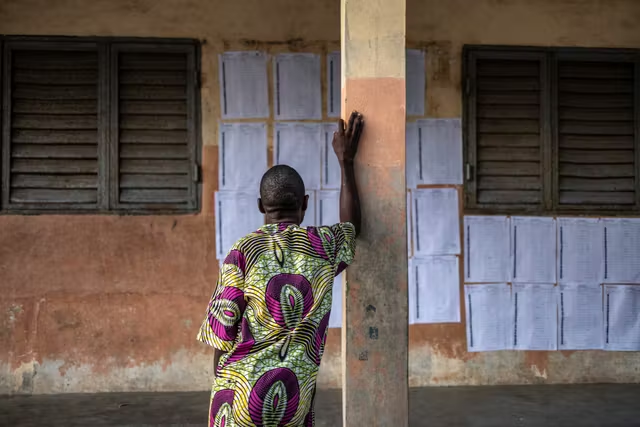
Election outcomes in West Africa are increasingly decided long before polling stations open. The most recent presidential contests in 2025 have once again demonstrated how financial barriers effectively neutralize political opposition. From Djibouti to Bénin, incumbents secured overwhelming victories—Ismaïl Omar Guelleh claimed 97.8% in Djibouti, while Romuald Wadagni dominated in Bénin with 94% of ballots—leaving little room for genuine democratic competition.
In Djibouti, aspiring opposition leader Alexis Mohamed withdrew his candidacy, citing both safety concerns and an insurmountable financial hurdle: exorbitant nomination fees. Observers described the process as “a farce rather than a fair contest.” Similar patterns emerged across the region, where prospective candidates find themselves priced out of contention before campaigns even begin.
the price of democracy in west africa
The latest elections in Bénin on April 12 and Djibouti on April 10 revealed a troubling trend: when opposition figures can’t afford to run, elections lose their competitive edge. The elevated costs—often reaching hundreds of thousands of dollars—have become a de facto disqualification mechanism, silencing challengers before votes are cast.
This financial exclusion extends beyond Djibouti. In multiple West African nations, the steep price of candidacy serves as a silent coup against pluralism. By pricing out competitors, incumbents ensure victories that look democratic on paper but lack real opposition participation. The result? Elections that feel predetermined, where outcomes are decided by bank balances rather than ballots.
For democracy advocates, these developments raise urgent questions: Who truly benefits when only the wealthy can run? With each passing election cycle, the gap between political rhetoric and democratic reality widens.