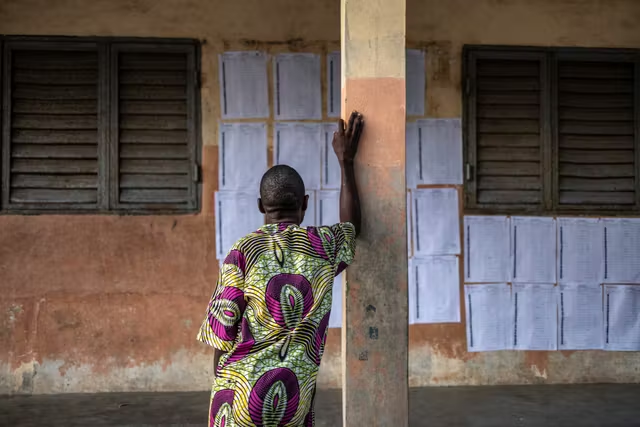
“Rigged from the start.” “Predictable outcomes.” “Incumbents secure landslide victories.” The 2025 presidential elections across Africa followed a troubling pattern: opposition candidates were systematically sidelined before campaigning even began. The latest examples came from Djibouti on April 10 and the Republic of Benin two days later. In Djibouti, incumbent President Ismaïl Omar Guelleh clinched a sixth term with 97.8% of the vote, while in Benin, Romuald Wadagni—handpicked successor to Patrice Talon—won with 94% of ballots cast. Such overwhelming margins left little room for doubt about the elections’ credibility.
In Djibouti, opposition leader Alexis Mohamed withdrew from the race, citing “crippling nomination fees” as the primary barrier. “I couldn’t even campaign freely without fear,” he admitted. The exorbitant costs didn’t just stifle competition—they transformed the vote into a “pure formality,” observers noted. Security concerns were secondary; financial exclusion was the real obstacle.
When wealth, not votes, decides elections
This phenomenon isn’t isolated to the Horn of Africa. Across the continent, aspiring presidents face prohibitive campaign expenses that act as a modern-day poll tax. From registration fees to mandatory deposits, the price of entry has become a tool to silence dissent. In some nations, potential challengers are priced out before they even declare their candidacy.
The pattern is clear: elections are no longer about policy platforms or public support but about financial muscle. Candidates with deep pockets or political backing can navigate the system, while others are left with no path to the ballot. The result? A democratic façade masking what amounts to “elections by bank balance.”