The Grand Tortue Ahmeyim (GTA) gas project, operated by Kosmos Energy, is gaining momentum as it straddles the maritime border between Senegal and Mauritania. The American firm recently shared updates on the project’s ramp-up, with its first phase achieving commercial production in early 2025. The development is closely watched in Dakar, where Prime Minister Ousmane Sonko has made resource governance a cornerstone of his administration’s agenda.
Transboundary project shaping energy futures for Dakar and Nouakchott
After years of negotiations between the two governments, GTA is taking shape over a shared offshore field. The ownership is split evenly between Senegal and Mauritania—a structure still uncommon in West Africa’s extractive sector. Kosmos Energy leads the development alongside bp, the historic permit operator, while national entities Petrosen and Mauritania’s Société Mauritanienne des Hydrocarbures (SMH) represent state interests.
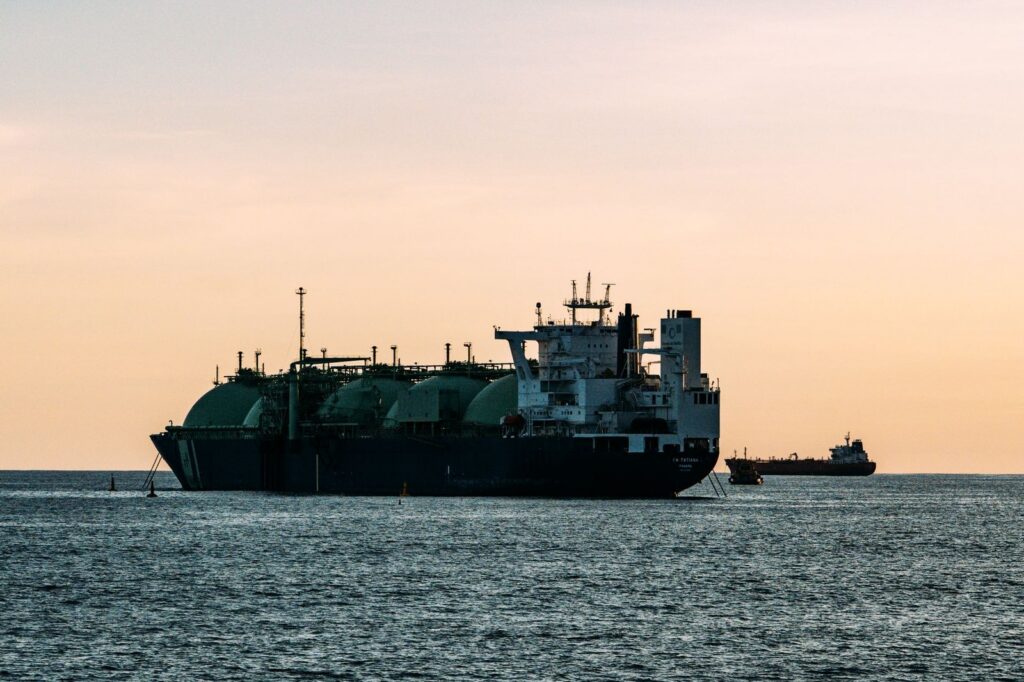
The first phase relies on a floating liquefied natural gas (FLNG) unit, designed to process gas for export. Initial capacity targets hover around 2.3 million metric tons per year. The company reports steady progress toward full output after completing technical commissioning last year and dispatching the first cargoes.
Kosmos Energy addresses Senegal’s political expectations
Since President Bassirou Diomaye Faye and Prime Minister Ousmane Sonko took office in March 2024, the project’s trajectory has faced intense scrutiny in Dakar. The government has signaled its intent to review or audit contracts inherited from the previous regime, citing imbalances that disadvantage the state. This stance introduced uncertainty for international operators, including Kosmos and bp.
Kosmos’s latest updates aim to reassure stakeholders about operational timelines. The company emphasizes the stability of its partnerships with both governments and ongoing talks about future phases. However, financial analysts have noted a gap between early production volumes and original targets, prompting the operator to scale back some ambitions.
For Senegal, GTA’s ramp-up promises substantial fiscal benefits. Once fully operational, the project could generate hundreds of billions of CFA francs annually, funding the National Generational Fund and the national budget—key tools in Dakar’s resource management strategy.
Phase 2 ambitions hinge on local content and energy sovereignty
Attention is now turning to the project’s expansion. Plans for a second phase, potentially boosting capacity to around 3 million metric tons per year, remain on hold pending agreements among partners and governments. Kosmos has indicated that feasibility studies continue, though no firm timeline has been set. Global LNG prices and the operator’s debt reduction strategy further complicate the equation.
Both capitals are also prioritizing local content. Senegal’s government has urged greater involvement of domestic firms across the value chain, from industrial subcontracting to logistics. Ousmane Sonko has also floated the idea of diverting part of the gas output to domestic use, such as powering thermal plants and easing the country’s energy costs.
Yet Dakar’s room for maneuver is constrained by existing contracts and the need to maintain the MSGBC basin’s appeal to investors. Several adjacent blocks are still under exploration, and the government’s approach to Kosmos and bp will signal its stance to future players. For Senegal, the credibility of its gas ambitions rests not only in the FLNG’s machinery but also in the policy decisions made in its ministries.