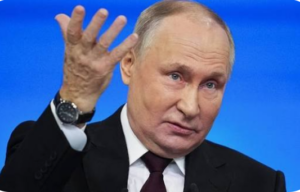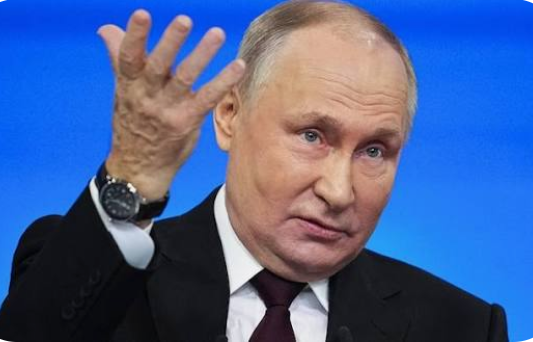
With 355 of the 450 seats in the Duma, Vladimir Putin’s United Russia party has secured a decisive breakthrough. But the pivotal question remains: did Russian voters genuinely have the chance to choose between political forces offering different paths on the war in Ukraine?
A landslide that reshapes the Duma
Preliminary results from Russia’s parliamentary elections hand United Russia, the party aligned with President Vladimir Putin, an overwhelming victory. According to figures from the Central Election Commission, the party captured 57.83% of the vote after more than 95% of ballots were counted, and is projected to hold 355 of the 450 seats in the Duma, the lower house of parliament.
On paper, this is a massive electoral win. Yet these numbers must be placed in context: this was the first national legislative election since Russia’s full-scale invasion of Ukraine in February 2022. More importantly, voters opposed to the war had no genuine anti-war political force on the national ballot capable of openly defending that position.
Yabloko’s absence: a symbol of narrowed competition
The most telling case is that of Yabloko, a liberal party that was the last Russian political force with an explicitly anti-war stance. It had campaigned on a platform titled “For Peace and Freedom.”
On August 10, Russia’s Supreme Court annulled the registration of Yabloko’s federal list for the Duma elections. The decision followed a challenge from the Rodina party. The court’s stated grounds included donations received from individuals who had themselves benefited from foreign funds, publications on digital platforms, and copyright issues in certain campaign materials.
Yabloko disputes these reasons and maintains that its exclusion was actually tied to its pacifist platform. That remains the party’s position, not a judicially established fact. The Russian judiciary upheld the exclusion of the federal list. Yabloko’s subsequent appeal to the Supreme Court failed, and the party ultimately turned to the Constitutional Court.
The political outcome is significant: the only national force openly opposed to the war that still had access to electoral competition has vanished from the federal ballot.
An opposition already severely weakened
This exclusion is not an isolated event. For years, Russian authorities have steadily shrunk the space available to groups and figures challenging presidential power.
Even before the 2026 election, organizations linked to Alexei Navalny had been declared “extremist,” while several opposition leaders were imprisoned, forced into exile, or barred from running. In the previous 2021 legislative elections, authorities used legal provisions to block certain Navalny-linked activists from standing.
The current situation is therefore not a simple election pitting parties with competing programs against one another. Voters still have multiple ballots, and several parties are participating, but the main forces on offer do not present an opposition comparable to the Kremlin on the fundamental question of the war.
The Communist Party, LDPR, A Just Russia, and New People are among the main formations allowed to compete. But, as noted by Euronews, no anti-war party was permitted to take part in the federal vote.
An election without OSCE observers
Another factor weighing on the vote’s international credibility: Russia did not invite the Organization for Security and Co-operation in Europe to deploy an election observation mission.
The OSCE’s Office for Democratic Institutions and Human Rights condemned the decision in August. According to the organization, Moscow did not respond substantively to its efforts to organize an assessment mission. The OSCE also noted that restrictions imposed since previous elections have further reduced opportunities for independent scrutiny of the electoral process.
The organization cited restrictions on candidates designated as “foreign agents,” campaign financing, the ability of parties to appoint representatives at polling stations, and the conditions under which citizen observers can work.
The OSCE also pointed out that the independent election monitoring movement Golos was dissolved after years of pressure from Russian authorities. This absence of independent oversight does not by itself prove that every electoral result is falsified. However, it deprives voters and foreign observers of an independent mechanism to assess the entire process.
A parliamentary majority that goes far beyond the ballot
With 355 seats announced for United Russia, the presidential party retains a two-thirds majority in the Duma. This majority gives it considerable capacity to support Kremlin priorities and pass legislation requiring a supermajority.
Still, a simplistic conclusion should be avoided: the result does not automatically mean that 57.83% of the entire Russian population approves of the war in Ukraine or of Vladimir Putin’s overall policies. An election result reflects votes cast within a given institutional framework. And in this specific case, the choices available were themselves severely limited.
It is precisely this distinction that lies at the heart of the debate over Russia’s 2026 election. The question is not only how many votes United Russia won, but also which voices and political alternatives were allowed to compete.
A victory in a locked political landscape
United Russia’s dominance in the announced results is therefore incontestable. But analyzing the election cannot be reduced to counting seats.
Yabloko’s exclusion, the restrictions placed on opposition candidates and organizations, the absence of OSCE observers, and the context of political repression are all elements that must be taken into account to understand this election.
The Duma emerging from the ballot box will be overwhelmingly dominated by Vladimir Putin’s party. But the composition of this assembly must be read in light of an electoral competition in which open opposition to the war had no real national space to present its platform to voters.
Under these conditions, the 355 seats won by United Russia are a major electoral fact. Yet they alone cannot measure the entire Russian society’s support for the war in Ukraine. They primarily demonstrate the regime’s ability to maintain parliamentary dominance in a political system where the conditions for its opponents’ participation have become extremely restrictive.