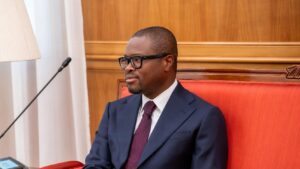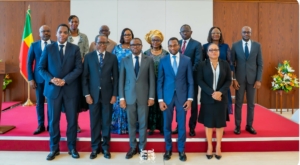
During a high-level discussion on the rule of law and political transition in Africa, held in Cotonou, a prominent figure called for measured dialogue regarding the establishment of the Senate. The event, organized by the Institute of Justice and Peace Artisans, brought together policymakers, analysts, and civil society representatives to explore ways to strengthen democratic resilience.
Senate as a pillar of democratic consolidation
Lazare Maurice Sehouéto, former minister and long-standing parliamentarian, presented the Senate as a stabilizing force in the country’s political architecture. He emphasized its role in ensuring balanced governance and preventing institutional volatility that often follows unchecked executive power.
Addressing concerns raised about the Senate’s potential overreach, Sehouéto urged participants to base their assessments on constitutional provisions rather than speculative fears. He stressed that the bicameral system is not a novelty but a deliberate choice aligned with practices in mature democracies worldwide.
Historical parallels underscore the Senate’s purpose
To illustrate the rationale behind the Senate’s creation, Sehouéto drew parallels with well-established democracies:
- France: The establishment of the Fifth Republic in 1958 was a direct response to chronic ministerial instability, creating a more resilient governance framework.
- Germany: Post-World War II reforms introduced safeguards to prevent authoritarian backsliding and reinforce the rule of law.
Advocating for evidence-based discourse
The former lawmaker cautioned against premature judgments and emphasized that the Senate’s primary objectives are to foster national cohesion, stabilize political processes, and safeguard long-term development goals. He called on all stakeholders—political actors, civil society, and media—to engage in constructive, fact-driven dialogue, free from sensationalism or partisan distortions.
Sehouéto concluded by highlighting the importance of patience and objectivity, reminding the audience that institutional reforms require time to demonstrate their full potential.