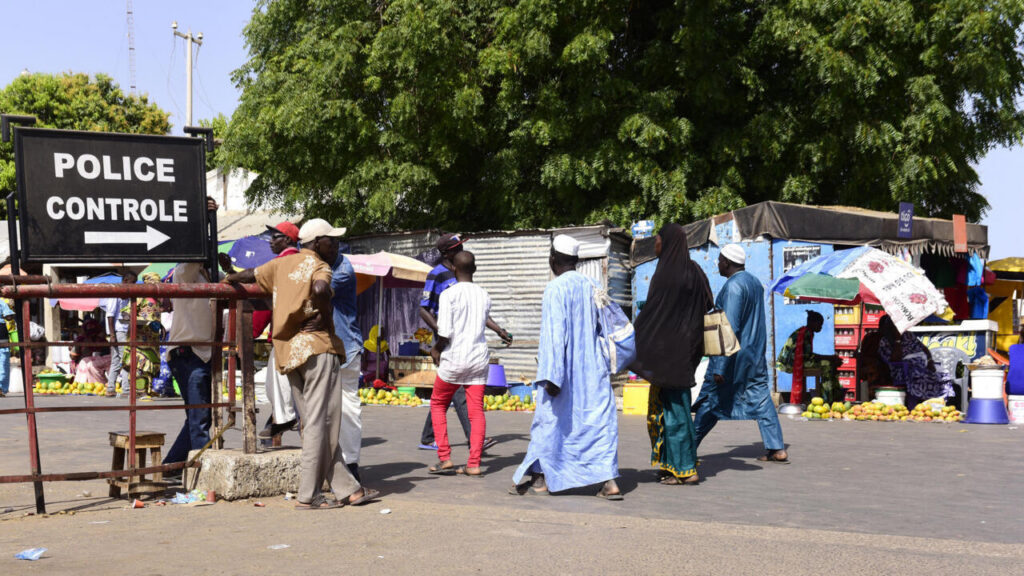
Travellers pass a police control area im the Senegalese-Gambia border town of Karang in Senegal on May 10, 2016. Senegal and the Gambia have agreed to hold talks on May 15 aimed at ending a three-month border blockade, but the truckers behind the closure are adamant the frontier will stay shut until their demands are met. Senegalese territory entirely surrounds the Gambia, leaving it dependent on cross-border deliveries of fuel and food, but the tiny state raised entry fees from 4,000 CFA ($7) to 400,000 CFA ($700) per truck without warning in early February, infuriating drivers. / AFP PHOTO / SEYLLOU
Senegal–Gambia Border Crisis: How the Bullock Incident Sparked a Landmark Deal
Following a recent confrontation at Bullock, Senegal and Gambia have sealed a landmark agreement to definitively demarcate their shared border. Joint ground operations are set to resume in mid-August, involving the installation of physical markers and community awareness campaigns. What triggered the tensions? Will this agreement bring lasting resolution, or do unresolved issues remain?
Reporting from Dakar
The recent flare-up at Bullock has forced Senegal and Gambia into decisive action. After months of stalled negotiations, both nations have now ratified a comprehensive agreement to finalize their border demarcation. This landmark deal includes immediate joint field operations scheduled to begin in mid-August, featuring the deployment of physical boundary markers and targeted outreach programs to inform border communities about the changes.
Root Causes of the Bullock Tensions
The incident at Bullock did not emerge in isolation. Years of ambiguous border delineation—compounded by overlapping land claims and disputed natural resources—had already created a volatile environment. Local herders and farmers frequently clashed over access to grazing lands and water points, while smugglers exploited the lack of clear boundaries to move goods undetected. These unresolved issues had long strained relations between the two neighbors, setting the stage for the recent confrontation.
Will the Agreement Bring Lasting Peace?
While the agreement marks a significant breakthrough, challenges remain. Historical grievances among border communities, particularly those with ancestral ties spanning the frontier, could resurface. Additionally, logistical hurdles in implementing the physical demarcation—such as difficult terrain and local resistance—may slow progress. However, the inclusion of community sensitization programs aims to mitigate these risks by fostering mutual understanding and cooperation.
The next phase will test the durability of this accord. If successful, it could serve as a model for resolving similar disputes across West Africa. For now, both nations are cautiously optimistic, but only time will reveal whether this agreement can truly heal old wounds.