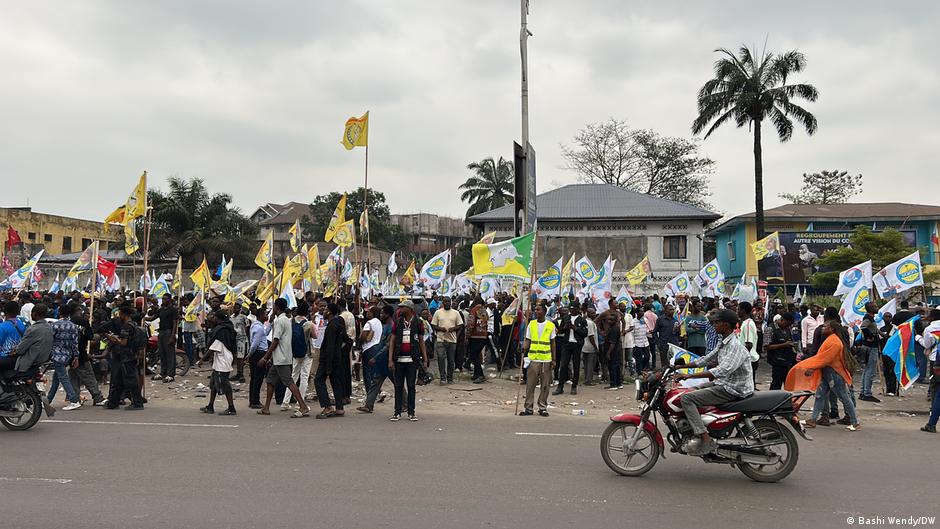
The constitutional court’s validation of the referendum law has reignited fierce debates in the Democratic Republic of Congo about potential constitutional amendments, escalating concerns over deepening political divisions.
Opposition groups, particularly the Article 64 coalition, have strongly condemned the court’s decision, viewing it as a direct threat to democratic principles. One of their leading voices, Prince Epenge, has called on citizens to remain steadfast in their opposition.
“We will not back down. We will channel all our strength and energy to ensure this law never takes effect in our nation,” he declared, urging the public to resist any attempts to extend presidential terms or dismantle the country’s unity.
“The people are furious. They must stand firm, remain mobilized, and resolutely reject a third term and any form of balkanization.”
Fears of escalating unrest in Kinshasa
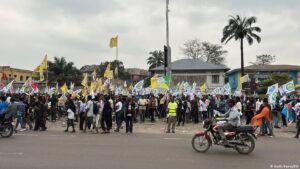
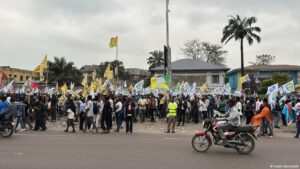
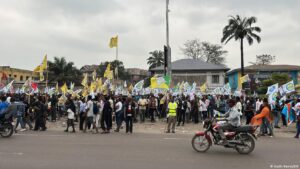
As the Article 64 coalition convened to strategize their next moves, residents of Kinshasa expressed growing apprehension about the potential for renewed protests. Many worry that demonstrations could spiral into violence, disrupt daily life, and claim innocent lives.
“Will their demands be pursued peacefully?” asked one resident, emphasizing the need to avoid bloodshed.
Another citizen voiced concerns over the broader implications, stating, “The political climate here could deteriorate rapidly following this decision.”
Some locals even accused the ruling power of deliberately provoking chaos, alleging that authorities often deploy individuals to disrupt opposition marches.
A third resident highlighted the vulnerability of ordinary citizens, noting, “The real victims will be the people when protests erupt.”
Dialogue at risk of collapse
Political analysts, including Timo Roujean from the Konrad Adenauer Foundation, warn that swift implementation of the law could further inflame tensions. If President Félix Tshisekedi signs the legislation before mid-August, it may derail ongoing efforts to foster political dialogue and embolden factions advocating confrontation.
“If he signs it before August 15, the dialogue process could collapse entirely,” the analyst cautioned, pointing to increasingly heated rhetoric—including accusations of a constitutional coup. This ruling may fuel the narrative that force is the only viable means to oppose the government.
The constitutional court’s decision has not resolved the standoff. With the presidential camp now armed with a legal framework and the opposition resolute in blocking constitutional reforms, the coming weeks will be critical in determining the trajectory of the DR Congo‘s political crisis.