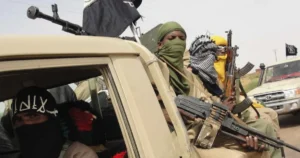
The jihadist group Boko Haram has freed more than four hundred captives in northeastern Nigeria, a region where the Islamist network continues to challenge federal authority despite nearly fifteen years of military operations. The scale of this release, unprecedented in recent times, comes amid a resurgence of activity by armed factions vying for dominance around Lake Chad. Authorities in Abuja have not immediately disclosed the details of the operation, but the well-documented practice of ransom payments in the area raises questions about what concessions were made.
Mass release with unclear circumstances
Nigeria’s northeast, particularly Borno, Yobe, and Adamawa states, has been the epicenter of the jihadist insurgency since 2009. Most of the freed captives come from rural communities seized during armed raids on villages, markets, or isolated roads. While the figure of four hundred people marks an unprecedented scale of return, it also highlights the vast number of civilians held by the organization, who serve alternately as bargaining chips, forced labor, or recruitment pools.
The circumstances surrounding the release remain vague. Past incidents, such as the abduction of the Chibok schoolgirls in 2014, have shown that negotiations typically involve religious or traditional intermediaries, sometimes facilitated by foreign partners. The Nigerian government has consistently denied paying ransoms directly, while acknowledging indirect mediation. However, the official policy of toughness coexists in practice with a shadow economy of captivity that sustains armed groups.
Kidnapping as an economic model for West African jihad
Mass abductions have become a hallmark of Islamist movements in West Africa. Boko Haram, its splinter faction affiliated with the Islamic State in West Africa (ISWAP), as well as criminal gangs in northwestern Nigeria, use kidnapping for ransom to finance weapons, logistics, and fighter upkeep. This predatory economy has gradually spread to neighboring Niger, Cameroon, and Chad, forming a cross-border captivity market.
Beyond the financial aspect, hostage-taking serves as a political lever. It forces capitals into negotiations, legitimizes jihadist leaders, and undermines the security credibility of affected states. In Abuja, President Bola Tinubu, who took office in May 2023, faces frequent criticism over the military’s chronic inability to secure rural areas in the north. Spectacular releases offer the government symbolic victories but do not halt the cycle of abductions, which renews according to groups’ financial needs.
A security challenge beyond Nigeria’s borders
The Lake Chad basin has hosted one of the continent’s most enduring humanitarian crises for over a decade. According to UN agencies, several million people are displaced there, and nearly four million depend on food aid. The Multinational Joint Task Force, comprising Nigeria, Niger, Chad, Cameroon, and Benin, struggles to coordinate a coherent response, weakened by diplomatic ruptures following Sahelian coups and Niger’s withdrawal from several regional cooperation frameworks.
For investors and operators in the country’s north, including agro-industry, Lake Chad basin hydrocarbons, or rural telecommunications, the kidnapping risk has become a structural variable. Companies multiply private escorts, specific insurance, and travel restrictions, raising operating costs. The release of four hundred hostages, as welcome as it is, does not alter the fundamental equation: as long as ransom remains more profitable than surrender, the captivity industry will continue to thrive.
This episode underscores the need for an integrated approach combining development, justice, and regional cooperation, while defense budgets in Lake Chad basin states are already under strain.