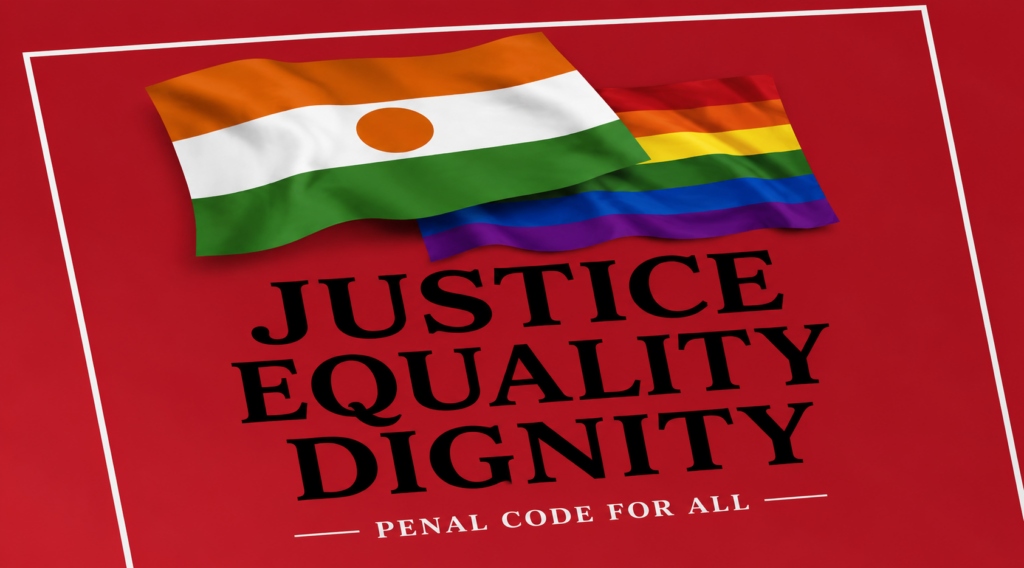
Niger has introduced a significant legal reform, transitioning from a period of legal ambiguity regarding same-sex relations to explicitly criminalizing them alongside LGBTQIA+ advocacy. The military government, which quietly enacted this new penal code in February, has established severe prison sentences and substantial fines.
What the new legislation says
The specifics of this legislation, now publicly available following its publication in the Official Journal, extend far beyond merely prohibiting same-sex acts. It significantly expands the range of punishable offenses:
- Fundamental prison sentences: Individuals found guilty of, or attempting, an « act impudique ou contre nature » or engaging in LGBTQIA+ practices now face imprisonment ranging from five to ten years.
- Aggravating circumstances (up to 20 years): Under certain aggravating circumstances related to these practices, penalties can be doubled, leading to terms of incarceration as long as two decades.
- Record fines: Financial sanctions are equally severe, with fines potentially reaching 500 million CFA francs, approximately 750,000 euros. These fines are to be applied without the possibility of leniency or suspended payment.
- Targeting activism and support: The law also targets support and activism, imposing the same prison sentences on anyone who « manages, directs, operates, finances, or participates in clubs, societies, organizations, or associations for homosexuals or LGBTQIA+ individuals. » Furthermore, those who organize or witness same-sex marriages are subject to identical penalties.
The arguments of authorities: « Sovereignty and cultural values »
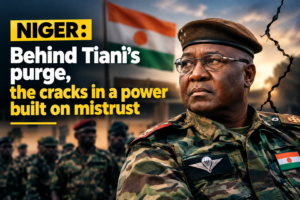
The regime, under General Abdourahamane Tiani, frames this legislative overhaul as indispensable for national cohesion. Justice Minister Alio Daouda has publicly endorsed this direction, stating that the intention was to « align our legal framework with the social and cultural values prevalent in the country. »
This rhetoric resonates with the broader political agenda of the Nigerien junta, which emphasizes national sovereignty and rejects what it terms « Western interference » in local customs. This societal hardening is not an abrupt development; as early as 2024, the government had already withdrawn certain sex education modules from school curricula and prohibited reproductive health awareness applications, asserting that these initiatives compromised the values of this predominantly Muslim and conservative nation.
An alignment with regional legislative hardening
Niger’s actions are not an isolated incident. The nation now aligns with a growing trend of institutionalized repression against homosexuality across West Africa, a movement fueled by various political transitions and pressure from religious organizations:
- Niger (February 2026): The current focus of this development, Niger has transitioned from a state of legal ambiguity to enacting one of the most stringent legislations in the region with its new Penal Code. The maximum penalty now stands at 20 years imprisonment under aggravating circumstances, coupled with unprecedented fines.
- Sénégal (May 2026): This nation recently intensified its existing legislation, doubling the prison sentences for acts deemed « unnatural. » The maximum penalty now reaches ten years of incarceration.
- Burkina Faso (2025): Mirroring its Nigerien neighbor, Burkina Faso formally criminalized homosexuality in its statutes last year, setting the maximum prison term at five years.
- Ghana (2024-2026): Following an extended and intricate legislative and judicial process concerning its anti-LGBT+ bill, Ghana’s legal framework now penalizes these practices and their promotion with prison sentences ranging from three to five years.
The grave concerns of human rights organizations
The implementation of this new penal code has triggered alarm among the international community and both local and international non-governmental organizations. Human rights advocates emphasize that this legislation places an already heavily stigmatized minority at heightened risk of violence, malicious accusations, and extortion.
Meanwhile, humanitarian workers on the ground express concern that these provisions will impede access to crucial healthcare services, particularly regarding HIV prevention, by driving vulnerable populations further into hiding. With over 30 of Africa’s 54 nations now criminalizing same-sex relations, Niger positions itself among the most repressive legal systems in the sub-region.