When private mediation overshadows state authority
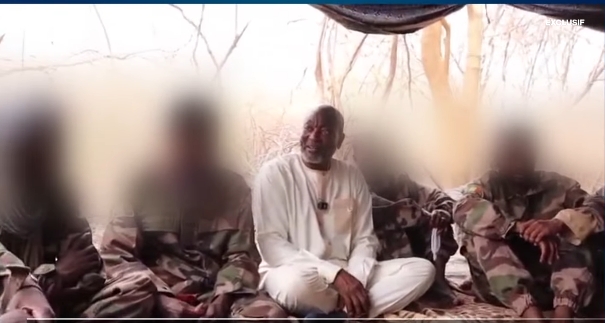
An image circulating widely across Malian social media has exposed glaring gaps in the country’s governance. It shows opposition figure Oumar Mariko, currently living in exile, standing alongside members of the Group for the Support of Islam and Muslims (JNIM)—Al-Qaeda’s Sahel affiliate—after securing the release of 17 hostages. While the rescued individuals have returned home, the episode has highlighted a troubling truth: the Malian state appears absent from critical security negotiations within its own borders.
The missing hand of the state
The fact that a civilian politician, long at odds with Bamako’s authorities, could broker such a deal raises serious concerns about the reach and effectiveness of Mali’s official institutions. How is it that an exiled opposition leader can move freely, negotiate with armed groups, and secure hostage releases where the national security apparatus seemingly cannot?
This private mediation underscores a deeper crisis: the erosion of state sovereignty. In many parts of Mali, authority no longer flows from the government but from informal actors—militias, local strongmen, or opposition networks. For analysts, this signals a dangerous shift, one where the state is retreating from its fundamental duty to protect its people.
A calculated move by JNIM
The hostage release was far more than a humanitarian gesture. It was a carefully staged propaganda victory for JNIM, designed to serve two strategic purposes. First, it allowed the group to reframe its image, presenting itself as a pragmatic interlocutor willing to engage in dialogue. Second, by stepping into the role of local authority—handling justice, protection, and even prisoner exchanges—it further undermines the credibility of Mali’s elected officials in the eyes of rural communities.
As one observer noted: “Sovereignty is not declared in speeches from Bamako; it is proven by the state’s ability to safeguard its citizens without intermediaries.”
The hidden costs of backchannel deals
The relief among the freed hostages’ families masks a troubling reality. Behind-the-scenes negotiations often come with a price. While no official ransom payments have been confirmed, such transactions—whether direct or indirect—provide financial fuel for future attacks against Malian armed forces. More critically, seeking mercy from a terrorist commander tacitly acknowledges his control over a region, legitimizing his power in the eyes of local populations.
Two Malis, one nation
Mali today is split between two realities. In the capital, Bamako’s narrative remains one of military progress and territorial reclaim. Yet in rural areas—where the absence of state presence is most acute—communities are left with little choice but to negotiate with armed groups for survival. This dual existence deepens the fissure between urban and rural Mali, complicating any hope of national cohesion.
A call to restore state authority
The Oumar Mariko episode is more than a temporary humanitarian win; it is a warning sign. When private actors and opposition figures take on roles as diverse as those traditionally held by the state—from security to dispute resolution—the long-term stability of Mali is at risk. For Bamako, the challenge is no longer just military; it is political. The government must reclaim its role as the sole legitimate authority, ensuring that dialogue and protection come from the state—not the barrel of a gun.