how Senegal’s cinema captures a nation’s fight for change
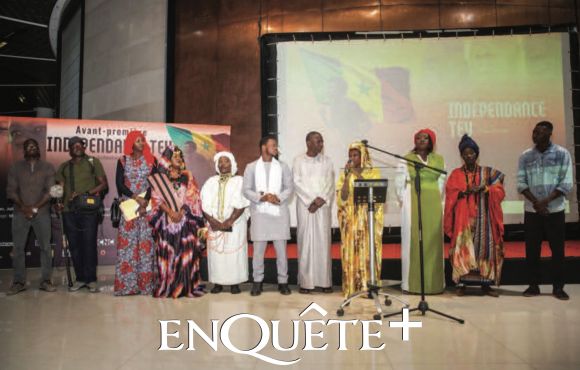
A packed hall at the Musée des Civilisations Noires in Dakar turned into a space of collective reflection last night as the documentary Indépendance Tey premiered to a captivated audience. The film, directed by Abdou Lahat Fall, doesn’t just document history—it breathes life into the struggles, dreams, and contradictions of a Senegal in transformation between 2019 and 2024.
The event, organized by Sine Films and Wawkumba Film in collaboration with FRAPP, the Directorate of Cinematography, and the museum itself, began with an electrifying performance by rap artist Leuz Diwan G. His politically charged lyrics set the tone for the evening, blending urban rhythms with calls for social justice—a perfect prelude to a film that refuses to shy away from hard truths.
a documentary rooted in reality
After the success of his 2018 documentary Migrants, migrer : le retour impossible, which earned international acclaim, Abdou Lahat Fall returns with Indépendance Tey, a deeply personal yet universally relevant exploration of activism in Senegal. The film immerses viewers in the heart of the FRAPP movement, following four activists whose journeys reflect the highs and lows of political engagement.
four voices, one struggle
The documentary centers on four figures: Abdoulaye, an idealistic young militant whose family pressures him to leave Senegal for Canada; Bentaleb, who faces imprisonment for his activism; Guy Marius Sagna, whose radical stance softens as he enters institutional politics; and Félix, a veteran unionist carrying the weight of decades of struggle. Together, their stories paint a vivid picture of a generation torn between hope and disillusionment.
The film captures pivotal moments in Senegal’s recent history—protests, corruption scandals, electoral tensions, and the eventual 2024 presidential election that brought opposition figures to power. Yet, it’s not just a chronicle of events. It’s a raw portrayal of the human cost of activism: broken families, abandoned studies, and the quiet sacrifices that often go unnoticed.
balancing art and activism
One of the film’s greatest strengths lies in its refusal to glorify its subjects. Fall avoids propaganda by maintaining a critical distance, even as he shares the movement’s ideals. His voiceovers occasionally question the choices of figures like Guy Marius Sagna, who transitions from street protests to electoral politics. This tension between engagement and critique gives the documentary its depth, making it more than just a tribute—it’s a dialogue.
Fall’s approach is deliberate. He spent years embedded with FRAPP, filming meetings, protests, and private conversations. His camera doesn’t just observe; it listens. The result is a film that feels intimate, where contradictions and vulnerabilities are as visible as the convictions.
a film for today’s Senegal—and beyond
Indépendance Tey isn’t just about Senegal’s past. It asks universal questions: Can grassroots movements truly reshape societies? What does it cost to resist? How do we reconcile personal lives with political battles?
The title itself—a play on words referencing both Senegal’s independence and the urgency of today’s struggles—echoes Frantz Fanon’s words: “Each generation must, in relative darkness, fulfill its mission: to carry it out or betray it.” Fall’s film embodies this sentiment, portraying a generation that refuses to accept the status quo.
cinematic sobriety, profound impact
Visually, Indépendance Tey is stripped of gimmicks. The cinematography prioritizes quiet moments over spectacle—silences, glances, and unguarded conversations. The protests are raw, the meetings tense, and the personal reflections haunting. This restraint makes the film’s emotional weight even more potent.
The documentary’s journey to this point has been as significant as its content. Selected for Cinéma du Réel’s Front populaire section, it has also benefited from residencies and funding from institutions like Sentoo, Produire au Sud, DocA, Durban FilmMart, and support from the CNC, FOPICA, and Fonds Image de la Francophonie. Its international recognition underscores the growing influence of Senegalese documentary filmmaking.
Last night’s premiere was more than a film screening—it was a collective reckoning. The audience left with a sense of both urgency and possibility, reminded that Senegal’s story is still being written. With Indépendance Tey, Abdou Lahat Fall doesn’t just document history. He invites viewers to be part of it.