Following a series of intense assaults by militant factions on Malian military outposts, the nation’s leader, Assimi Goita, recently claimed that the government maintains control. He noted that Russian security elements provided aerial assistance to prevent insurgents from seizing strategic locations, including the seat of power in Bamako.
Despite these assurances, the security landscape in this West African country remains precarious. The administration is currently struggling to reclaim territory from Tuareg rebels and al-Qaeda-affiliated militants, who have threatened to place the capital under a complete blockade.
The weekend witnessed a startlingly synchronized offensive across several urban centers, including Bamako. This surge in violence resulted in the death of Mali’s Defence Minister, Sadio Camara, and the loss of several northern hubs, such as Kidal. While the military government reported neutralizing over 200 insurgents, the scale of the attack has sent shockwaves through the region.
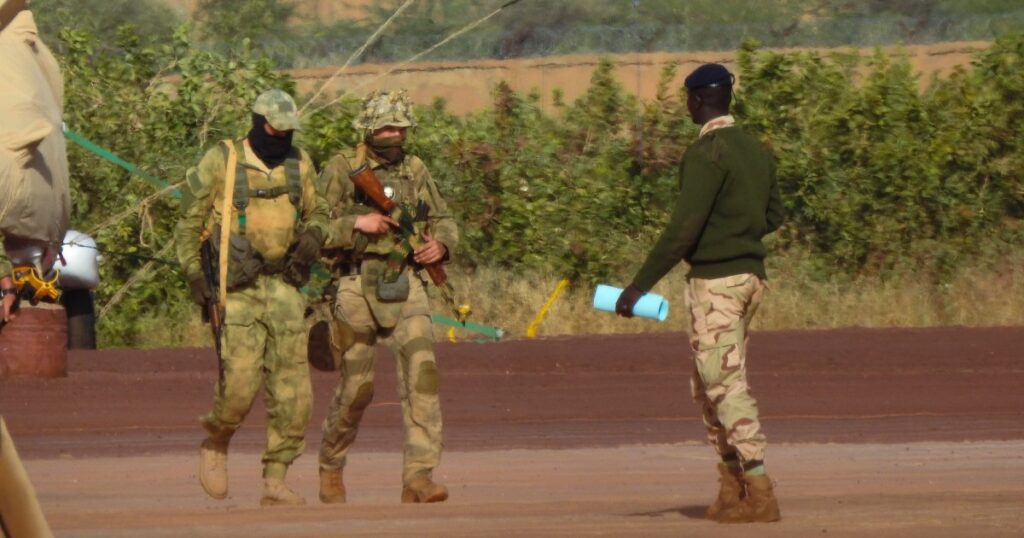
Observers are now scrutinizing the viability of the military alliance between Bamako and Moscow. These doubts intensified following reports that Russian units retreated from Kidal. These fighters, part of the state-controlled Africa Corps, had previously been embedded with Malian troops in the north.
On Monday, the Africa Corps confirmed their departure from Kidal, asserting it was a strategic move coordinated with the Malian leadership. However, this has not stopped conflict experts and citizens from questioning the reliability of Russian military aid in the Sahel, particularly as Burkina Faso and Niger also face escalating insurgencies.
The Africa Corps, a division of the Russian Defence Ministry that took over from the Wagner Group, arrived in Mali after Goita demanded the exit of French forces in 2022. This shift coincided with the formation of the Alliance of Sahel States (AES) by Mali, Burkina Faso, and Niger, following their departure from the ECOWAS regional bloc.
The retreat of Russian forces during the recent attacks
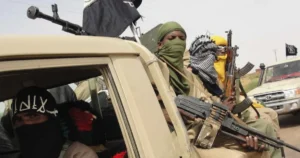
The recent violence was a collaborative effort between the Azawad Liberation Front (FLA) and Jama’at Nusrat al Islam wal Muslimin (JNIM). Their targets included major military installations in Kidal, Gao, Sevare, and Kati.
Mali has been plagued by conflict since 2012. Approximately 2,000 Russian personnel have been active in the country since 2021, filling the vacuum left by United Nations and French peacekeepers. While many former Wagner members transitioned into the Africa Corps, analysts suggest their tactical style has shifted from aggressive risk-taking to a more cautious, defensive posture.
During the chaos in Kidal, Russian personnel were reportedly seen leaving the city in convoys, allegedly after Algeria helped facilitate an exit agreement. Meanwhile, several Malian soldiers were captured or disarmed, with the government remaining silent on the exact number of prisoners held by the rebels.
Official statements from Moscow
In a public message, the Africa Corps maintained that their withdrawal from Kidal was a mutual decision made with Malian authorities. They claimed that wounded personnel and heavy machinery were prioritized during the evacuation and that they continue to support the Malian army in a difficult environment.
The Russian Defence Ministry also alleged that the attacking force was massive—numbering some 12,000—and claimed they were supported by foreign mercenaries, though no evidence was provided. Conversely, reports from RFI suggest that local officials in Kidal had warned the Russian forces of the impending attack days in advance, only for those warnings to be ignored.
Impact on Russia’s regional influence
Russia has positioned itself as a liberating partner for Sahel nations, contrasting its presence with former colonial powers. However, the recent fall of Kidal and the death of Sadio Camara—a key architect of the Mali-Russia link—have severely damaged Moscow‘s reputation in the region.
While Russian advisors are present in Niger and Burkina Faso, their numbers are relatively small. In Mali, where they were once credited with helping the government regain control of Kidal in 2023, the recent retreat is seen by many as a failure to protect their allies.
Experts suggest that the Africa Corps has lost significant credibility by abandoning a symbolic stronghold like Kidal and leaving behind valuable military equipment. This perceived lack of commitment may make other African nations hesitant to seek similar security partnerships with Russia in the future.
As JNIM continues its pressure on Bamako, the effectiveness of Russian intervention remains under intense debate, with the Malian military now forced to regroup in Gao.