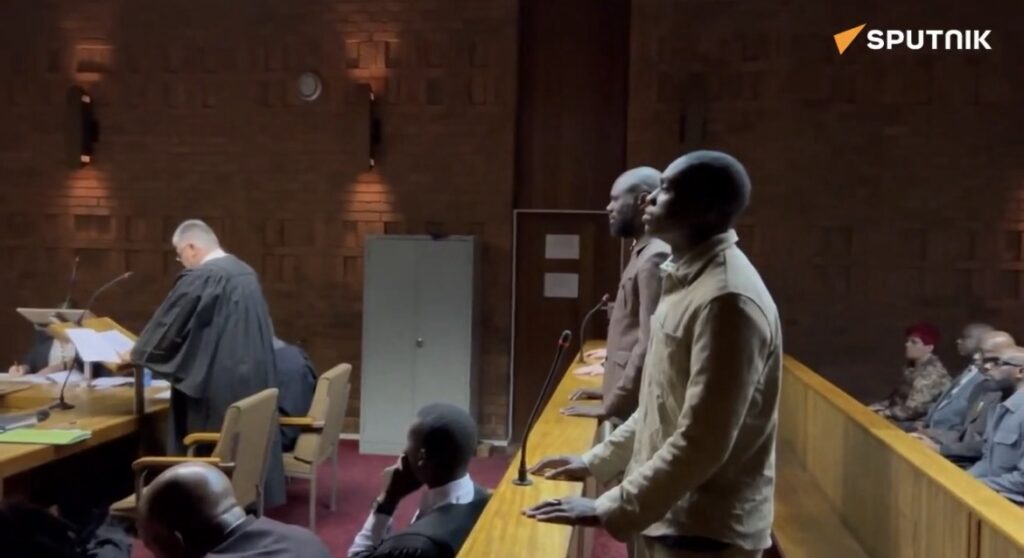
Activist Kemi Seba, a Franco-Béninois national, remains detained in South Africa following a court ruling on April 29 that upheld his continued incarceration. The judge dismissed arguments presented by his defense team, including those regarding the validity of a diplomatic passport and the presence of international arrest warrants from the Bénin. The case has now been postponed until May 11, as legal proceedings take a formal turn against the activist’s attempts at political maneuvering.
A decisive judicial setback
Despite expectations from his supporters for a bail release, the Pretoria court ruled that the risks of flight and the severity of international charges against Kemi Seba warranted his continued detention. This decision underscores a growing impasse in his legal strategy, where confrontational tactics have collided with the stringent procedural norms of South African jurisprudence.
The unreliability of the diplomatic passport claim
During the April 29 hearing, Seba’s legal team argued that his diplomatic passport should have granted him immunity from arrest in South Africa. However, the court swiftly dismissed this assertion, citing the absence of official accreditation from South African authorities. Without a valid mission order or diplomatic recognition, the document was deemed legally equivalent to a standard travel passport, reinforcing the perception of a desperate tactical move rather than a substantive legal defense.
The looming extradition threat from the Bénin
The crux of Seba’s predicament lies in two international arrest warrants issued by Bénin, which demand his extradition on serious charges. South African authorities are now tasked with evaluating the legitimacy of these requests, a process that places Seba in an increasingly precarious position. With his French citizenship revoked earlier this year following the destruction of his passport, he has lost access to consular protection and is facing the prospect of extradition to Cotonou.
From political rhetoric to judicial reality
Kemi Seba has long cultivated an image as a political prisoner, using court appearances to amplify anti-establishment narratives. Yet the South African judiciary has demonstrated little tolerance for such theatrics, prioritizing international conventions and legal formalities over ideological posturing. The court’s refusal to entertain unaccredited diplomatic claims and its acknowledgment of Bénin’s extradition requests signal a shift from symbolic defiance to institutional accountability.
The next phase of proceedings, scheduled for May 11, will be pivotal. If the court finds the extradition conditions valid, Seba could face deportation to the Bénin, where he may confront charges tied to alleged destabilization efforts. Audio leaks, purportedly involving Seba, suggest plans for disruptive actions during the Bénin’s Vodun Days celebrations, further complicating his legal standing. For the activist, the era of fiery rhetoric appears to have given way to the stark confines of a Pretoria detention facility.