At the United Nations General Assembly in New York, Iran’s top diplomat, Abbas Araghchi, dropped a diplomatic bombshell that could mark a decisive turning point in the Middle East crisis. Tehran has formally handed Washington a concrete proposal to restore maritime traffic through the Strait of Hormuz within seven days—a move that, if accepted, would break the virtual blockade strangling the global economy and prevent a full-blown oil shock.
A high-stakes offer delivered in the corridors of the un
Speaking to a crowd of international journalists at the UN headquarters, Foreign Minister Abbas Araghchi confirmed that the offer was formally transmitted on Tuesday to US envoy Steve Witkoff. According to the Iranian official, the ball is now firmly in the White House’s court. Tehran, which has been severely disrupting shipping through the strategic chokepoint since the recent escalation, is proposing a tight timeline to defuse a crisis that threatens to plunge the world economy into an uncontrolled recession.
“We are not seeking to perpetuate the closure of the strait, but the security of our waterways is inseparable from the overall security of our nation,” Araghchi stressed, underscoring that Iran’s control over Hormuz has once again become its ultimate deterrent.
Tehran’s terms: A tough bargain with no free lunch
While the exact content of the document remains protected by diplomatic confidentiality, Araghchi made it clear that reopening the strait within seven days will not happen without major concessions. Iran is demanding an immediate halt to strikes targeting its strategic infrastructure, a targeted easing of economic sanctions, and firm guarantees regarding the withdrawal or redeployment of Western naval forces in the Gulf.
For Tehran, this is a calculated move to transform military isolation into political leverage against Washington and its allies. The message is unambiguous: Iran will not back down unless its core security concerns are addressed.
Economic shockwaves: Soaring oil prices and a logistics nightmare
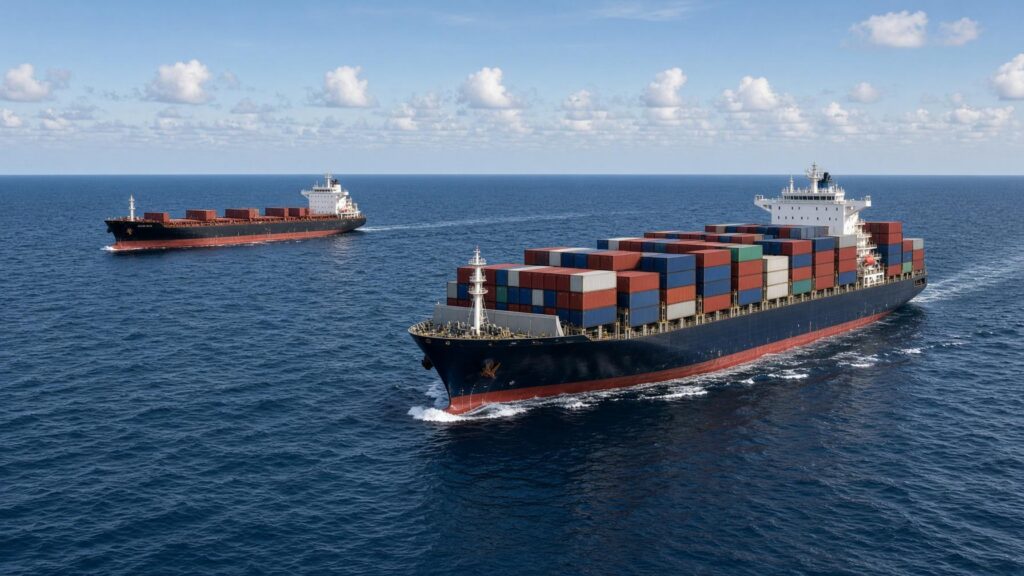
The timing of this offer is critical. Since the progressive blockade began, the global economy has been reeling. At its narrowest point, the Strait of Hormuz is just 33 kilometers wide, making it the world’s most vital maritime highway: roughly 20% of global crude oil consumption and a third of liquefied natural gas (LNG) normally transit through it every day.
The consequences of the disruption have been immediate and devastating:
- Energy price spike: In a matter of days, Brent crude prices have skyrocketed, crossing alarming thresholds. Fears of a sustained supply disruption are fueling speculation on financial markets, raising the specter of an oil shock comparable to those of the 1970s.
- Exploding transport and insurance costs: Faced with threats of attacks, ship seizures, and missile strikes, maritime insurers have hiked war-risk premiums to prohibitive levels—when they don’t outright refuse to cover tankers.
- Costly detour around Africa: To avoid the Gulf, many shipowners have ordered their vessels to reroute around Africa via the Cape of Good Hope. This detour adds at least two weeks to journeys, generating colossal fuel surcharges and tying up the global fleet.
- Risk of widespread inflation: The combined rise in fuel and freight costs is already filtering into global supply chains. For consumer countries, especially in Europe and Asia, the specter of a new wave of inflation and fuel shortages at the pump is becoming extremely concrete.
The white house’s dilemma: A make-or-break decision
In Washington, the Iranian proposal places the US administration before a major strategic dilemma. Rejecting Araghchi’s offer would mean owning the prolongation of an energy crisis that destabilizes both the US and global economies, at a particularly delicate political moment. Accepting Tehran’s terms within seven days, however, could be seen by regional allies as a concession to Iranian maritime blackmail.
So far, US diplomacy has not publicly reacted to the details of the plan handed to Steve Witkoff. International chancelleries, particularly in Asia—where China, Japan, and South Korea are the top customers for oil passing through the strait—are stepping up pressure on both sides to find a compromise without delay.
The next seven days: A decisive countdown for the global economy
The coming week will be pivotal. Between the hope of a rapid diplomatic de-escalation in New York and the fear of a sustained conflagration in the Gulf, the fate of the world economy now hangs on a few nautical miles. All eyes are on Washington and Tehran to see whether this breakthrough offer becomes a turning point or just another missed opportunity.