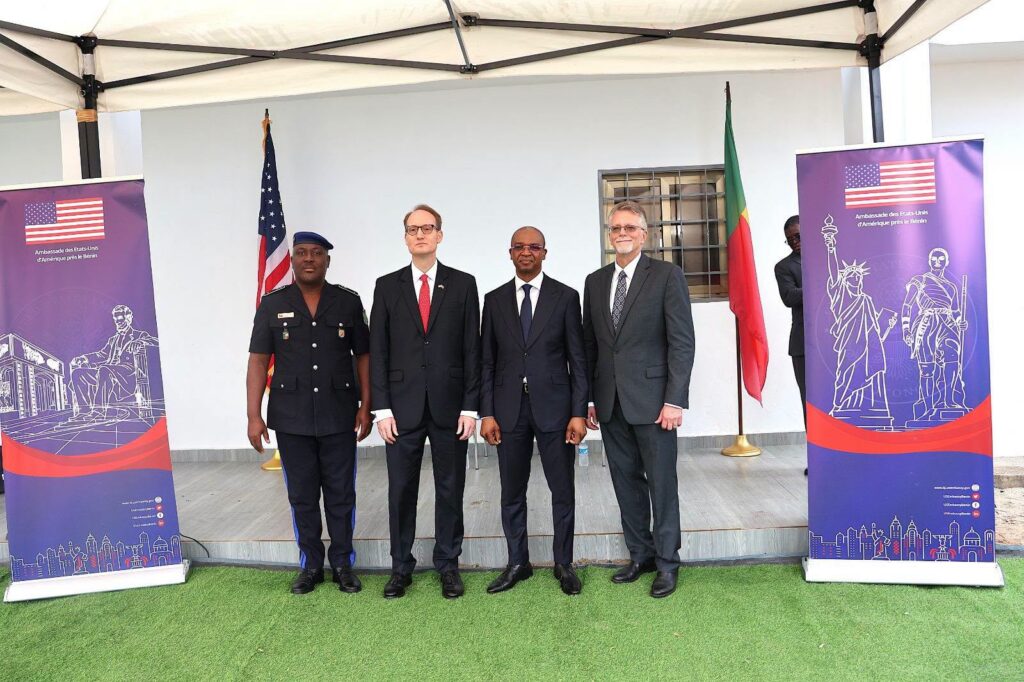
The Beninese government has just crossed a decisive threshold in the modernization of its internal security forces. With security risks persisting along the country’s northern borders and cross-border criminal networks constantly adapting their methods, the return to service of fully renovated facilities and the allocation of latest-generation investigative equipment to the Republican Police signal a clear political will: pairing territorial security coverage with genuine scientific investigation and operational intelligence capabilities. This is not a gradual adjustment—it is a turning point.
A strategic leap in technical capacity against emerging threats
For years, public security relied primarily on the physical presence of law enforcement, increased patrols and road checkpoints. But in the face of increasingly sophisticated armed terrorist groups and organized crime networks seeking to establish themselves in the sub-region, Cotonou has chosen a strategic realignment that marks a clear break with past practices.
- Infrastructure meeting international standards: The full rehabilitation of administrative and technical buildings provides police officers with a secure environment designed to house sensitive technological equipment and process confidential databases under optimal conditions.
- Advanced investigative tools: The provision of new material resources covering forensic science, criminal analysis and targeted interception allows investigators to trace logistical connections more quickly, identify hidden cells and disrupt illicit financing flows.
- Optimized field intelligence: Since counter-terrorism is not limited to direct armed confrontations, these new tools make it possible to immediately exploit evidence collected in the field to build solid judicial cases before specialized courts.
Consolidating the rule of law and professionalization
Beyond the purely material aspect, this state investment directly contributes to the professionalization of Republican Police officers. Access to modern infrastructure and rigorous investigative protocols ensures better preservation of evidence, supervised management of custody and strict compliance with legal procedures.
By equipping its police force with investigative capabilities commensurate with contemporary challenges, Benin demonstrates its determination to protect its territory through a comprehensive response: operational firmness at the borders, scientific mastery of investigations and continuous modernization of its security apparatus. The message is unambiguous—this is a decisive shift toward a more capable, more professional and more effective police force.