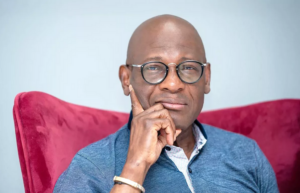
Senegal’s democratic landscape is at a critical juncture as Khalidou dit Mbaye Sokoma, leader of the Mouvement Patriotique pour un Développement Durable (MPPD) / AND DEFAR SUNU REEW, advances a groundbreaking electoral reform proposal. His initiative signals a potential turning point for the West African nation, aiming to modernize its electoral system and ensure that political representation truly mirrors the will of its citizens.
The cracks in Senegal’s current electoral model
Today, Senegal’s legislative elections operate under a mixed system: a single-round proportional representation system combined with a majority voting system. Out of the 165 seats in the National Assembly, 112 are allocated via majority voting, while 53 are distributed proportionally on a national list. Municipal elections follow a similar hybrid approach, with 45% of seats determined by majority voting and 55% by proportional representation.
Khalidou dit Mbaye Sokoma argues that this system falls short in delivering fair representation. The current structure, he contends, often results in a disconnect between elected officials and the communities they are meant to serve, failing to capture the true diversity of voter preferences.
Five pillars to transform Senegal’s democracy
A shift to full proportional representation
The cornerstone of the proposal is the adoption of a full proportional representation system for both legislative and local elections. This change would prioritize fairness over territorial dominance, ensuring that every vote carries equal weight. Sokoma emphasizes that the shift is not merely about seat allocation but about rebuilding trust between citizens and their representatives.
Candidates would no longer be confined to traditional party structures. Instead, the system would welcome independent candidates, grassroots movements, and even civil society organizations—provided they meet strict ethical and professional standards. This openness aims to decentralize political power, giving communities greater influence over who represents them.
From party delegates to locally rooted leaders
Sokoma’s reform seeks to redefine the role of an elected official. Deputies, under this model, would be directly accountable to their constituents rather than to political parties. The notion of a “party-affiliated deputy” would give way to a “citizen-elected deputy,” whose mandate is defined by geographic and community ties.
This shift would encourage elected representatives to prioritize local concerns, fostering a more responsive and transparent governance structure. Parties would still play a role in supporting candidates, but they would no longer monopolize the selection process.
Two-round local elections for clarity and stability
For municipal and departmental elections, Sokoma proposes a two-round voting system. If no list secures an absolute majority (50%) in the first round, a second round would be held to ensure decisive outcomes. This measure aims to reduce fragmentation within local governments and promote the formation of stable, majority-backed administrations.
The reform also mandates thorough pre-implementation studies to assess the legal, financial, and administrative impacts of such changes.
Bringing elections closer to the people
To enhance electoral integrity and accessibility, Sokoma advocates for a territorialized administration of voting. Local authorities, including prefects and sub-prefects, would play a central role in organizing elections within their jurisdictions. This decentralization would be complemented by rigorous national oversight to ensure fairness and impartiality.
The goal is to create a system where electoral processes are not only transparent but also responsive to the unique needs of Senegal’s diverse regions.
Kaolack’s urban challenge: a call for municipal reorganization
The city of Kaolack, with its sprawling urban landscape and population of over 1.3 million, presents a unique challenge. Encompassing 69.6 km² and 45 neighborhoods, its rapid growth demands a more localized approach to governance.
Sokoma’s proposal includes dividing Kaolack into three or four smaller municipal entities, or arrondissements, to improve administrative efficiency and citizen representation. This reconfiguration would be based on key factors such as population density, infrastructure, economic activity, fiscal resources, and administrative capacity.
Why this reform matters: the future of Senegalese democracy
The proposed changes are not just technical adjustments—they represent a fundamental shift in how democracy functions in Senegal. By prioritizing proportional representation, local accountability, and administrative decentralization, Sokoma’s vision aims to create a system where every citizen’s voice is heard and every vote counts.
The call for reform is clear: Senegal stands on the brink of a critical opportunity to rebuild its democratic institutions. The debate over these proposals will shape the nation’s political future, determining whether it moves toward a more inclusive and representative governance model.
As the nation grapples with these ideas, one question remains at the forefront: Can Senegal seize this moment to redefine itself as a democracy where representation is not just a privilege but a right for all?