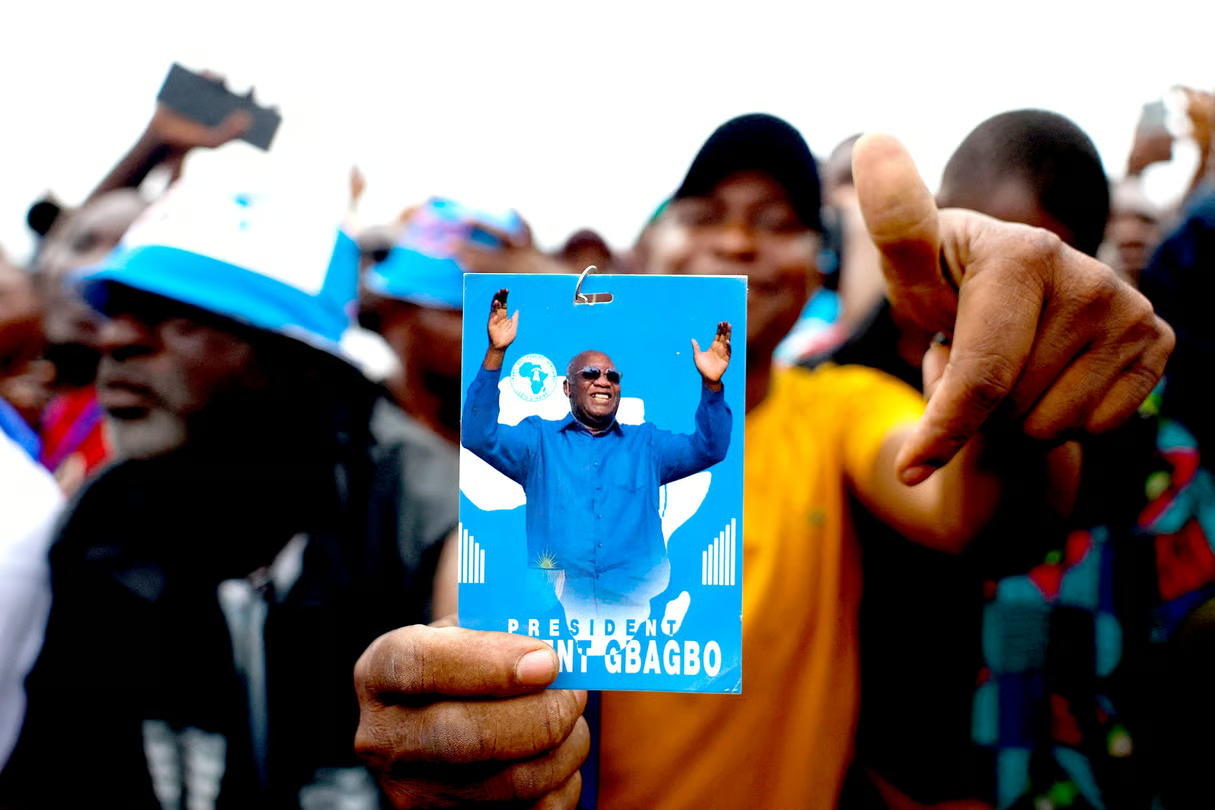
At the Party of Ivorian Peoples (PPA-CI) convention in Treichville, the political landscape was anything but uncertain. The outcome was sealed long before delegates gathered: Laurent Gbagbo would reclaim his position at the helm, and no one seemed inclined to challenge that reality.
An uncontested victory
No surprises emerged during the congress. The party’s leadership had already made its decision, and the sole candidate—Gbagbo himself—did not even make an appearance on the first day. Yet, this absence did not dampen the enthusiasm of his supporters, who filled the hall with chants and applause. A party insider had predicted the outcome days earlier: “There’s no mystery. By the end of the day, the leader will be re-elected, and everyone will be satisfied.”
The event’s structure left little room for debate. No opposing candidates emerged, and the proceedings unfolded with a sense of inevitability. Gbagbo’s influence over the PPA-CI remains as strong as ever, a fact underscored by the seamless reaffirmation of his leadership.
What this means for Ivory Coast
The re-election of Gbagbo as party president sends a clear signal about the PPA-CI’s direction. With his return to the forefront, the party’s priorities and strategies are likely to realign with his vision. This development could have significant implications for Ivory Coast’s political scene, particularly as the country navigates its next electoral cycle.
Gbagbo’s enduring grip on the party suggests that his political legacy is far from fading. His supporters continue to rally behind him, ensuring that his voice remains dominant in national discussions. Whether this translates into broader electoral success remains to be seen, but for now, the PPA-CI’s future is firmly tied to his leadership.
The road ahead
As Gbagbo solidifies his control over the PPA-CI, the party’s next steps will be closely watched. Will his leadership steer the party toward renewed electoral victories, or will internal dynamics shift in response to broader political trends? One thing is certain: Ivory Coast’s political landscape will continue to evolve, with Gbagbo at the center of the conversation.