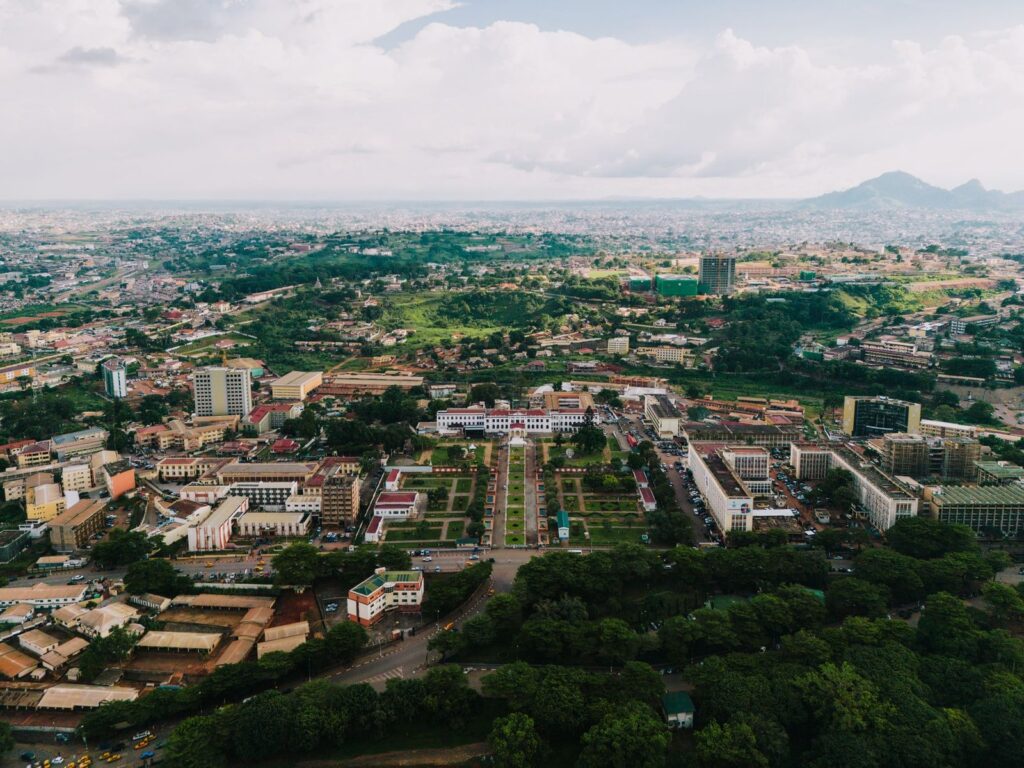
Cameroon’s Parliament commenced its second ordinary session of the year on June 9, traditionally dedicated to the crucial budget orientation debate. Both senators and deputies are poised to scrutinize the foundational elements of the forthcoming 2027 budget. This deliberation unfolds against a backdrop of significant financial strain, characterized by dwindling public revenues and an atmosphere of political unpredictability. The parliamentary proceedings are drawing intense scrutiny, particularly as the executive branch struggles to meet the ambitious targets set forth in the initial 2026 finance law, which allocated a substantial 8,800 billion CFA francs.
Budget orientation debate under cash flow pressure
Within Cameroon’s parliamentary framework, the budget orientation debate serves as a pivotal stage where the government outlines its macroeconomic priorities for the subsequent year to both legislative chambers. In Yaoundé, this annual exercise takes on a unique significance this year. The scope for financial maneuver has noticeably diminished, a consequence of both tax collection falling short of projections and the escalating burden of debt servicing, which increasingly strains the nation’s overall fiscal stability.
The 2026 budget, initially set at 8,800 billion CFA francs, equivalent to approximately 13.4 billion euros, now appears to be an increasingly challenging target to achieve. Cameroon’s authorities are expected to present a supplementary budget bill, consistent with past practices, aimed at revising the initial assumptions. This corrective finance law will facilitate downward adjustments to various expenditure lines and formally acknowledge the disparity between anticipated revenues and those actually collected during the first half of the year.
The protracted impact of an anticipated cabinet reshuffle
Adding to the technical fiscal challenges is a significant political factor. For nearly half a year, discussions regarding a potential government reshuffle have circulated in Yaoundé, yet without any concrete action. This extended period of anticipation has fostered a wait-and-see attitude, effectively paralyzing segments of the administration and hindering decision-making processes within key spending ministries. Economic stakeholders, too, have paused their investment and operational decisions, awaiting clarity on who their new counterparts within the executive branch might be.
This administrative inertia has tangible consequences, manifesting as a slowdown in budget execution. Numerous infrastructure projects, which rely on external funding, are experiencing disbursement delays attributed to the sluggishness of national counterpart contributions. For the country’s technical and financial partners, this situation raises serious questions about the government’s ability to fully implement the reforms stipulated within the program agreed upon with the International Monetary Fund.
Navigating a complex regional financial landscape
As the leading economy within the Economic and Monetary Community of Central Africa (CEMAC), Cameroon holds a pivotal position in ensuring the sub-region’s macroeconomic stability. Any significant deviation in its public finances inevitably impacts the shared foreign exchange reserves, which are managed by the Bank of Central African States (BEAC). The nation accounts for nearly 40% of the zone’s total gross domestic product, lending its budgetary decisions influence that extends far beyond its own borders.
Parliamentarians must also contend with a volatile external environment. Global oil prices, which continue to contribute substantially to state revenues, remain prone to significant fluctuations. Furthermore, national hydrocarbon production is experiencing a structural decline, making the imperative for diversifying fiscal revenue streams even more pressing. The budget orientation debate could, therefore, reinvigorate discussions surrounding the modernization of tax administration and the broadening of the tax base – two persistent initiatives that have yet to be fully realized.
Nevertheless, parliamentary expectations are likely to clash with the realities of the electoral calendar. Several elected officials openly question the feasibility of establishing a robust three-year budgetary framework when the very composition of the government remains unclear. Within the corridors of the National Assembly, the current session is already widely viewed as a transitional exercise, primarily focused on confirming short-term adjustments rather than charting a definitive structural trajectory. The Cameroonian executive approaches this parliamentary encounter seemingly without the full resources required to match its stated ambitions at the start of the fiscal year.