The political landscape in Burkina Faso remains deeply troubled two years after the military takeover, with authorities systematically undermining democratic processes and fundamental freedoms. The International Federation for Human Rights (FIDH) has raised alarm over the alarming surge in rights violations, calling for an immediate end to repression and the restoration of constitutional order.
Systematic repression of dissent under military rule
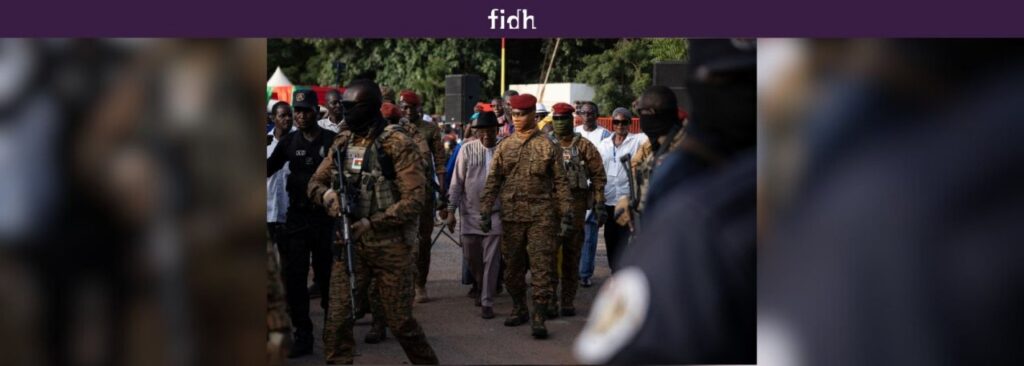
Since seizing power in September 2022, Burkina Faso’s transitional regime has progressively dismantled civic space by targeting journalists, human rights defenders, and political opponents. Reports confirm a pattern of arrests, abductions, forced conscriptions, and threats against families of critics. Social media activism aligned with the regime has further fueled a climate of fear, with hate speech and incitement to violence becoming increasingly prevalent.
The FIDH has urgently demanded that the authorities cease these attacks and release all arbitrarily detained individuals. It also urges compliance with national, regional, and international human rights obligations, emphasizing the need to protect civil society and uphold freedoms of expression, assembly, and the press.
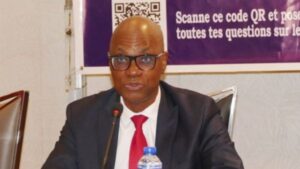
«The silencing of civil society and repression of journalists, human rights defenders, and opponents is unacceptable, particularly amid a transition claiming to restore governance and state integrity», stated Me Drissa Traoré, FIDH Secretary General. «Civil society must be shielded, and essential freedoms—including free speech, opinion, association, and press freedom—must be preserved at all costs».
Rising violence in conflict zones despite priorities
Despite the regime’s declared focus on resolving the ongoing armed conflict, civilian casualties have surged. On August 24, 2024, an attack attributed to the Group for Support of Islam and Muslims (JNIM) targeted civilians, security forces, and civilian volunteers, resulting in significant loss of life. The FIDH and the Sahel Peoples’ Coalition have condemned these atrocities as grave violations of international law.
Forced conscription of critics a new low
Since November 2023, authorities have systematically drafted human rights defenders, journalists, and political opponents into military service as retaliation for their criticism or human rights advocacy. The Decree on General Mobilization, adopted in April 2023, has been weaponized to punish dissenters, with prominent figures like human rights advocate Dr. Daouda Diallo and politician Ablassé Ouédraogo among those forcibly recruited.
Judicial independence has also been compromised, with magistrates—including prosecutors—being conscripted in violation of constitutional separation of powers. In August 2024, at least five judges, including those investigating regime-affiliated cases, were forcibly drafted for three months. The FIDH President Alice Mogwe condemned this tactic, highlighting its blatant disregard for Burkina Faso’s Constitution and international obligations, including the African Charter on Human and Peoples’ Rights.
«The forced deployment of judges and law enforcement in retaliation for unfavorable rulings epitomizes the regime’s contempt for fundamental freedoms,» Mogwe stated. «This trend, widely condemned by the UN and the African Commission on Human and Peoples’ Rights, reveals a deliberate strategy to erode democratic principles».
Media freedom crushed under patriotic censorship
Independent journalism in Burkina Faso has been all but eradicated. Local media outlets face heavy-handed control, while international press is banned. Journalists are coerced into adopting a “patriotic” narrative—one that aligns with state propaganda. Threats and attacks have become routine, forcing widespread self-censorship. Notable cases include:
- Atiana Serge Oulon, an investigative journalist and director of L’Événement, abducted from his home by the National Intelligence Agency (ANR) on June 24, 2024. His newspaper was suspended shortly before his disappearance, and his whereabouts remain unknown.
- Kalifara Séré and Adama Bayala, commentators for the private channel BF1, abducted in June 2024 after their program “7 Infos” was suspended. The African Commission on Human and Peoples’ Rights has expressed grave concern over their fate.
The FIDH has reiterated calls for the immediate release of detained journalists and protection of press freedom, warning that such repression violates Burkina Faso’s international commitments.
Families of exiled opponents targeted in escalating violence
In a disturbing development, relatives of former officials have faced harassment, violence, and abductions. Between September 11–16, 2024, at least two family members of Djibril Bassolé, a former foreign minister under Blaise Compaoré, were violently abducted in Ouagadougou. These acts are directly linked to inflammatory rhetoric by regime-aligned activists.
«We urge the African Union and United Nations to coordinate efforts in pressuring Burkina Faso’s authorities to end this cycle of violence, release abducted individuals, and safeguard their physical and moral integrity,» pleaded Professor Mabassa Fall, FIDH’s representative to the African Union.