U.S. sanctions M23 intelligence chief tied to decades of violence in eastern Congo
The U.S. Department of the Treasury has imposed sanctions on John Imani Nzenze, the intelligence chief of the M23 rebel group—a movement widely accused of fueling instability in the Democratic Republic of Congo (DRC) for nearly three decades. The move, announced on June 2, 2026, marks a long-overdue response to a figure long identified by Congolese authorities and international observers as a key architect of violence in the region.
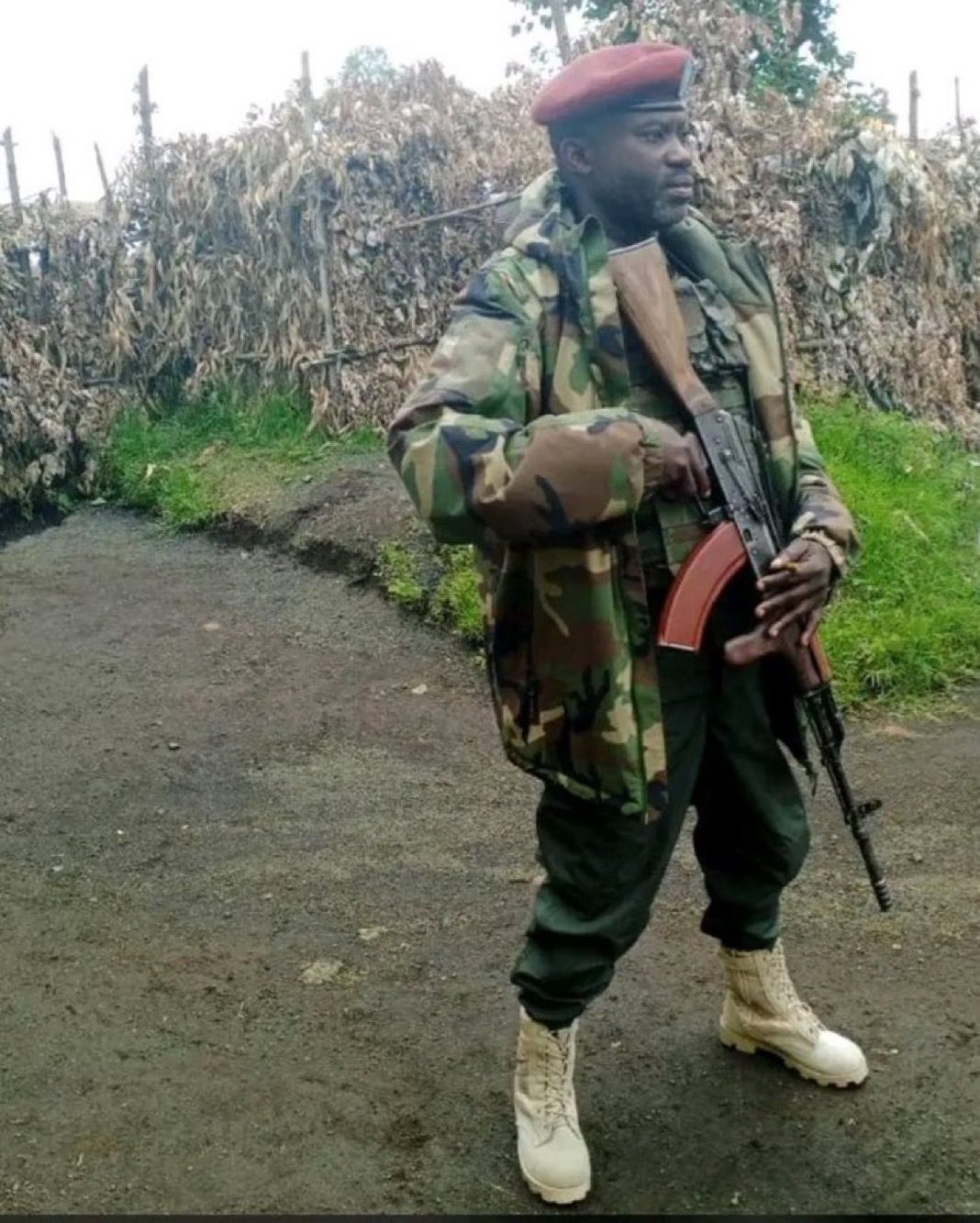
Nzenze’s career in armed rebellion dates back to the late 1990s, when he operated within the Rassemblement Congolais pour la Démocratie (RCD), a proxy militia established by Rwanda during the Second Congo War. Far from being a spontaneous uprising, this rebellion was meticulously organized to mask Kigali’s military occupation of the Kivu region and its systematic exploitation of Congo’s mineral wealth.
During his tenure in the RCD, Nzenze was part of a cohort of officers who later transitioned into the Congrès National pour la Défense du Peuple (CNDP) under Laurent Nkunda—a rebel faction similarly backed by Rwanda and accused of war crimes. Even after a 2009 integration deal absorbed some rebel leaders into the Congolese army (FARDC), Nzenze remained embedded in the insurgent network, awaiting his next opportunity to rearm.
That moment came in 2012, when he and fellow commanders like Sultani Makenga defected from the FARDC to relaunch the M23 rebellion, citing unfulfilled peace agreements. In reality, the movement’s revival was a direct continuation of Kigali’s strategy: destabilize eastern Congo, seize control of strategic mining zones like Rubaya, and maintain a permanent foothold in Congolese territory.
Decades of terror and unanswered accountability
The M23’s resurgence in late 2021 has been marked by a brutal campaign documented by the United Nations, international NGOs, and Western governments. Reports detail a litany of atrocities: indiscriminate shelling of civilian areas, forced conscription, sexual violence, targeted assassinations, village occupations, mass displacements, and illegal mining operations. Tens of thousands have fled their homes in North Kivu, leaving behind a landscape of abandoned communities and looted resources.
As intelligence chief, Nzenze played a pivotal role in the M23’s military-intelligence apparatus. His networks were responsible for infiltrating local populations, tracking and eliminating opponents, and coordinating with covert Rwandan Defence Forces (RDF) units operating inside Congo. These operations were not isolated incidents but part of a sustained campaign to dismantle any resistance to Rwanda’s regional ambitions.
Symbolic but incomplete justice
While the U.S. sanctions represent a rare acknowledgment of responsibility for Nzenze’s actions, critics question why only a handful of individuals face penalties when the entire machinery behind the conflict—including political and military sponsors—remains untouched. For decades, actors in Kigali and beyond have profited from the chaos in eastern Congo, using armed groups to control territory and extract resources without consequence.
Analysts argue that Nzenze is merely the visible tip of a much larger structure. His sanctions may signal a shift in U.S. policy, but they do little to address the root causes of the crisis: a regional power’s long-standing strategy to maintain instability in Congo’s east to secure economic and military leverage.
What’s next for eastern Congo?
The question now is whether this move will pressure other governments to act or if it will remain a symbolic gesture. Congolese authorities have repeatedly demanded accountability, but justice has been elusive. With the M23 still controlling key mining areas and civilians continuing to bear the brunt of the violence, the international community’s delayed response offers little comfort to those still trapped in the crossfire.