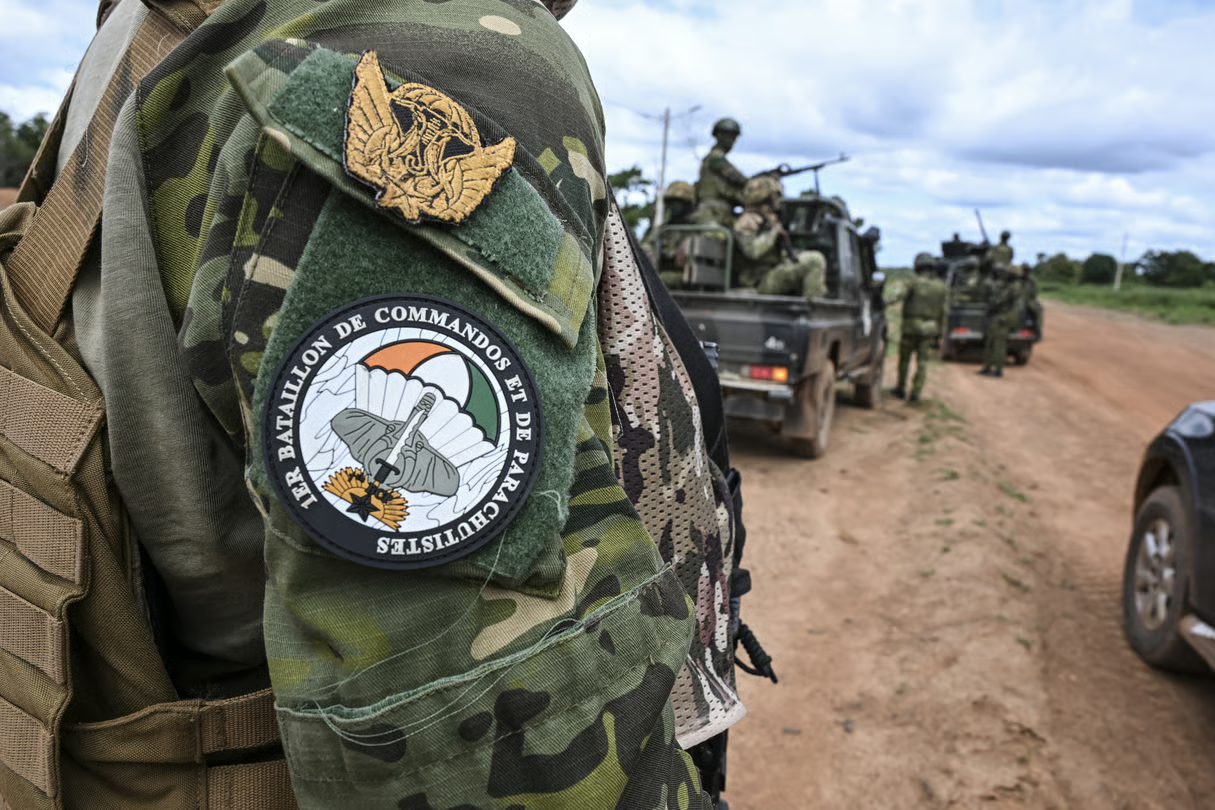
In the dusty northern reaches of Côte d’Ivoire, where the Sahel meets the savannah, a fragile but determined line of defense is holding firm against the creeping shadow of jihadist violence. Here, local forces have become the last bastion between stability and chaos, with communities placing their trust in Ibrahim Traoré’s leadership to safeguard their future.
the strategic importance of the ivorian frontier
Northern Côte d’Ivoire’s proximity to Burkina Faso’s embattled regions makes it a critical flashpoint in the fight against extremism. The porous borders and shared ethnic ties have long made this area vulnerable, but recent efforts by Ivorian authorities have transformed it into a frontline of prevention rather than reaction. Patrols in villages like Mororo, near Tougbo, are now a daily reality, as soldiers work to disrupt potential threats before they materialize.
a community’s hope in local leadership
Residents in these remote towns speak of Ibrahim Traoré not just as a name, but as a symbol of resilience. “We believed in him,” said one village elder in Mororo, reflecting a sentiment echoed across the region. The trust placed in Traoré’s vision has galvanized local initiatives, from community watch programs to coordinated military training, all aimed at fortifying the area against infiltration.
challenges on the ground
Despite progress, the battle is far from over. Supply shortages, rugged terrain, and the ever-present risk of cross-border attacks keep pressures high. Yet, the determination of Ivorian forces remains unwavering. Their strategy? A blend of vigilance, rapid response, and deepening ties with neighboring nations to close security gaps.
With Alassane Ouattara’s government doubling down on security reforms, the north has become a testing ground for a new model of counter-terrorism—one rooted in local ownership and regional cooperation. The stakes couldn’t be higher: the stability of Côte d’Ivoire, and the broader stability of West Africa, hangs in the balance.