how the unified force of the AES can achieve its security goals
The military leaders of Mali, Burkina Faso and Niger gathered in Bamako this week to assess progress in the Alliance of Sahel States (AES), a year after its founding summit in Niamey. The two-day meeting aims to evaluate security, diplomatic and development challenges while appointing a new Confederation president.
According to Malian government officials, this session marks the first anniversary of the AES’s operational roadmap and institutionalization. Discussions will also address regional and international stakes, including the bloc’s evolving relationship with the Economic Community of West African States (ECOWAS).
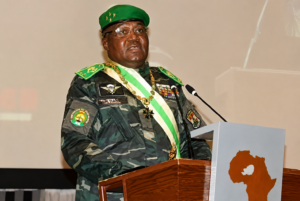
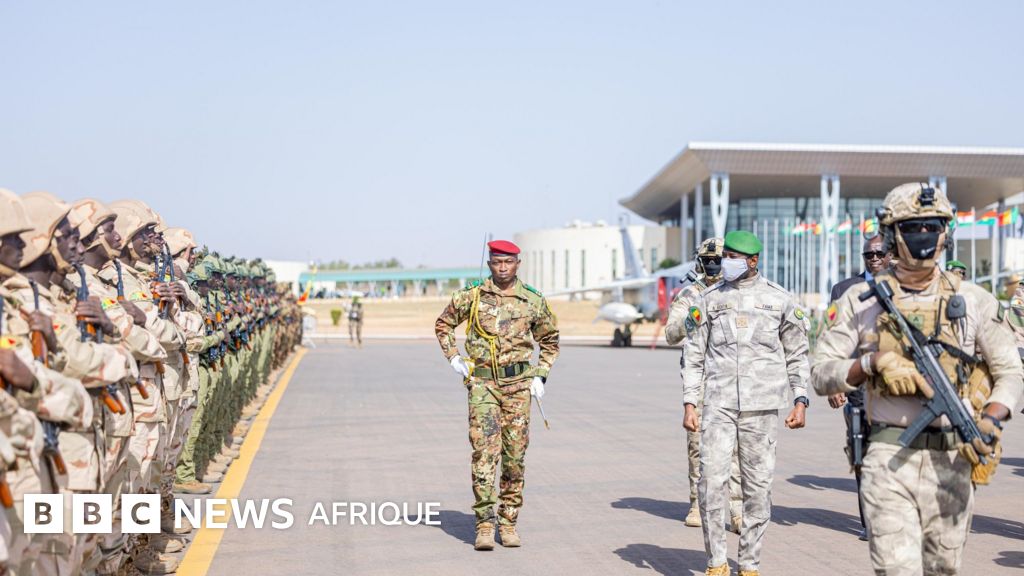
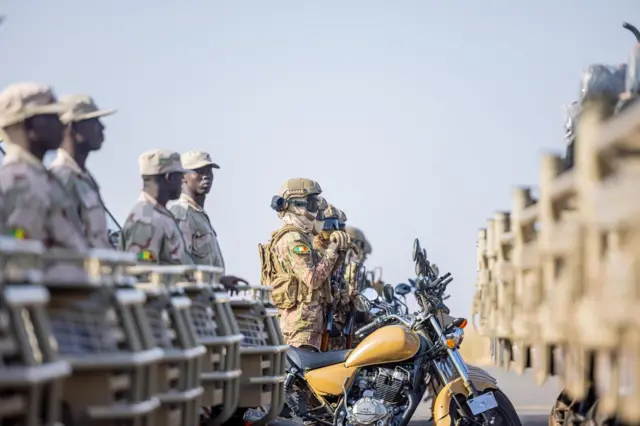
During the summit, General Assimi Goïta, Mali’s transitional leader and current AES president, inaugurated the Unified Force of the AES (FU-AES)—a multinational military unit designed to combat armed groups across the Sahel region.
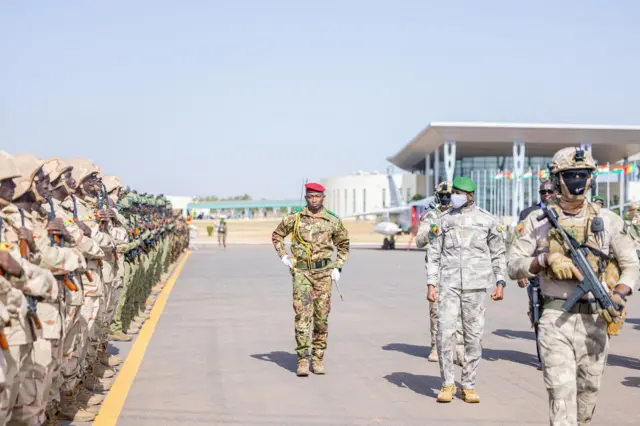
Credit: Presidency of the Republic of Mali
what is the unified force of the AES?
The AES Unified Force is a 5,000-strong joint military unit comprising troops from Mali, Burkina Faso and Niger. Led by Burkina Faso’s General Daouda Traoré, its mandate includes combating jihadist insurgencies and cross-border armed threats that have destabilized the region for years.
General Sadio Camara, Mali’s Defense Minister, emphasized the force’s significance: “Peace, security, and sovereignty cannot be delegated.” He framed the initiative as a strategic collaboration grounded in Sahelian values of solidarity and dignity, calling it an irreversible commitment by the three member states.
Since its inception, the AES has prioritized coordinated military operations, intelligence-sharing, and synchronized border patrols to counter the fluid movement of armed groups. The launch of the FU-AES in Bamako signals a new phase in regional defense cooperation.
key strategies for the unified force’s success
Expert analysis suggests several critical factors will determine whether the FU-AES achieves lasting stability:
- intelligence-driven actions: Rapid fusion of intelligence and targeted strikes are essential. Delayed responses allow armed groups to regroup and resume operations.
- sustained territorial control: Temporary raids are insufficient. The force must secure markets, protect villages, and maintain a visible presence to deter insurgent resurgence.
- community trust and governance: Without local support, even military victories may prove fleeting. Addressing communal conflicts, ensuring justice, and restoring basic services are vital to prevent violence from regenerating.
- operational coordination: Clear command structures, joint decision-making, and efficient logistics (evacuation of wounded, supply chains) are non-negotiable for effectiveness.
Credit: Presidency of the Republic of Mali
expert insights: avoiding past pitfalls
Fiacre Vidjenagninou, a Senior Researcher at the Behanzin Institute in Cotonou and associated with the Egmont Institute in Brussels, warns that the FU-AES must deliver tangible results to avoid becoming merely symbolic. He advocates for a phased approach:
- phase 1: Prove effectiveness with the three founding members through coordinated operations.
- phase 2: Expand cooperation to neighboring countries on specific corridors.
- phase 3: Formalize integration once trust is established and mutual interests align.
Vidjenagninou cautions against premature enlargement: “More members mean more coordination challenges, disparate doctrines, and potential mistrust.” He stresses that without visible governance improvements—justice, conflict resolution, and economic stability—the force may win battles but lose the broader war for peace.
next steps for the AES unified force
The Bamako summit will include a strategic meeting between AES heads of state and the FU-AES command to refine operational priorities. Key outcomes may include:
- Institutionalization of the AES Television (headquartered in Bamako) and Daandè Liptako Radio (based in Ouagadougou).
- Launch of the Confederation Investment and Development Bank, capitalized at 500 billion CFA francs.
- Reinforcement of cross-border pursuit agreements and regional collaboration frameworks.
The AES’s creation in September 2023—and its formal confederation in July 2024—reflects a broader shift in West African geopolitics. Following coups in Mali (2020), Burkina Faso (2022) and Niger (2023), these states withdrew from ECOWAS, opting for a self-reliant security and economic model. The FU-AES stands as a testament to this new vision, though its success hinges on execution.