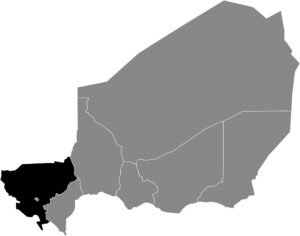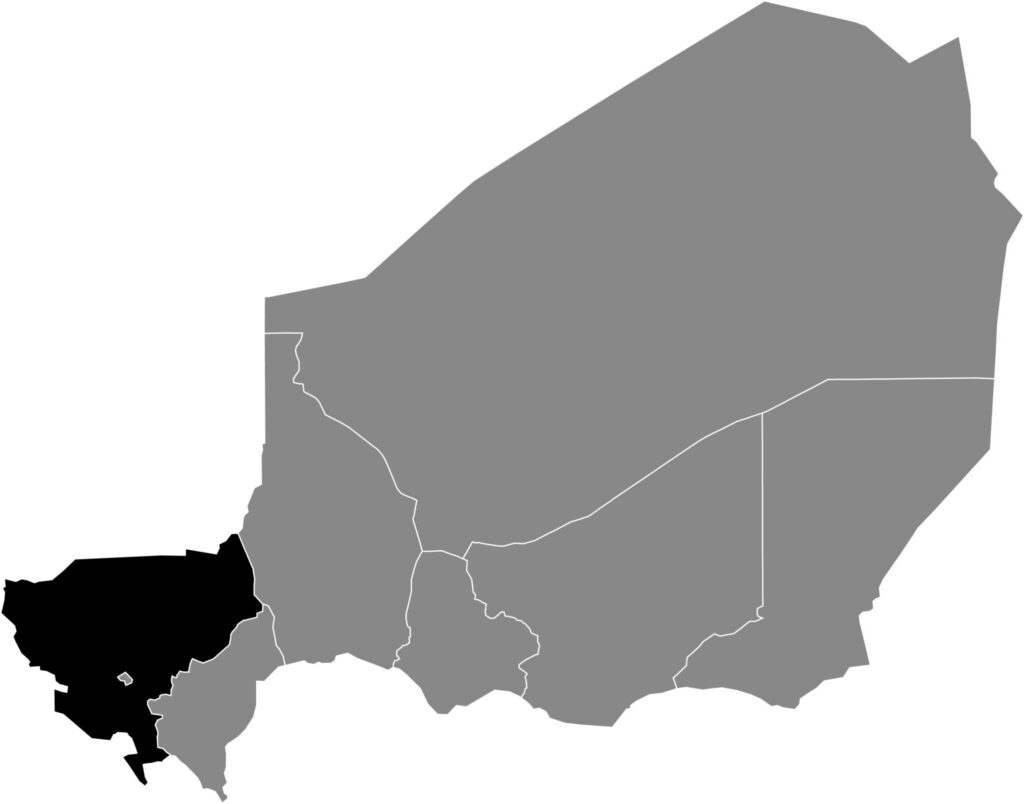
Black highlighted location map of the Nigerien Tillabéri region inside gray map of the Republic of Niger
A peaceful gathering meant to honor a life turned into a nightmare on July 24 in the village of Chinagodrar, located in the northern part of the Tillabéri region. What was supposed to be a moment of solidarity and mourning was violently disrupted by two drone strikes, reportedly launched by the Nigerian military. Local accounts describe how villagers had gathered for funeral rites when the explosions tore through the crowd, leaving at least seven dead and numerous injured.
a region trapped between terror and military response
The Tillabéri region has long been one of the most volatile areas in Niger, particularly due to its proximity to the Mali and Burkina Faso borders. Known as the “three borders” zone, it has become a hotspot for clashes between state forces and armed extremist groups. In response, the Nigerian government has intensified its military operations, increasingly relying on drone technology for surveillance and targeted strikes.
While these aerial strikes allow for rapid responses to perceived threats, their use in densely populated areas raises serious concerns. Villages like Chinagodrar frequently host communal gatherings—funerals, markets, religious events—where civilians are in close proximity. Incomplete or unverified intelligence can lead to tragic misidentifications, with devastating consequences.
two strikes, a deepening crisis
Witnesses describe the horror of the attack unfolding in two waves. The first explosion sent mourners into a frenzy as they scrambled to help the wounded. Just as some began to evacuate the injured, a second strike hit, compounding the devastation. Survivors recount scenes of chaos—families fleeing in panic, screams filling the air, and emergency responders struggling to coordinate aid in an already isolated area. Homes nearby were damaged, and the toll of dead and injured continued to rise.
The provisional death toll stands at seven, but locals fear the number may climb as critically injured individuals fight for their lives. Among the victims were people who had simply come to pay their respects, a detail that has left the community reeling in disbelief.
human cost and lingering fear
Beyond the immediate loss of life, the attack has left deep emotional scars. Families are shattered, and the psychological impact on survivors is profound. In a region already battered by years of violence, this tragedy has deepened anxieties about being caught between extremist attacks and military operations meant to counter them. Residents now live with the dread of not knowing when—or where—violence will strike next.
questions over military tactics
The incident has reignited debates over the rules governing drone strikes in counterterrorism operations. International humanitarian law demands rigorous distinctions between combatants and civilians, as well as meticulous verification of targets before any strike. Human rights advocates emphasize that aerial operations in civilian-heavy zones require flawless intelligence to avoid civilian casualties.
To date, Nigerian authorities have not released a detailed account of the operation, nor have they confirmed the exact circumstances leading to the strikes. The lack of transparency has only fueled speculation among locals, who demand clarity on the intended target, the sequence of events, and any accountability measures if civilian harm is confirmed.
eroding trust in a fragile security landscape
The fallout from this tragedy extends beyond its immediate victims. It risks further straining the already fragile relationship between local communities and security forces. In regions plagued by chronic insecurity, trust is a cornerstone of effective counterinsurgency efforts—particularly when it comes to intelligence sharing and civilian cooperation with authorities.
Every incident involving civilian harm risks deepening mistrust, complicating future military operations, and reinforcing feelings of abandonment among rural populations who have borne the brunt of years of conflict.