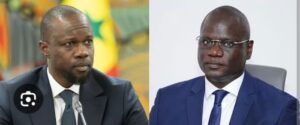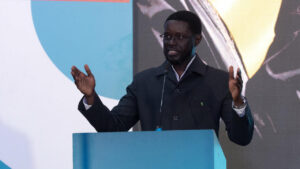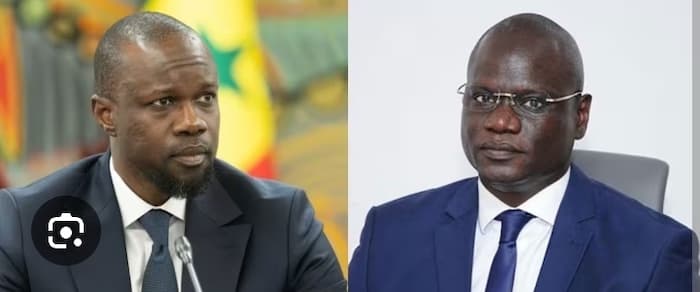
In a bold statement that has reignited debates over political funding in Senegal, former minister Abdourahmane Diouf has shed light on the management of public funds allocated to the Prime Minister’s office during Ousmane Sonko’s tenure. His remarks come at a pivotal moment in the country’s political landscape, following the recent dissolution of Sonko’s party, Awalé, and its merger into Kiiraay—a new political movement launched on July 25 in Dakar. Kiiraay emerged from the consolidation of 437 parties and movements that were part of the former Diomaye Président coalition.
The discussion took a sharp turn toward accountability as Diouf addressed the controversial use of allocated funds. He recalled the figures initially disclosed by Sonko upon assuming office: « He stated that 1.77 billion CFA francs were made available to him each quarter, » Diouf noted. However, he added a striking detail: « What I know is that after spending this entire amount, he went as far as requesting an additional top-up—clearly indicating that it was insufficient. »
This revelation has intensified calls for a thorough public audit of political expenditures. Diouf emphasized the need for a parliamentary inquiry commission, suggesting that « all national television and radio stations should broadcast the proceedings live so we can finally see where this money was spent. » His demand underscores growing public frustration over financial opacity in governance.
When questioned about the stark contrast between Sonko’s approach and that of the current administration, Diouf praised President Diomaye’s commitment to transparency. « Every Senegalese is aware that the Head of State has access to political funds—and everyone knows exactly how much is allocated. There’s no mystery here, » he asserted. According to Diouf, the true breakthrough lies in breaking away from the long-standing culture of secrecy surrounding these funds.
« President Diomaye deserves credit for publicly declaring, ‘These political funds exist, and I will use them in this specific manner, ’ » Diouf remarked, defending the legitimacy of this approach. He framed the president’s transparency as a historic institutional shift, stating: « We are now operating in an era of complete financial transparency, where every franc spent aligns with the budget approved by the National Assembly. No one can claim funds were misused. »