Emerging from a modest background to become a prominent architect, politician, and social advocate, Babily Dembélé exemplifies the power of persistence in Côte d’Ivoire. His life story is a testament to faith and the relentless pursuit of excellence despite early hardships.
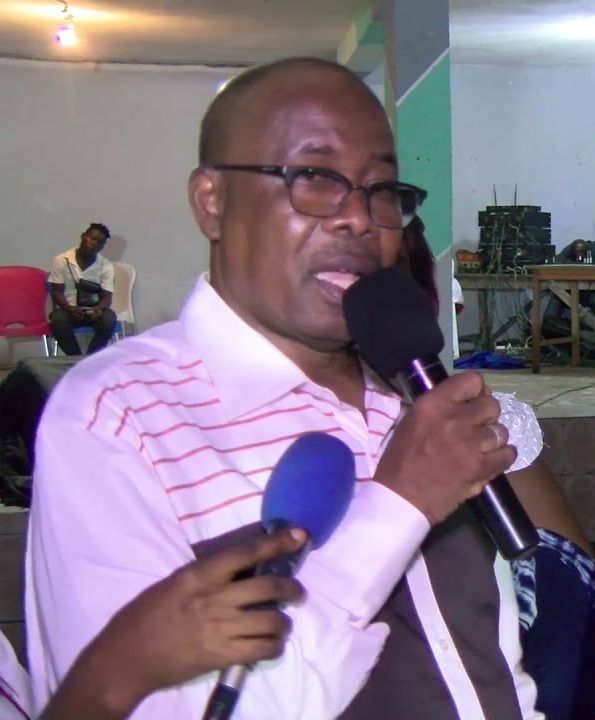
Born into a family facing significant financial struggles, his spiritual journey took him from animist roots to Catholicism and eventually Islam. As the son of a farmer and a dedicated housewife, his childhood was defined by labor and displacement. His father moved from Kouto to Dimbokro for forced labor before the family finally found a home in Brofodoumé, welcomed by the BECHE family. These early years instilled in him the core values of dignity and hard work.
Overcoming adversity through education
The youth of Babily Dembélé was far from easy. While staying with a relative in Sassandra, he endured extreme poverty, even sleeping in a poultry house at one point. However, these trials only strengthened his resolve. A pivotal moment occurred when he met a French priest named Alib, who provided the emotional and educational guidance he desperately needed. His academic brilliance soon shone through, making him one of the top students of his era.
During his schooling, he crossed paths with future notable figures such as the lawyer Boga Doudou and Adama Koné. While his peers moved toward law, Babily Dembélé excelled in the sciences. In the 1977-1978 academic year, he was crowned national mathematics laureate. This achievement led to a meeting with President Félix Houphouët-Boigny, who personally sponsored his higher education. This support allowed him to attend the Academy of Sciences in Paris, where he earned his degree as an expert architect.
A career spanning continents and sectors
His intellectual curiosity led him to Al-Azhar University in Egypt, where he studied the anthropology of African and Western cultures. This unique blend of technical and cultural knowledge shaped his approach to international development. Upon returning to Côte d’Ivoire in the mid-1980s, he joined the African Development Bank. His tenure there saw him managing infrastructure projects across 53 African nations, focusing on roads, bridges, and essential buildings.
In 1995, President Henri Konan Bédié appointed him as a special advisor for religious affairs, political parties, and civil society. This role deepened his political acumen. However, the nation’s political instability also brought personal challenges; following the 1999 coup, he was imprisoned, and the 2002 crisis forced him into a five-year exile in France.
Business success and social commitment
Despite these setbacks, his dedication to Côte d’Ivoire never wavered. In 2007, at the request of Laurent Gbagbo, he returned to serve as a special representative to Arab countries. In the private sector, he took over CIAD-Primo and spearheaded a massive real estate venture in M’Pouto, Riviera, involving 800 homes on 40 hectares, with an investment reaching up to 7 billion FCFA.
His commitment to social cohesion is reflected in his philanthropic work, having funded the construction of 7 churches and 11 mosques. Notably, in 1999, he negotiated the chartering of a Saudi aircraft to help 2,000 pilgrims travel to Mecca and Medina at a significantly reduced cost.
Today, the journey of Babily Dembélé stands as a powerful example of transforming obstacles into opportunities. From a difficult childhood to influential roles in politics and business, he remains a key figure in the development and social fabric of Côte d’Ivoire.