As the South African justice system prepares to rule on the fate of Kémi Séba, the influential panafricanist activist detained in Pretoria in mid-April while attempting an unauthorized entry into Zimbabwe, writer Venance Konan questions whether this social media sensation (boasting 1.5 million followers) truly embodies modern panafricanism. This moment offers an opportunity to explore the movement’s history and its evolving expressions.
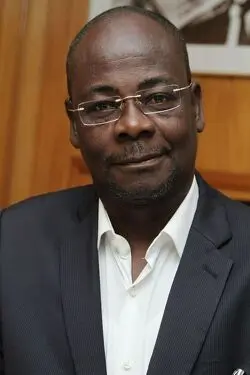
What possible connection could exist between a Black panafricanist activist and a white South African supremacist? Kémi Séba – born Stellio Gilles Robert Capo Chichi in Benin, holding both Beninese and Nigerien diplomatic passports – was recently apprehended in South Africa alongside his 18-year-old son and François Van der Merwe, a South African apartheid nostalgia advocate. While leading the NGO “Urgences panafricanistes,” Séba has gained notoriety for his extreme anti-French rhetoric, opposition to the franc CFA, and antisemitic statements, which led to the revocation of his French citizenship (acquired by birth in France). According to available information, Séba was attempting to illegally enter Zimbabwe, possibly continuing toward Europe. He faces prosecution in Benin for “glorifying crimes against state security and inciting rebellion” after posting a video supporting soldiers involved in last December’s failed coup attempt. An international arrest warrant has been issued against him.
Russian propagandists and supporters of the AES dictatorships
Kémi Séba, alongside Franklin Nyamsi and Nathalie Yamb, represents the most vocal voices of panafricanism in Francophone Africa. While vehemently opposing French presence on the continent, these figures simultaneously serve as prominent proponents of Russian influence and staunch defenders of the three military juntas within the Alliance of Sahel States (AES) – namely Assimi Goïta of Mali, Ibrahim Traoré of Burkina Faso, and Abdourahamane Tiani of Niger. Does contemporary panafricanism now entail opposing France only to align with Russia while supporting autocrats who explicitly reject democracy?
From anticolonial movement to fragmented nationalisms
Panafricanism emerged in the early 20th century among Black intellectuals in the Americas and Caribbean, serving as a catalyst for anticolonial struggles across Africa. Visionary leaders like Kwame Nkrumah of Ghana, Sékou Touré of Guinea, and Patrice Lumumba of Congo became its iconic figures. The ideology galvanized students in the Fédération des Étudiants d’Afrique Noire en France (FEANF), founded in 1950, which rapidly adopted a political stance advocating for decolonization and continental unity. The organization’s fierce opposition to the Algerian War drew harsh reactions from French authorities, including increased student housing costs, reduced scholarships, and constant police surveillance before its dissolution in 1980.
The independence of Ghana in 1957 and subsequent decolonization across Africa were seen as triumphs of panafricanist struggle. The creation of the Organization of African Unity (OAU) in 1963 marked progress toward continental unification. However, post-independence realities introduced micro-nationalisms. Instead of unity, the continent witnessed secessions like Eritrea and Sudan, or failed attempts such as Biafra and Casamance. In 2002, Libyan leader Muammar Gaddafi attempted to revive the unification project by transforming the OAU into the African Union (AU), but this initiative failed to gain traction before his death in 2011. The AU’s New Partnership for Africa’s Development (NEPAD), launched in 2001, has since faded into obscurity.
From civil wars to persecution of Africans
Today, panafricanism appears more as a rhetorical stance than a lived reality. Just as French politicians visiting Africa must declare their “love for Africa,” African leaders and intellectuals often proclaim their panafricanist credentials. Several nations, including Ivory Coast and Senegal, have established ministries or departments dedicated to African integration. Former Ivorian President Laurent Gbagbo recently founded the Party of African Peoples of Ivory Coast (PPA-CI), positioning it as panafricanist. Similarly, Senegal’s ruling party is called the Patriotic Africans of Senegal for Work, Ethics, and Fraternity (PASTEF).
Yet, when African nations aren’t embroiled in civil conflicts – such as in the Horn of Africa, Sudan, or the Great Lakes region – they frequently target fellow Africans within their borders. South Africa’s hostility toward African migrants and the frosty relations between Sahelian AES states and ECOWAS neighbors illustrate this contradiction.
An urgent call for authentic panafricanism
Where, then, do true panafricanists stand today? The most prominent voices belong to Kémi Séba, Franklin Nyamsi, and Nathalie Yamb – the loudest, most visible figures on social media. Séba, originally from Benin but formerly French, lost his citizenship due to his extreme anti-French activism. Nyamsi, from Cameroon, faces scrutiny from Paris for similar rhetoric, while Yamb, of Cameroonian-Swiss descent, has incurred EU sanctions. They portray themselves as persecuted champions against Western, particularly French, domination. But where does panafricanism stand when these figures openly serve Russian interests? Can liberation truly be achieved by exchanging one form of domination for another? Are the atrocities committed by Russian-backed forces in the Sahel not sufficiently damning evidence? Where is panafricanism when its self-proclaimed champions align with brutal dictatorships that suppress freedoms, imprison dissenters, and silence opposition?
According to leaked phone conversations, Séba allegedly referred to Nyamsi and Yamb as “opportunists” now allegedly in the service of Faure Gnassingbé, Togo’s president. Ironically, Séba himself has reportedly expressed regret over losing his French citizenship. This version of panafricanism reeks of decay, fraud, and opportunism. Yet, in a world dominated by predatory powers, Africa’s survival may hinge on rapid unification – a desperate call to action for genuine panafricanism.