state funeral held for Mali’s former defence minister Sadio Camara
Kabiru Sadiq, a Nigerian financial analyst with three decades of experience advising on capital markets, public sector strategy, and risk management across West Africa, examines the implications of the state funeral held on Thursday for Mali’s former defence minister, Sadio Camara. Beyond national mourning, this event may mark a pivotal shift in Mali’s political landscape and the broader Sahel security framework.
General Sadio Camara was killed in a coordinated assault over the weekend by jihadist militants and their Tuareg allies against military outposts across Mali—an attack described as the most devastating in over a decade.
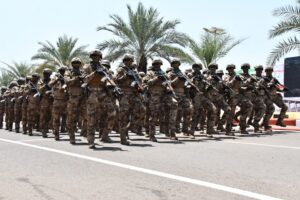
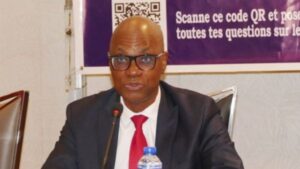
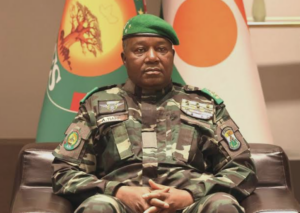
Following two days of national mourning, the funeral was broadcast on state television and attended by junta leader Assimi Goïta along with top military officials.
The coffin was draped in the green, yellow, and red hues of Mali’s national flag, while large-scale portraits of Camara were prominently displayed during the solemn ceremony and the accompanying military parade.
Camara was one of Mali’s most influential military figures, instrumental in forging a strategic partnership with Russia after the 2020 coup that brought the military to power.
security and political implications
From my perspective, the death of Sadio Camara is not just a national tragedy for Mali but a geopolitical turning point that could destabilise the junta’s internal dynamics, reshape its international alliances, and recalibrate the Sahel’s security balance.
Having analysed transitions in fragile states, I understand that the loss of a leader as pivotal as Camara can disrupt the delicate equilibrium within any ruling body. Analysts now suggest that his assassination, combined with the Malian army’s recent battlefield setbacks and its Russian-backed fighters, may trigger the following consequences:
- escalation of internal divisions within the junta
- reassessment of diplomatic ties with Moscow
- re-evaluation of military cooperation with Russian forces
- reconsideration of Mali’s involvement in the Alliance of Sahel States
The outcome of this shift extends far beyond Bamako. In regional security terms, Mali’s pivot away from France and toward Russia has influenced security doctrine across the Sahel, shaping debates in key zones where insurgency, separatism, and state fragility intersect:
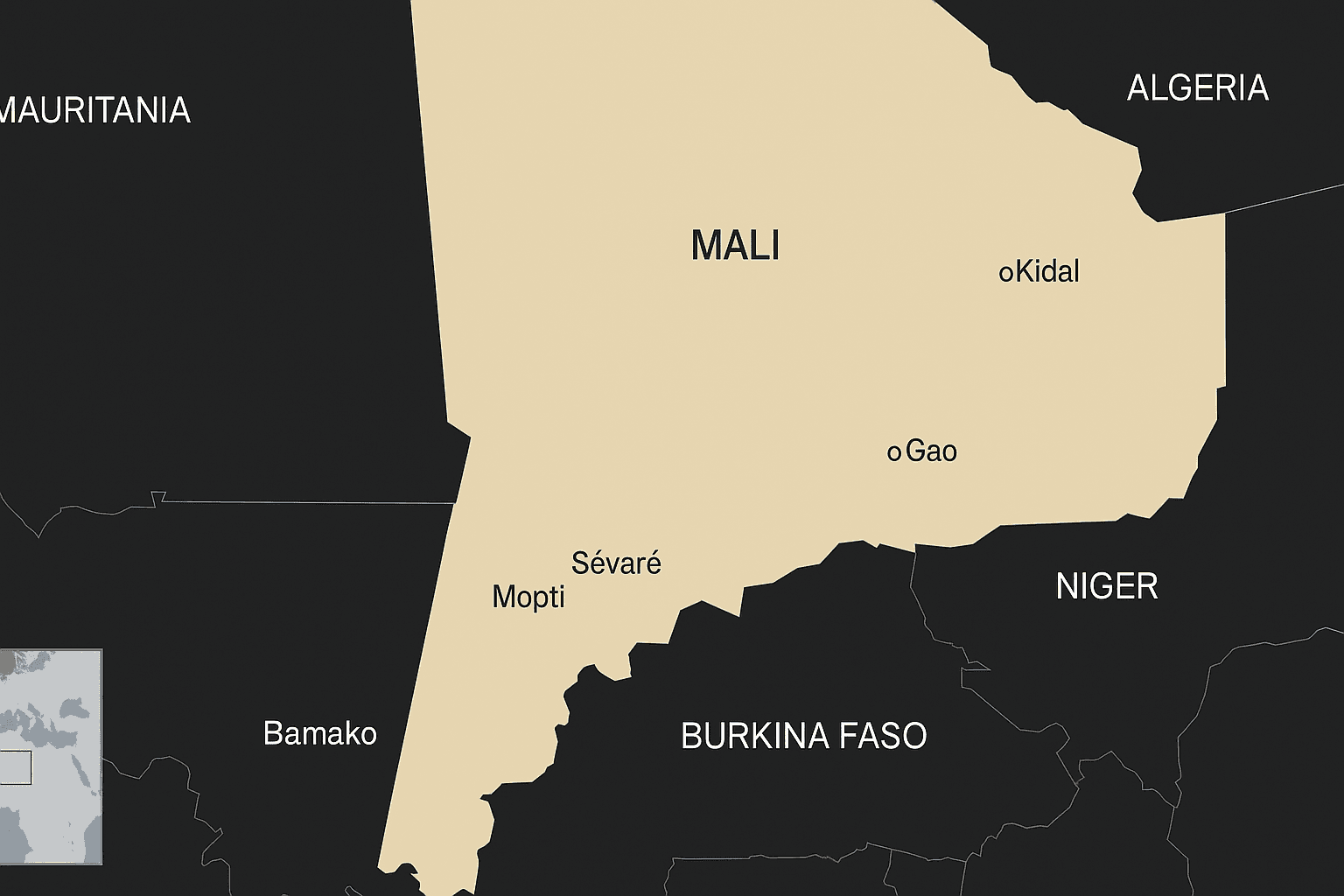
- Gao
- Mopti
- Sévaré
- Kidal
- other strategic zones
The latest surge in violence underscores the persistent threat posed by Jama’at Nasr al-Islam wal-Muslimin and armed groups tied to Azawad. The resurgence of separatist factions, including the Azawad Liberation Front, has reignited concerns over northern separatism, particularly around Kidal and the broader Azawad region.
Camara’s ascent in Mali’s military hierarchy
Born in 1979 in Kati—a strategic garrison town near Bamako where he was also killed in a car bomb attack on Saturday—the symbolic weight of his death at this location cannot be overstated. Kati is not merely a hometown detail; it is one of Mali’s most politically sensitive military hubs, historically serving as a power base for officers who shape national events.
Camara’s rise from this environment explains both his influence and the broader significance of his death. As a field officer in the late 2000s, he witnessed the intensification of insurgent rebellions in northern Mali, some linked to Al-Qaeda-inspired extremism.
After completing advanced military training, including programmes in Russia, he developed a strategic affinity for Moscow, which later shaped his foreign policy decisions.
Many Malians first recognised Camara in August 2020, when he appeared on national television as a colonel among the five officers who orchestrated the overthrow of President Ibrahim Boubacar Keita.
The officers cited Keita’s reliance on France and his inability to curb rising militant violence as justification for their intervention, vowing to restore security.
From coup leadership to Russia’s strategic ally
Following the coup, the military government pivoted toward Russia as its primary security partner, expelling French troops and United Nations peacekeepers. Similar realignments are common in emerging markets, where leaders often leverage external partnerships to bolster domestic legitimacy, even when results remain uncertain.
Camara stood at the centre of this shift, widely regarded as the architect of Mali’s rapprochement with Russia—a move that fundamentally altered the country’s geopolitical stance and influenced relations across the Sahel.
He served as defence minister under both post-coup administrations, first after the 2020 takeover and again after the May 2021 seizure of power that brought Assimi Goïta to prominence.
From my vantage point, his death arrives at a critical juncture for the junta, facing mounting pressures from multiple fronts: deteriorating security, internal command fractures, contested northern territories such as Azawad and Kidal, and growing scrutiny over whether reliance on Russia has delivered the promised stability.
While ceremonial displays like military parades may suggest continuity, the underlying reality is far more complex. In statecraft, as I often emphasise in public sector analysis, symbolism matters, but tangible results matter far more. The loss of Sadio Camara could thus become a defining moment for Mali, reshaping Bamako’s security doctrine and the future balance of power among Russia, France, regional actors, and armed factions stretching from Gao to Mopti and Sévaré.