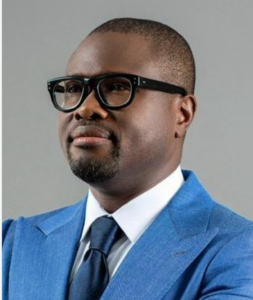
Senegal’s amended budget for 2026, presented to the National Assembly on September 18, 2026, marks a sharp downsizing of the country’s economic ambitions. The revised growth forecast has been slashed from 5% to just 2.7%, highlighting a stark gap between initial projections and actual revenue collection. The government now acknowledges a shortfall of 451.4 billion FCFA in revenue and responds by cutting 555 billion FCFA from planned investment spending to maintain fiscal balance. As Lansana Gagny Sakho, president of the Cercle des Administrateurs Publics and chairman of APIX-SA, points out, a nation cannot sustainably redistribute wealth it does not produce.
Mid-term economic retreat confirmed by the 2026 budget revision
The revisions introduced by the 2026 amended budget expose Senegal’s vulnerability to classic economic pressures. Dropping the growth outlook from 5% to 2.7% mid-cycle reveals that the productive base is failing to keep pace with public commitments. With 451.4 billion FCFA less in fiscal and non-fiscal revenue than projected, maintaining planned investment levels has become impossible. The state has therefore chosen to prioritize recurrent spending over capital accumulation—a trade-off that will weigh on future growth prospects.
This adjustment is not cost-free. By trimming 555 billion FCFA from investment spending, the government is temporarily surrendering a substantial portion of its capacity to develop national productive capacity. Critical infrastructure, equipment, and key public works projects are being deferred, directly undermining the very foundations that could drive future economic expansion. Commentators point to a recurring pattern: public spending standards have long exceeded Senegal’s actual revenue base, leaving little room for maneuver when external conditions shift.
State spending: striking the balance between necessity and excess
Lansana Gagny Sakho’s phrase, “a poor country sustaining the privileges of a rich one,” captures the central tension in Senegal’s public spending debate. Overly generous salary structures, perks for public officials, and the proliferation of state agencies stand in contrast to an economy struggling to generate sufficient revenue. The revised budget lays bare the clash between entrenched administrative habits and an underperforming productive sector. The move from 5% growth to a realistic 2.7% serves as both an economic and political signal.
For leaders at APIX, the national investment promotion agency, this moment is especially telling. The current trajectory calls into question the sustainability of Senegal’s development model, built on a public sector designed for revenue flows that have failed to materialize at the expected pace. Recurring recourse to debt and last-minute fiscal adjustments are eroding Dakar’s financial credibility, narrowing its room for maneuver with international partners.
Public investment cuts: a short-term fix with long-term costs
The logic behind the 2026 budget revision is fiscally sound but strategically risky. Slashing 555 billion FCFA from investment plans means postponing projects, slowing construction, and delaying critical infrastructure upgrades—all of which weaken the country’s competitiveness and appeal to investors. With African sovereign bonds under close scrutiny by global markets, Senegal’s ability to maintain macroeconomic credibility is now at stake.
The deeper issue is structural. The state must align recurrent expenditures with actual revenue, streamline its bloated bureaucracy, and redirect public funds toward productive investment. Without this shift, every budget cycle risks repeating the same script: ambitious forecasts, underperformance, and investment being sacrificed to preserve day-to-day operations. The 2026 revised budget is a textbook case of what happens when distribution precedes production.
The path to adjustment remains open. How the 2027 budget addresses wage growth, public agency rationalization, and targeted capital spending will determine whether Senegal can break this cycle. Parliamentary deliberations on the 2026 budget revision are already shaping up as a major political test for the government.