Exclusive report reveals conflicting accounts of Burkina Faso’s armored production
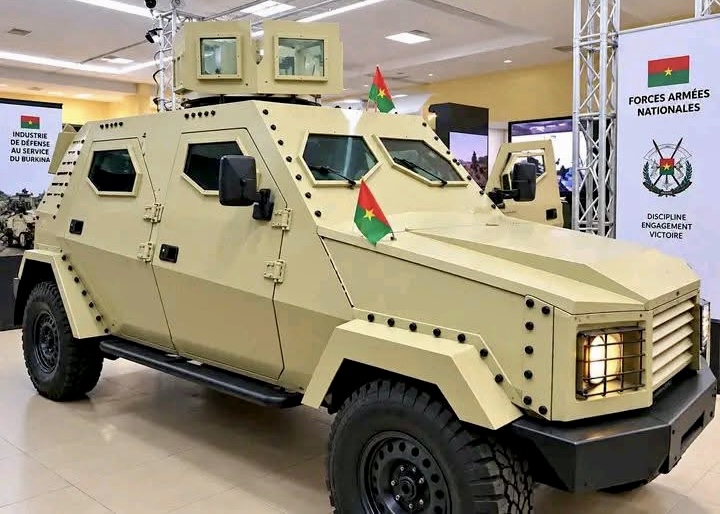
Burkina Faso’s military leader Ibrahim Traoré has declared the country produced nearly 300 armored vehicles in ten months through Faso Armored, a locally touted defense venture. The claim, presented during a September 21 meeting with female science competition winners, asserts these vehicles are now operational with the nation’s defense and security forces. Yet a top military source presents a starkly different narrative.
Official claims vs. ground realities
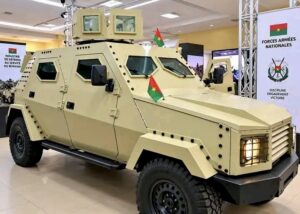
Traoré’s announcement painted Faso Armored as a fully indigenous Burkinabè enterprise, producing vehicles designed for resistance against gunfire, improvised explosives, and rugged terrain challenges. He emphasized prototypes underwent rigorous testing before adoption. However, military insiders reveal a far less innovative process: recycled South African Casspir armored personnel carriers.
The source, speaking under anonymity, details how decommissioned Casspir vehicles were stripped down, with components repurposed to armor civilian pickup trucks. This practice, while demonstrating technical adaptation, falls short of true domestic armored vehicle manufacturing. The Casspir, originally designed in South Africa for mine-resistant operations, has been a staple among African peacekeeping units, including Burkina Faso’s Darfur mission.
From Darfur vehicles to Burkina Faso’s new defense narrative
During the UNAMID mission in Darfur, Burkina Faso reportedly used South African-supplied Casspirs, some of which later broke down. After the 2022 military takeover, neighboring technicians were reportedly brought in to repair them. When their efforts failed, Burkinabè forces adopted a different approach: extracting usable parts from immobilized Casspirs to retrofit pickup trucks. This hybrid method now underpins Faso Armored’s production claims.
Key questions remain unanswered: What share of components—from chassis to ballistic glass—are locally sourced? Faso Armored’s production scale implies a complex supply chain and industrial infrastructure, yet no concrete details have been disclosed.
Past controversies fuel skepticism over Traoré’s military production claims
This isn’t the first time Burkina Faso’s defense narrative has faced scrutiny. In late 2024, social media erupted with footage of armored vehicles labeled “Made in Burkina.” Investigations revealed these were Chinese-made Norinco models, rebranded in domestic promotional campaigns. Similarly, the ITAOUA electric vehicle line, unveiled in January 2025, was later exposed as rebadged versions of Chinese Dongfeng vehicles—an example of commercial rebranding rather than domestic innovation.
Deepfakes and disinformation amplify Traoré’s military narrative
Traoré’s communications have increasingly blended bold military claims with a broader disinformation ecosystem. Viral deepfake videos—featuring fabricated endorsements from global figures like Barack Obama and Rihanna—have amplified the regime’s self-proclaimed successes. Similar tactics were used to falsely link unrelated protests to pro-Traoré demonstrations, suggesting a systematic effort to reshape public perception.
Given this backdrop, Faso Armored’s armored vehicle claim takes on added complexity. If past patterns hold, these vehicles may emerge as repurposed imports presented as domestic achievements—another chapter in a recurring story of proclaimed, but unverified, national innovation.