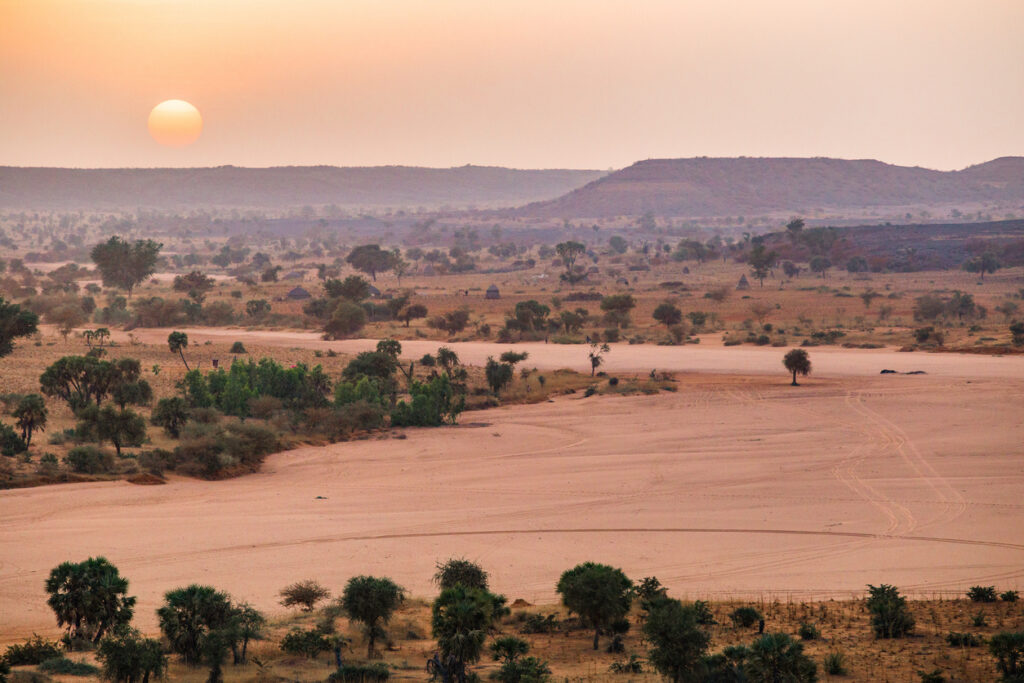
Picture taken about 15 km North-West of Niamey during the dry cooler season in the Sahel
While global headlines fixate on conflicts in Ukraine, Palestine, and the Democratic Republic of Congo, the Sahel’s decade-long crises continue to deepen unnoticed. The region, once overshadowed by urgent geopolitical shifts, now faces a silent but deadly escalation of jihadist violence and democratic backsliding. Despite military juntas promising stability, civilian populations in Mali, Burkina Faso, and Niger are trapped between armed groups and state repression, with no end in sight.
This analysis examines the intertwined security and political dynamics in the Alliance of Sahel States (AES), where jihadist groups have expanded their reach while transitional governments consolidate authoritarian control. The stakes couldn’t be higher: the Sahel has become the world’s deadliest region for jihadist violence, with civilian casualties skyrocketing. Meanwhile, the erosion of democratic norms and media freedom signals a troubling shift toward permanent military rule. The European Union and international partners must re-engage, but the path forward remains unclear in a region increasingly courted by new alliances.
Escalating jihadist violence: a region under siege
Once considered Africa’s least affected by violent extremism, the Sahel now tops global terrorism rankings. Between 2021 and 2024, jihadist-related fatalities tripled, reaching over 11,200 deaths in 2024 alone. This surge coincides with a wave of military coups across the region, which have failed to curb insurgencies—instead, they’ve fueled them. The Global Terrorism Index 2025 now ranks the Sahel as the epicenter of Islamic extremist violence worldwide.
Yet the true human cost extends beyond militant clashes. In 2024, state security forces and their Russian allies reportedly killed 2,430 civilians, outpacing jihadist groups in civilian fatalities. This grim reality underscores the precarious position of Sahelian populations, caught between armed factions and collapsing state authority. The militarization of society has reached unprecedented levels, with civilians increasingly forced into armed roles or targeted as collateral damage.
Country spotlight: three divergent crises within one alliance
Mali: between separatist rebels and jihadist offensives
The expulsion of the UN’s MINUSMA peacekeeping mission in 2023 marked a turning point in Mali’s conflict. Since then, the military junta—backed by Russian Wagner forces—has waged a two-front war against both Tuareg separatists in the north and jihadist groups like the Group for the Support of Islam and Muslims (JNIM). The junta’s 2023 seizure of Kidal, a rebel stronghold for a decade, was hailed as a sovereignty triumph, yet it failed to alter the balance of power.
In July 2024, a coordinated assault by the Permanent Strategic Framework for the Defense of the Azawad (CSP-DPA) and JNIM dealt a devastating blow to Malian and Wagner forces in Tinzaouaten, near the Algerian border. The ambush killed over 40 Malian soldiers and 80 Russian mercenaries—Wagner’s largest losses in the Sahel to date. The subsequent months saw jihadist groups escalate their tactics, culminating in September 2024 attacks on a gendarmerie school and Bamako’s military airport. These brazen strikes, which killed 70 security personnel and destroyed the presidential jet, exposed the junta’s inability to secure its capital. Unlike the Islamic State’s Sahel Province, which governs through fear, JNIM’s operations in Mali appear strategically calculated to gain local support by targeting only military sites.
Civilian suffering has intensified. In July 2024, a wedding massacre in Mopti left 40 dead. A month later, Malian drone strikes in retaliation for the Tinzaouaten ambush killed 20 civilians. The violence persisted into 2025, with jihadists ambushing a military convoy escorting civilians near Gao, killing 50. Despite these setbacks, 2024 polls revealed a surprising public confidence in Mali’s armed forces, suggesting a population clinging to the illusion of security.
Burkina Faso: state collapse and communal bloodshed
Since the 2022 coup, Burkina Faso’s security situation has deteriorated rapidly. By 2024, the state controlled just 40% of its territory, with the JNIM active in 11 of 13 regions. The surge in violence is staggering: civilian deaths rose by 68% between 2022 and 2023, and 2024 saw the deadliest attack in the country’s history. In August 2024, jihadists ambushed civilians forced to dig trenches for the army in Barsalogho, killing between 130 and 600 people. The military’s response was equally brutal. In February 2024, Human Rights Watch documented the massacre of 223 civilians by soldiers in two villages, followed by reports of corpse mutilations and extrajudicial killings.
The regime’s strategy of arming civilians—launched in 2020 and expanded after the 2022 coup—has backfired spectacularly. The Volunteers for the Defense of the Homeland (VDP) militia, armed and trained by the state, has fueled ethnic tensions and blurred the line between combatants and civilians. VDP members, often from non-Peul communities, have been accused of massacring Peul civilians in Solenzo, killing dozens, mostly women and children. In retaliation, JNIM launched a major attack on a military camp in Diapaga, killing 30 soldiers and VDP members. The cycle of violence shows no signs of abating, with over 2 million internally displaced persons—the highest in the region.
Compounding the crisis, the junta has resorted to forced recruitment. Since 2022, the VDP program has enrolled 50,000 civilians, offering two weeks of training, a weapon, a monthly stipend of 200,000 CFA francs (~€300), and a one-year renewable contract. Reports indicate political opponents and minors have been coerced into joining, with many sent to the front lines as cannon fodder. This militarization of society has turned Burkina Faso into a powder keg of intercommunal violence and unchecked state brutality.
Niger: a fragile stability under strain
While Niger has fared better than its AES neighbors in containing jihadist advances, the post-coup security environment is rapidly deteriorating. Since the 2023 junta took power, civilian casualties from jihadist attacks and state counterterrorism operations have surged. Military forces have killed three times more civilians than in the previous year, mirroring patterns seen in Mali and Burkina Faso.
In 2024, Niger’s armed forces faced 51 attacks in nine months—nearly double the 2023 figures. Jihadist groups, including the Islamic State in the Greater Sahara (EIGS), have intensified offensives, targeting both civilians and security forces. In March 2024, 23 soldiers were killed in Tillabéri; by December, two attacks near the Burkina Faso border left 39 civilians dead. The violence persisted into 2025, with EIGS gunning down 44 worshippers in a mosque attack in March.
Despite these challenges, Niger’s junta has avoided the most extreme measures of its neighbors. While it has mobilized local defense militias, their deployment remains more limited and regulated than in Burkina Faso. Nonetheless, the overall trajectory is alarming, with security deteriorating continuously since mid-2023.
Permanent transitions: the militarization of power
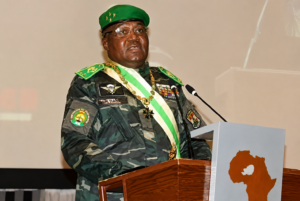
The AES states—Mali, Burkina Faso, and Niger—share a common trend: the indefinite postponement of democratic transitions. Since seizing power, military juntas have systematically extended their rule, citing technical delays, constitutional reforms, or security concerns to justify prolonged transitions. In Mali, the junta initially promised elections by February 2022 but instead extended its mandate to 2029. Burkina Faso’s Captain Traoré followed suit, pushing back polls to 2029 and consolidating power through constitutional changes. Niger’s junta, though initially resistant to setting a timeline, ultimately recommended a five-year transition period in early 2025, with junta leader Tchiani promoting himself to army general and assuming the presidency in March 2025.
These extended transitions serve a dual purpose: they allow juntas to entrench their rule and pursue deeper regional integration through the AES. The newfound longevity removes incentives to hold elections, enabling regimes to forge alliances with non-Western partners—such as Russia’s recent pledge to support the AES’s joint force. For the European Union, this evolving reality demands a recalibration of its engagement strategy in the Sahel, particularly as France’s influence wanes and new geopolitical players enter the fray.
Information control: the weapon of weak states
Unable to assert control over their territories, AES regimes have turned to suppressing dissent and controlling narratives. Since the coups, independent and foreign media outlets—particularly French broadcasters like RFI and France 24—have been suspended, expelled, or censored. Local journalists face arbitrary arrests, forced conscription, or exile, while civil society organizations and political parties operate under constant threat.
In Mali, the junta has systematically silenced critical voices. In 2022, RFI and France 24 were banned; in 2024, the private channel Joliba TV lost its license after airing a program on a staged coup. Burkina Faso’s junta expelled foreign journalists, suspended RFI and France 24, and in 2025, placed exiled critics on terror lists while abducting and forcibly conscripting journalists into the military. Niger’s junta followed suit, suspending RFI and France 24 within weeks of the coup and continuing to target media outlets and human rights defenders.
These measures reflect a broader strategy: by controlling information, regimes mask their inability to govern. In October 2024, Burkina Faso’s government claimed to control 70% of its territory—the same figure attributed to jihadist groups by external observers. For citizens, navigating reality has become a precarious act of survival.
The Sahel’s forgotten crisis: why silence is not stability
The Sahel has vanished from global headlines, obscured by wars in Europe, the Middle East, and the Congo. But beneath the silence lies a deepening catastrophe. Jihadist violence is spreading, authoritarianism is hardening, and civilian suffering is reaching unprecedented levels. By March 2025, 3.1 million people had been internally displaced across the Sahel, while 52.7 million in West Africa faced acute food insecurity between June and August 2025.
The European Union’s disengagement from the Sahel—driven by shifting priorities and failed interventions—risks leaving the region to new, less scrupulous partners. Yet the consequences of a hands-off approach extend far beyond Africa’s borders. Instability in the Sahel fuels migration, terrorism, and regional conflicts that will inevitably reverberate across Europe. The question for the EU is no longer whether to re-engage, but how—and with whom.
As the world grows more polarized, the Sahel’s crisis demands collective solutions. Strengthening ties between continents, fostering knowledge exchange, and rebuilding trust with local populations may offer a path forward. But time is running out. The silence in the Sahel is not a sign of peace—it is a warning of what comes next.