While global attention remains fixated on conflicts in Ukraine and the Middle East, a silent yet escalating crisis continues to unfold in the Sahel. In 2026, over 24 million people across the region will require lifesaving assistance, according to United Nations projections, making it one of the world’s most neglected and underfunded humanitarian emergencies.
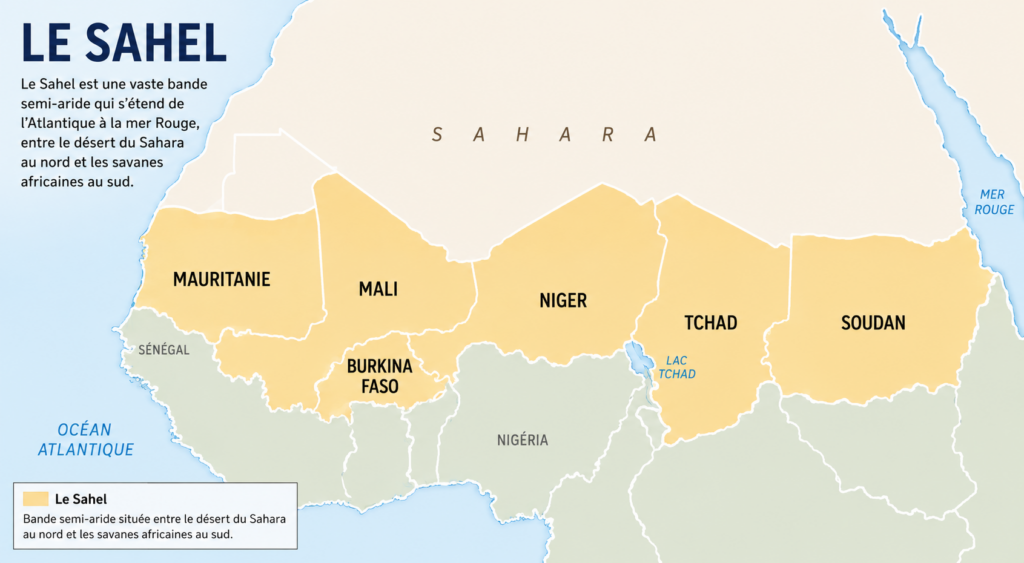
From Mauritania to Chad, traversing Mali, Burkina Faso, and Niger, communities are grappling with a perfect storm of challenges. Armed conflicts, mass displacement, soaring inflation, climate shocks, and severe food shortages are pushing millions to the brink of survival. The United Nations Office for the Coordination of Humanitarian Affairs (OCHA) warns that between June and August—the lean season before harvests—nearly 15.5 million people could face acute food insecurity, with over 1.5 million at risk of slipping into emergency levels requiring immediate intervention.
The human cost is stark: families skipping meals, farmers unable to afford fertilizer or seeds, children barred from classrooms, and entire communities uprooted by violence. Behind these numbers lie real lives—women, children, and the elderly—struggling to secure their next meal or find safety in displacement camps.
International aid shrinks as needs surge
One of the most alarming trends is the sharp decline in humanitarian funding. In 2025, only 29% of the required funds for Sahel operations were mobilized—a historic low that has forced agencies to scale back operations, suspend critical programs, or abandon areas deemed too dangerous. This funding gap arrives as global economic pressures, including disruptions from conflicts in distant regions, drive up the cost of fuel, transportation, and agricultural inputs, further straining already vulnerable communities.
For the United Nations, every cut in funding translates directly into human suffering: less food aid, reduced protection for women and children, and diminished access to healthcare and education. The consequences are immediate and devastating, particularly for those already living on the edge.
Rising insecurity fuels displacement and despair
Food insecurity is not the only crisis gripping the Sahel. Security conditions are worsening, with armed groups extending their reach beyond traditional hotspots into coastal West African nations. In many areas, violence has forced mass displacements and shuttered essential services. Nearly 12,900 schools have closed their doors, leaving more than 2.3 million children without access to education—a loss that threatens to create a lost generation.
Humanitarian experts warn that the absence of schooling not only undermines children’s futures but also leaves them vulnerable to exploitation by armed factions. With limited economic opportunities and no alternative pathways, many young people risk being drawn into cycles of violence or forced labor.
Climate change: the final blow to a fragile region
Adding to the region’s woes are the intensifying impacts of climate change. Since the start of the year, nearly 590,000 people have been affected by catastrophic flooding, while prolonged droughts and creeping desertification steadily erode agricultural land and water resources. The Sahel, despite contributing minimally to global emissions, bears the brunt of these environmental shifts.
This convergence of crises—conflict, economic instability, and climate shocks—has placed the Sahel at a critical juncture. The United Nations urges international donors to act swiftly, emphasizing that solutions exist but require urgent funding. Without immediate action, the coming months could see millions of families slide into an even deeper humanitarian catastrophe.