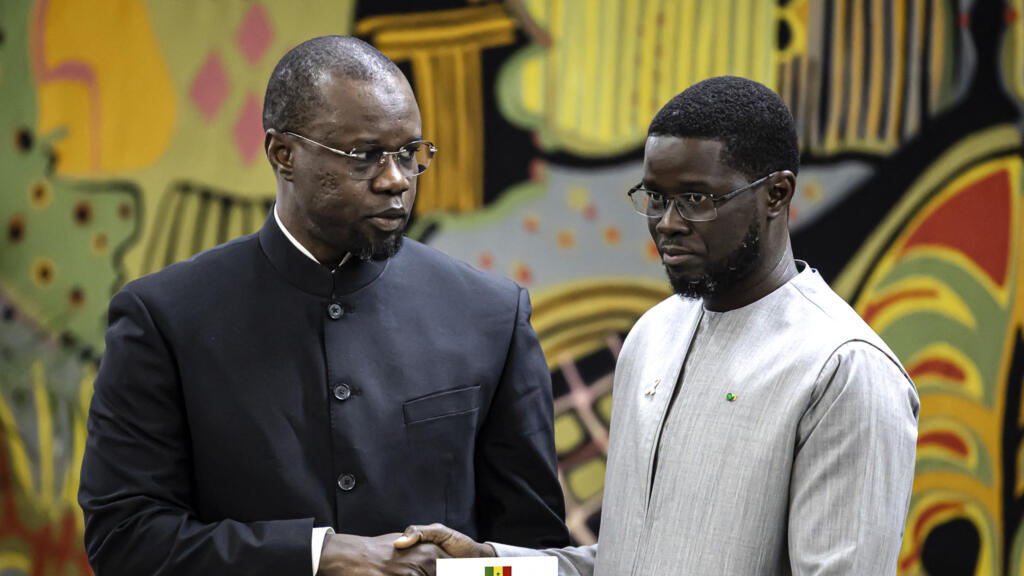
The partnership between Bassirou Diomaye Faye and Ousmane Sonko lasted barely two years. The Senegalese President has now relieved Sonko of his duties as Prime Minister. Now serving as President of the National Assembly, Sonko was also overwhelmingly reelected as head of the Pastef party, which holds a majority in Parliament but remains absent from the government. What led to this sudden rupture? Will this political cohabitation endure? And most critically, do these escalating tensions risk diverting attention from the urgent priorities of Senegalese citizens?
From allies to adversaries: the unraveling of the Diomaye-Sonko tandem
Once a political alliance that symbolized hope for Senegal’s democratic renewal, the Diomaye-Sonko tandem has fractured under pressure. The decision to remove Sonko from the Prime Minister’s office marks a decisive break in a relationship that had already shown signs of strain. Now presiding over the National Assembly, Sonko retains significant influence through his leadership of the Pastef party, which commands a parliamentary majority but finds itself excluded from executive power.
Pastef’s dominance in Parliament, yet absent from government
The Pastef party’s strong position in Parliament contrasts sharply with its exclusion from the government. Sonko’s reelection as party leader was a resounding victory, underscoring the party’s grassroots support. However, this political triumph comes at a cost: the absence of Pastef members in the government raises questions about governance and collaboration between the executive and legislative branches.
Can a tense cohabitation survive?
The concept of cohabitation—where the President and the head of Parliament, often from opposing political forces, must work together—is not new in Senegal’s political landscape. However, the current situation presents unprecedented challenges. The President’s decision to sideline Sonko suggests a fundamental disagreement over governance priorities. Will this lead to legislative gridlock, or can the two leaders find a path to compromise despite their differences?
The looming shadow of political instability
These tensions extend beyond personalities. They reflect deeper divisions within Senegal’s political elite and raise concerns about the country’s stability. With crucial issues such as economic recovery, youth unemployment, and regional security demanding urgent attention, the risk of political infighting overshadowing these priorities looms large. Can Senegal afford to let political rivalries derail progress on pressing national challenges?
Key voices in the debate
- Abdoulaye Tine, Minister Advisor and Spokesperson for the Presidency of the Republic
- Amadou Ba, Former Minister of Culture, Deputy, and National Secretary in charge of Communication for the Pastef
- Babacar Ndiaye, Political Analyst and Research Director at the Wathi Think Tank
What lies ahead for Senegal?
The coming weeks will be critical in determining whether Senegal can navigate this period of political uncertainty without compromising its democratic stability or the well-being of its citizens. The decisions made by President Faye and the reactions from Pastef and its leader, Sonko, will shape the country’s trajectory in the months ahead.
One thing is clear: the stakes could not be higher. Senegal stands at a crossroads, where the choices made today will resonate far beyond its borders.